

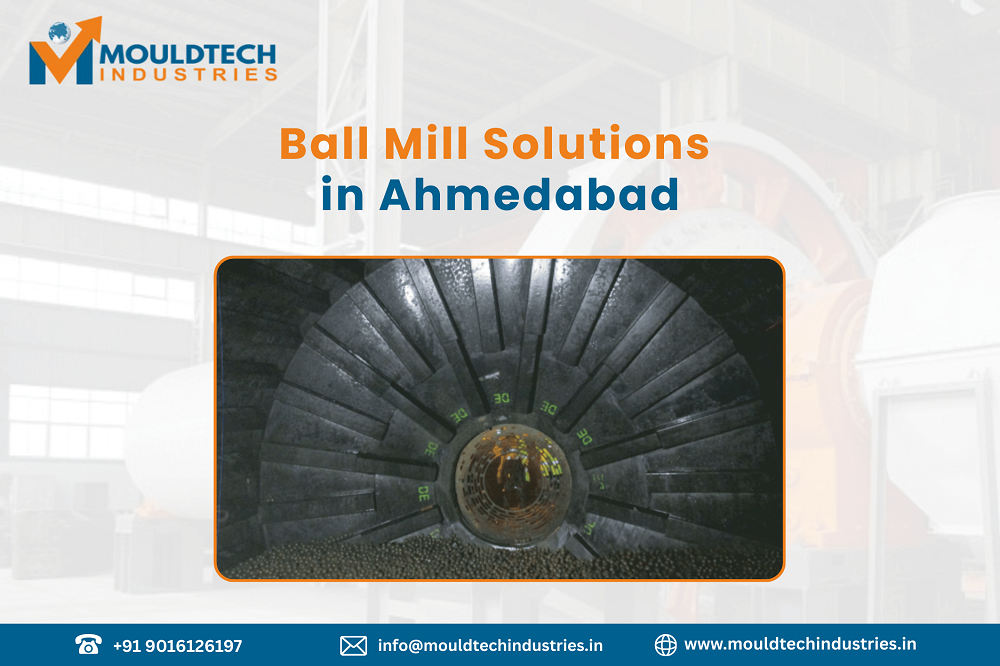
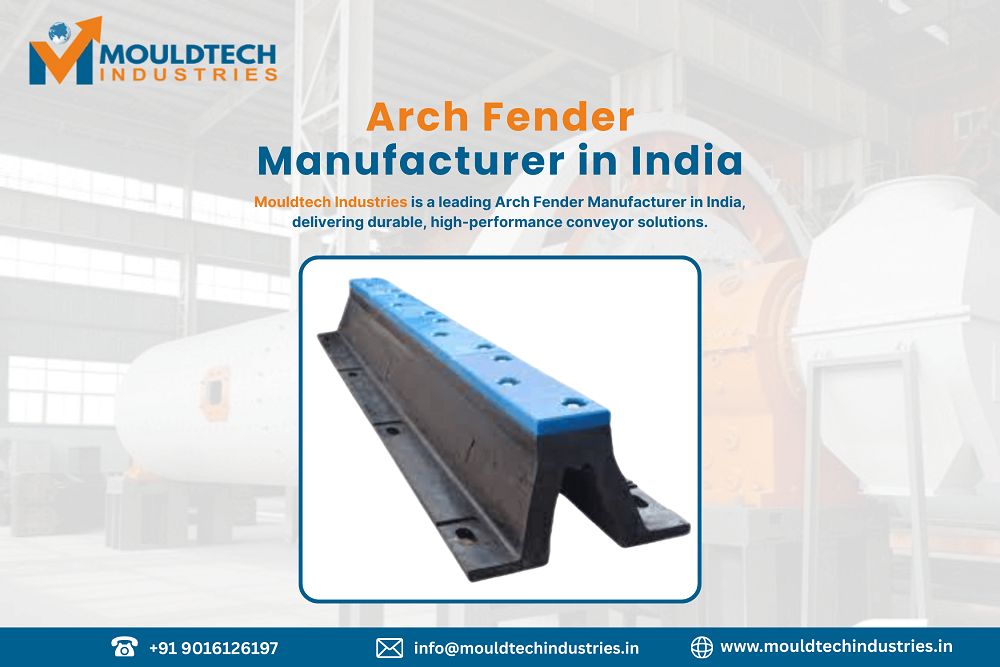
India’s Top Arch Fender Manufacturer and Supplier: Mouldtech Industries Pvt. Ltd.
In heavy-duty industrial environments, an Arch Fender Manufacturer in India plays a crucial role in supplying durable solutions to mining companies, metal and steel plants, cement factories, ceramic manufacturers, and bulk material handling facilities. These industries face significant challenges from abrasion, impact loads, corrosion, and operational wear on equipment, all of which can reduce productivity, increase maintenance costs, and compromise plant safety. Equipment downtime not only disrupts production schedules but also leads to substantial financial losses.
Worldwide industrial movements point to an increasing focus on equipment dependability and enduring service life. As extraction and metalwork activities expand in key locales such as Odisha, Chhattisgarh, Jharkhand, Gujarat, Maharashtra, and Tamil Nadu, the need for robust protection against wear becomes increasingly crucial. Similarly, construction material hubs in Rajasthan and Andhra Pradesh need systems that can consistently handle gritty materials while resisting severe wear.
Against this backdrop, the Arch Fender has emerged as an essential industrial solution, engineered to enhance machine durability, ensure operational consistency, and reduce maintenance burdens in rigorous industrial settings.
Wear Challenges Driving Need for Arch Fender?
Seasoned plant operators frequently note persistent issues across primary industrial operations:
- Friction/Erosion: The constant movement of raw materials such as ore, clinker, coal, and other bulk materials causes significant degradation of structural surfaces and equipment linings. Gritty particles can erode even strong metals, leading to thinning and eventual equipment failure.
- Shock Loads: In extraction and metal refinement, falling debris, heavy metal chunks, and dense inventories impose intense shock stress on delivery structures, bins, and transport systems. Recurring impacts accelerate wear and increase the risk of component warping.
- Chemical Deterioration: Exposure to dampness, chemicals, and mineral-rich fluids hastens the decay of metal parts, further shortening asset life.
- Stoppages: Unexpected machinery halts due to degraded linings or fenders, directly harming output continuity and frequently necessitating expensive emergency mends.
- Upkeep Expenses: Frequent component swaps, labour-intensive service schedules, and the need for specialised repairs compound elevated operating expenses.
Industrial settings globally—from mining zones in Australia and Africa to metal-refining centres in Europe and North America—face comparable wear-related problems, making remedies like Arch Fender pertinent worldwide.
What is an Arch Fender?
Arch Fender is a specially manufactured part designed to protect against wear, absorb shocks, reduce surface erosion, and extend the working life of industrial machinery. It’s mainly slotted into areas with high wear in grinding mills, conveyor networks, chutes, and hoppers.
Unlike standard linings, Arch Fender is particularly designed to:
- Withstand recurring high-impact forces without losing shape
- Supply steady wear defence in erosive environments
- Minimise the chance of equipment corrosion and material fatigue
This solution is built upon sound technical foundations, prioritising operational performance over mere promotional claims. It serves as a tangible, operational-level fix that safeguards vital machinery while sustaining output efficiency.
Industry Uses
- Extraction: In mining, Arch Fender is fitted in ore chutes, crushing units, and grinding mills. It offers protection against high-speed rock impacts and abrasive minerals, ensuring continuous ore processing.
- Cement Production: Cement works process vast quantities of clinker and primary materials that are highly abrasive. Arch Fender shields mills, storage bins, and conveyor transition points, extending service intervals and improving plant performance.
- Metal & Steel Refinement: Steelworks and metal processing sites employ Arch Fender in blast furnace feeding systems, slag-handling chutes, and conveyor transitions. This reduces the risk of liner failure from heavy metallic impacts and enhances equipment security.
- Ceramics: In making ceramic tiles and sanitary ware, gritty inputs like clay, feldspar, and quartz rapidly degrade typical surfaces. Arch Fender safeguards bins, grinding mills, and transfer chutes, improving operational dependability.
- Power Generation: Coal conveyance systems in thermal plants are subject to severe erosion and impact. Arch Fender linings cut down on wear in feed chutes, crushers, and conveyor systems, maximising plant operational time.
- Bulk Product Handling: Ports, storage facilities, and logistics centres often handle heavy bulk items such as grains, ores, and minerals. Arch Fender provides protective covering in high-flow zones of conveyors and bins, curbing equipment degradation.
Material Science & Design Considerations
Arch Fender is engineered using thorough material science concepts. Key elements include:
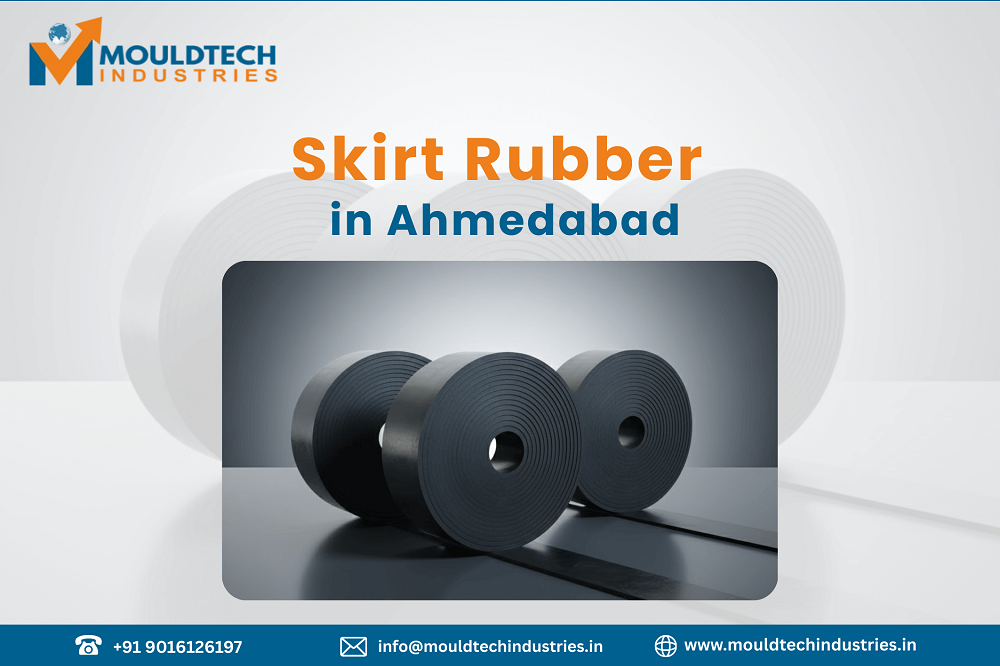
- Rubber Characteristics: Top-grade industrial rubber provides superb pliability and shock absorption. It lessens force transfer to structural metal sections, thus avoiding fatigue and distortion.
- Ceramic Rigidity: In abrasive environments, ceramic inlays built into Arch Fenders offer superior hardness and wear resistance. This fusion assures longevity in demanding service situations.
- Wear Resistance Logic: The fender’s configuration accounts for friction ratios, erosion metrics, and the granularity of the handled substance. This ensures predictable wear rates and extended useful life.
- Impact Dampening: The geometry and makeup of Arch Fender are fine-tuned to disperse energy from falling or sliding bulk goods, reducing peak stresses on equipment structures.
These considerations are derived from actual performance data gathered from mining and metal-processing installations across India and industrial centres worldwide.
Design & Customisation Needs
Arch Fender is not a universal fit. Every deployment calls for a technical evaluation:
- System Integration: Dimensions and form are tailored for grinding mills, conveyors, chutes, and hoppers. Compatibility with existing fixture points is essential.
- Sizing Adaptation: Engineers adjust fender thickness and curvature for peak service duration based on bulk material density, flow velocity, and impact magnitude.
- Use-Specific Configuration: For environments with intense abrasion, such as cement clinker transfer, designs might incorporate ceramic components, whereas mining applications might emphasise flexible rubber solutions for shock absorption.
Manufacturing Quality & Process Oversight
Producers with deep roots in the industry grasp the necessity of accuracy and uniformity:
- Precision Fabrication: Every Arch Fender undergoes CNC-based moulding and shaping to meet tight specifications, ensuring a snug fit and consistent performance.
- Performance Verification: Measurements are checked, material hardness is tested, and abrasion scenarios are simulated to maintain batch uniformity.
- Batch Uniformity: Consistent material attributes across production runs ensure predictable wear speeds and reduce unforeseen issues for plant engineers.
Fitting & Servicing Notes
Correct assembly and upkeep are vital for realising the full advantages of Arch Fender:
- Simple Installation: Pre-formed mounting features and standard shapes streamline onsite fitting, reducing facility downtime.
- Reduced Outages: Quick-swap assemblies enable technicians to replace worn components without halting entire production lines.
- Maintenance Planning: Routine checks, coupled with wear indicators, allow maintenance teams to schedule replacements smartly, avoiding sudden breakdowns.
Safety & Operational Dependability
Equipment integrity closely ties workforce protection and plant reliability together:
- Personnel Safety: Correctly mounted Arch Fenders reduce the risk of material spills, structural damage, and unintended contact with moving parts.
- Asset Safeguarding: By absorbing impact and limiting surface wear, fenders prolong the life of central machinery, reducing the risk of significant failure.
- Plant Consistency: Uninterrupted operation with minimal unplanned stops ensures higher output and reliable scheduling.
Value Over Asset Lifetime
While the initial outlay for wear defence might appear considerable, the long-term rewards are significant:
- Sustained Savings: Fewer equipment failures lead to lower replacement and repair expenditures.
- Fewer Interruptions: Minimising unplanned service interruptions averts costly production lags.
- Service Streamlining: Predictable wear patterns enable maintenance personnel to plan interventions proactively, optimising labour and material allocation.
Export Readiness & World Acceptance
Industrial manufacturers increasingly work across borders, and Arch Fender meets these outside expectations:
- International Industry Benchmarks: Adherence to ISO and ASTM standards confirms suitability for global deployments.
- Documentation & Standard Compliance: Material certifications, batch records, and supporting compliance documents facilitate international purchasing.
Global Purchaser Needs: Developed for mining, cement, metal, and bulk material handling activities worldwide, Arch Fender fulfils performance expectations in regions spanning Europe, North America, and Southeast Asia.
Why Proven Producers Matter?
In rugged industrial settings, the selection of the manufacturer impacts operational results:
- Technical Acumen: Established manufacturers develop wear defence strategies based on onsite data and operational insights.
- Sector Knowledge: Decades of experience in mining, cement, steel, and ceramics inform decisions on material selection and design.
- Dependable Supply Chain: Timely and consistent provision keeps plant schedules on track, even for large-scale undertakings.
About Mouldtech Industries
Mouldtech Industries has been supplying industrial producers across India and global markets with top-tier wear protection remedies. Backed by decades of specialised experience and a commitment to accurate manufacturing, Mouldtech Industries provides enduring Arch Fender products customised for mining, cement, metal, ceramic, and bulk material conveyance applications. For further specifics, look at their official portal: https://www.mouldtechindustries.in/
Conclusion:
Arch Fender plays a critical role in enhancing equipment lifespan, improving operational reliability, and reducing maintenance interventions in heavy-duty industrial environments. By integrating materials science, precision engineering, and plant-level insights, Arch Fender is a practical solution for the mining, metal, cement, ceramic, and bulk material-handling industries. Experienced plant engineers recognise the importance of such solutions in ensuring continuous, safe, and efficient operations.
For plant engineers and procurement teams seeking reliable wear protection, understanding the engineering behind Arch Fender is essential to maintaining industrial efficiency.
Key Takeaways
- Arch Fender provides robust wear protection against abrasion, impact, and corrosion.
- Enhances operational reliability and reduces unplanned downtime.
- Suitable for mining, cement, metal, ceramic, power, and bulk handling industries.
- Material and design choices optimise long-term performance and plant safety.
- Recognised in global industrial environments for durability and reliability.
FAQS
Q1: What is the typical lifespan of an Arch Fender?
- Depending on the material, application, and operational conditions, Arch Fenders typically last 3 to 7 years in heavy-duty environments.
Q2: Which industries benefit most from Arch Fender?
- Mining, cement, metal & steel, ceramic, power, and bulk material handling facilities benefit from enhanced equipment protection.
Q3: How frequently should we inspect Arch Fenders?
- Experienced plant engineers recommend inspections every 6–12 months, depending on material abrasion levels and operational intensity.
Q4: Rubber vs ceramic: which is better for wear protection?
- Rubber absorbs impact and reduces structural stress, while ceramic provides superior abrasion resistance. Often, a combination yields optimal performance.
#BallMillRubberLiner #CeramicWearProtection #RubberLining #MiningSolutions #BulkMaterialHandling #ConveyorSolutions #MouldtechIndustries #WearProtection #IndustrialManufacturing