
Ceramic Lagged Pulley Manufacturer, Supplier, And Exporter in India: Mouldtech Industries
Mouldtech Industries is a Manufacturer of Ceramic Lagged Pulley in Ahmedabad.
Our Manufacturing Unit is in Vadodara, Gujarat, India.
Mouldtech Industries is a Manufacturer of Ball Mill Solutions, Ball Mill Rubber Lining, Wear Protection Line, Resistant Rubber Liner, Embedded Rubber Liners, Conveyors Solutions, Diamond Pulley Lagging, Belt Cleaners, Pulley Lagging, Ceramic Rubber Lagging Services, and Ceramic Rubber Lagging Sheet.
Ceramic Lagged Pulley: Enhancing Conveyor Reliability in Demanding Industrial Environments
Introduction
In today’s manufacturing settings, material movement systems face constant strain. Sectors like mining, cement production, metalworking, ceramics, and power generation rely heavily on belt systems to shift bulk goods effectively. Any interruption in these setups can slow down output, impact plant throughput, and raise running expenses.
Within harsh industrial settings, conveyor belts frequently manage coarse ores, jagged aggregates, damp substances, and significant weights. These circumstances hasten the deterioration of conveyor parts, especially the drive drums responsible for imparting movement to the belt. When drums lose their grip owing to wear or surface matter, issues like belt sliding, uneven material distribution, and frequent stoppages become common occurrences.
Across worldwide industrial markets—encompassing major extraction zones, steel-making areas, and ceramic hubs—the call for robust, wear-resilient solutions keeps rising. Facility supervisors and upkeep crews are increasingly concentrating on boosting equipment dependability while lessening unforeseen outages.
Operational Hurdles Driving the Need for Ceramic Lagged Drums
Bulk material handling settings subject conveyor systems to numerous operational difficulties. Seasoned facility engineers frequently observe that drum exteriors are among the initial elements to degrade.
Friction
Mined ores, ground limestone, quartz sand, and ceramic feedstock incorporate highly frictional particles. When this material spills or circulates near the drum surface, continuous rubbing gradually wears away the standard steel or rubber lining.
Shock Loads
Heavy payloads and inconsistent material delivery can generate sudden stresses on conveyor assemblies. These impacts transmit strain directly to the drums and belts, speeding up mechanical breakdown.
Deterioration
In industries such as extraction and power generation, conveyors often function in damp, wet, or chemically harsh surroundings. Moisture, sludge, and chemical agents contribute to rusting and the breakdown of metal components.
Belt Sliding
Residue from water, muck, or fine dust lessens the friction between the belt and the drum face. As grip diminishes, belts can slide, reducing efficiency and increasing power needs.
Outages and Servicing Expenses
Regular drum resurfacing, belt misalignment, and abrupt failures disrupt plant agendas. Servicing teams must halt systems to mend or swap worn parts, resulting in lost production.
Major industrial centers situated across the globe host numerous facilities where conveyor dependability directly influences facility productivity.
Define Ceramic Lagged Pulley
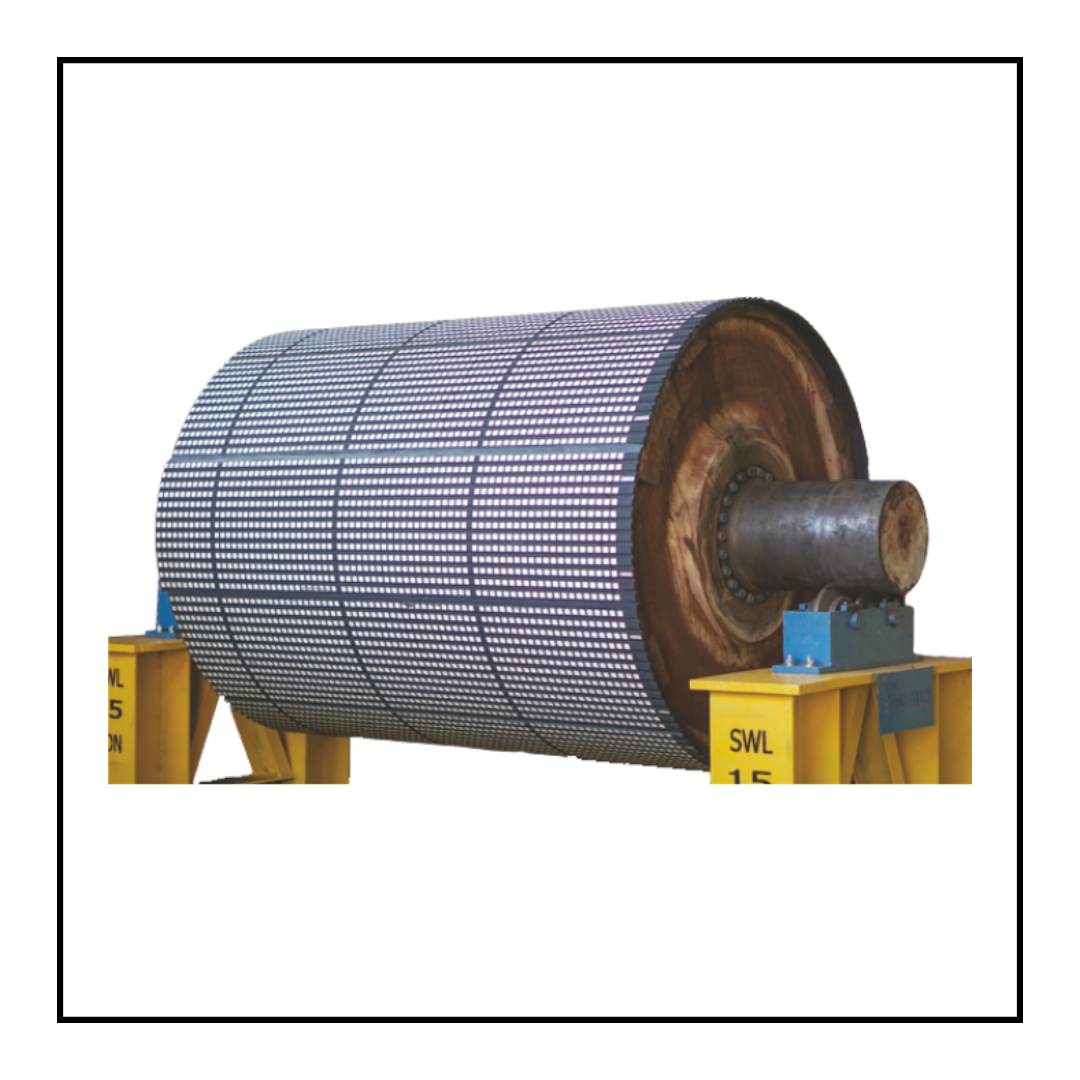
A Ceramic Lagged Pulley is a conveyor drum surface engineered with ceramic wear components adhered to a rubber substructure. This compound design aims to enhance grip between the conveyor belt and the driving drum while offering defense against wear and abrasion.
Unlike typical rubber lining, ceramic lining incorporates high-strength ceramic pieces set into rubber. These pieces form small contact zones that boost friction and purchase, especially in wet or soiled conditions.
The rubber base serves several functions:
- Buffering impact forces
- Permitting pliability during drum rotation
- Securing ceramic elements to the drum body
In mining and metal fabrication settings, this combination assists in sustaining steady belt traction even under heavy loads and tough operational scenarios. Ceramic Lagging Sheet and Diamond Groove Sheet enhance grip, reduce slippage, and improve overall pulley performance in demanding industrial environments.
Usage Across Sectors
Drums fitted with ceramic lagging see broad use in sectors where conveyor systems run nonstop and under high stress.
Mining Sector
Extraction activities involve moving abrasive substances like metallic ores, coal, bauxite, limestone, and copper ore. Conveyor reliability is vital for maintaining steady material flow from extraction spots to processing units.
Ceramic lining assists in cutting down drum wear whilst improving belt traction in dusty or damp mining locales.
Cement Sector
Cement facilities rely on conveyors to move limestone, hot sinter, gypsum, and finalized cement products. High warmth and abrasive elements create demanding circumstances for conveyor machinery.
Ceramic lining supplies longevity in kiln feed conveyors and sinter transport systems.
Metal and Steel Facilities
Steel plants shift primary materials like metallic ore, coal, coke, and slag across extensive conveyor networks. High loads and abrasive dust make wear protection crucial.
Ceramic Production
Ceramic factories transport clay, feldspar, silica, and similar feedstock via conveyors during manufacturing.
Drums with ceramic lags offer superior defense against these abrasive substances.
Power Stations
Coal-fed power facilities depend on dependable conveyors to ferry coal from storage areas to boilers. Damp coal and dust can induce belt slippage.
Ceramic lining enhances grip and cuts down on operational interruptions.
Bulk Material Movement Systems
Ports, logistics hubs, and warehouses managing bulk goods also gain from ceramic lagging solutions for enhanced dependability.
Setup & Upkeep Notes
Correct fitting is vital to getting the best from ceramic lagged sheaves.
A typical setup procedure includes:
- Wiping and prepping the sheave face
- Applying bonding agents
- Positioning lagging sections accurately
- Allowing sufficient hardening duration
After fitting, ceramic lagged sheaves usually need less upkeep than standard lagging types.
Regular upkeep checks generally concentrate on:
- Looking at the condition of the ceramic pieces
- Verifying belt tracking
- Noting any unusual signs of wear
Less frequent upkeep can lead to better process performance.
Export Preparedness & Worldwide Acceptance
Industrial purchasers globally anticipate suppliers to satisfy rigorous quality and documentation benchmarks.
Producers set for export must furnish:
- Details on materials
- Records of the making process
- Reports from quality checks
- Uniform product batches
Global sectors like extraction, steel making, and the ceramics trade often depend on suppliers able to meet these criteria.
The Importance of Seasoned Producers
Industrial parts operating in challenging conditions need to be conceived with genuine operational insight.
Manufacturers with a sector background grasp:
- How conveyor systems behave
- How wear develops in various sectors
- Which materials work well together
- What upkeep is necessary
Dependable manufacturing associates also guarantee a steady stream of products and technical help when needed.
About Mouldtech Industries
Mouldtech Industries is a manufacturing firm concentrating on protection from wear and conveyance solutions for tough industrial uses.
The firm serves industries across Pan India, supporting fields such as mining, cement production, metal handling, ceramics, and moving large volumes of material. Their production capacities cover solutions like:
- Protective Rubber Linings for Ball Mills
- Wear Resistance Solutions Using Ceramics
- Systems for Applying Rubber Linings
- Rubber Items for Ball Mills
- Parts for Conveyors
More insights into their industrial offerings are available at:👉 https://www.mouldtechindustries.in/
Summary
Conveyor systems form a crucial part of modern factory output. When these systems perform dependably, facilities keep material moving smoothly, maintain consistent production, and operate efficiently.
Ceramic lagged sheaves tackle several frequent conveyor issues, such as rubbing, belt sliding, and surface deterioration. By merging the toughness of ceramic with the suppleness of rubber, these parts deliver a resilient grip in demanding industrial settings.
For mining activities, cement works, metal processing sites, and bulk material flow arrangements, enhancing sheave durability can significantly boost overall site effectiveness.
Main Points
- Ceramic lagged sheaves enhance the grip between conveyor belts and the drive sheaves.
- The ceramic face offers strong defense against rubbing and wear.
- The rubber base helps absorb impacts and vibrations.
- Appropriate for use in mining, cement, steel, ceramics, and power generation facilities.
- Contributes to reducing time offline and the frequency of maintenance tasks.
Trending FAQs
1. What is the typical lifespan of a ceramic lagged pulley?
- The lifespan depends on operating conditions such as material abrasiveness, belt tension, and maintenance practices. In many industrial environments, ceramic lagging lasts significantly longer than traditional rubber lagging.
2. Where are ceramic lagged pulleys commonly used?
- They are widely used in mining, cement plants, steel mills, ceramic factories, power plants, and bulk material handling facilities.
3. How often should ceramic lagging be inspected?
- Routine conveyor maintenance inspections usually include visual checks of the pulley surface. Many plants inspect lagging during scheduled shutdowns.
4. What is the difference between rubber lagging and ceramic lagging?
- Rubber lagging provides cushioning and basic traction, while ceramic lagging offers improved wear resistance and better grip in wet or abrasive environments.
5. Can ceramic lagging be installed on existing pulleys?
- Yes. In many cases, existing pulleys can be refurbished with ceramic lagging after proper surface preparation.
#BallMillRubberLiner #CeramicWearProtection #RubberLining #MiningSolutions #BulkMaterialHandling #ConveyorSolutions #MouldtechIndustries #WearProtection #IndustrialManufacturing