
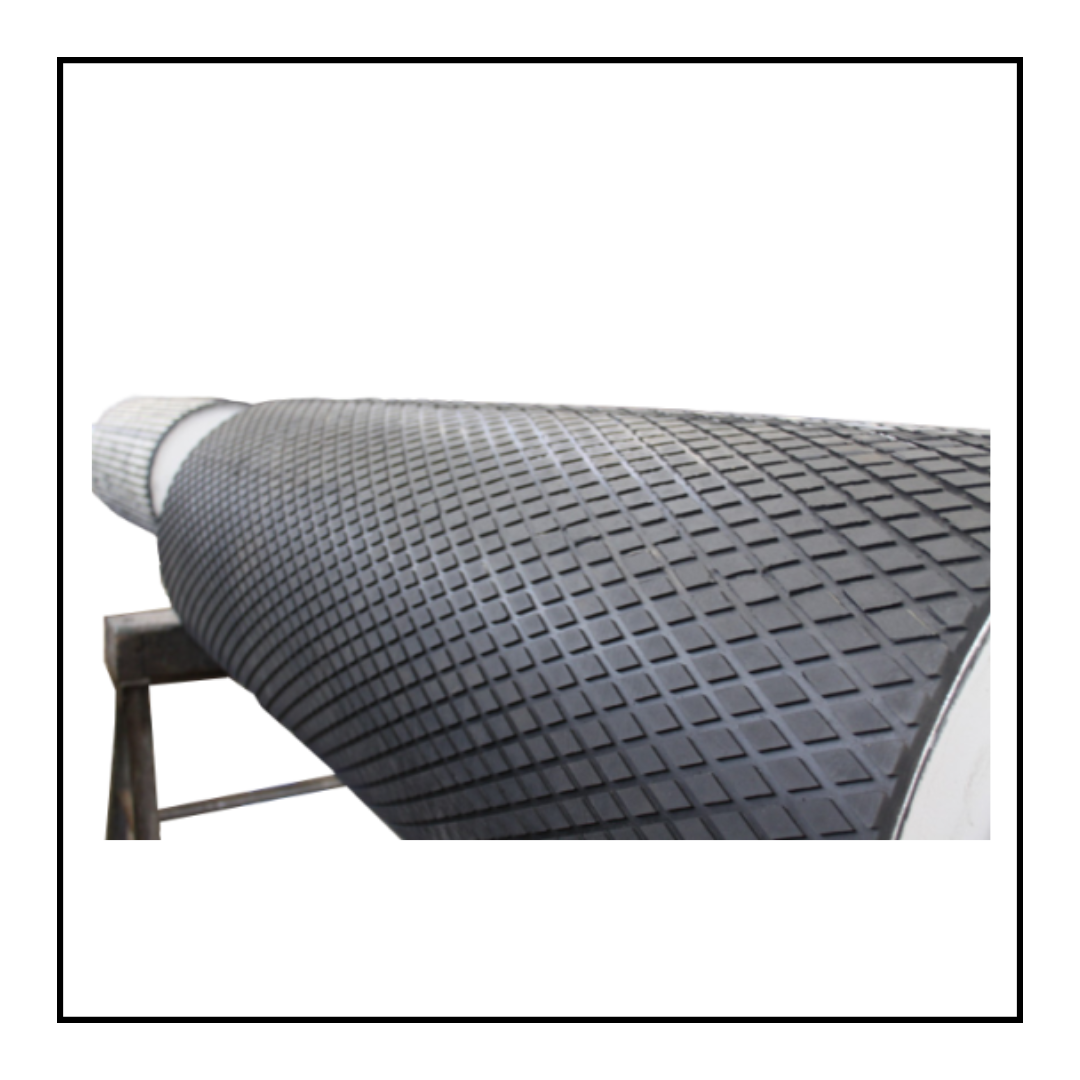
Diamond Pulley Lagging Manufacturer, Supplier, And Exporter in India: Mouldtech Industries
Mouldtech Industries is a Manufacturer of Diamond Pulley Lagging in Ahmedabad.
Our Manufacturing Unit is in Vadodara, Gujarat, India.
Mouldtech Industries is a Manufacturer of Ball Mill Solutions, Ball Mill Rubber Lining, Wear Protection Line, Resistant Rubber Liner, Embedded Rubber Liners, Conveyors Solutions, Diamond Pulley Lagging, Belt Cleaners, Pulley Lagging, Ceramic Rubber Lagging Services, and Ceramic Rubber Lagging Sheet.
Boosting Plant Performance with Diamond Pulley Lagging Coverage
In rigorous industrial settings, such as extraction, metal fabrication, cement creation, and ceramic production, machinery endures continuous degradation from rubbing, striking forces, and corrosive elements. Seasoned facility operators frequently note that exposed pulley surfaces, material transport lines, and grinding mills degrade rapidly, resulting in elevated servicing expenses, unexpected stoppages, and reduced productivity. Throughout India—including key manufacturing centers like Delhi, Mumbai, Ahmedabad, Bengaluru, Pune, Chennai, Hyderabad, Kolkata, Surat, Vadodara, and Jaipur—sectors are increasingly putting resources into dependable abrasion defense solutions. Similar operational hurdles are faced by global markets in Australia, South Africa, the UAE, and parts of Southeast Asia.
Among these protective measures, Diamond Pulley Lagging has surfaced as an essential industrial component, boosting operational dependability and ensuring safer material movement.
Industrial Hurdles Driving Demand for Diamond Pulley Lagging
Extraction, cement, and bulk material handling tasks confront multiple mechanical and environmental strains:
- Friction: Constant contact with tough minerals, raw materials, and fine powders accelerates material breakdown.
- Impact Loads: Sudden material drops or belt misalignment generate shock stress on pulleys.
- Corrosion: Damp conditions, chemical contact, and humidity can damage metal pulley exteriors.
- Stoppages: Unforeseen repairs disrupt production timelines and raise labor expenditures.
- Service Expenses: Frequent replacements or urgent repairs inflate operational spending plans.
Producers with substantial sector background recognize that lessening these risks is vital for sustained facility function and personnel safety. Wave Liner and Lifter Bar further support equipment durability and efficient material handling in heavy-duty industrial operations.
Defining Diamond Pulley Lagging
In technical language, Diamond Pulley Lagging refers to a textured rubber or composite overlay affixed to pulley surfaces within conveyor frameworks. The raised diamond pattern offers superior traction, prevents belt sliding, and promotes better material charting. Far from being just cosmetic, its architecture addresses tangible facility issues: decreasing mechanical wear, absorbing vibrations, and prolonging conveyor belt service life. In extraction and metal processing tasks, it aids in sustaining steady material throughput while reducing pressure on pulleys and associated parts.
Usage Across Varied Sectors
Diamond Pulley Lagging demonstrates adaptability and broad applicability:
- Extraction: Improves conveyor belt grip when hauling ore and lessens dust buildup.
- Cement Works: Boosts belt adhesion when handling heavy clinker or base materials.
- Metal & Steel: Shields pulleys in hot and abrasive settings, like moving slag.
- Ceramic Production: Cuts down on wear from clay, coating agents, and other fine matter in bulk conveyance.
- Power Stations: Supports ash removal and other fast-moving material transport duties.
- Bulk Material Handling: Ensures smoother operations at docks, storage areas, and stockyards.
Manufacturing Quality & Process Oversight
Creating effective Diamond Pulley Lagging demands precise fabrication and rigorous quality checks:
- Material Uniformity: Rubber blends are tested for firmness, flexibility, and resistance to wear.
- Pattern Precision: Diamond configurations are cast to exact specifications to maximize grip and output.
- Batch Verification: Each production run is examined for consistent thickness, bonding strength, and durability.
These procedures guarantee predictable, dependable performance in demanding industrial settings.
Fitting & Servicing Notes
Simplicity of application and long-term upkeep are crucial for minimizing lost operational time:
- Fitting: The covering can be applied using bonding agents, heat curing (vulcanization), or mechanical fasteners, based on pulley dimensions and duty cycle.
- Reduced Downtime: Correct installation prevents belt slippage and unexpected failures.
- Inspection Schedules: Routine checks permit early detection of wear, extending the overall system lifespan.
Practiced facility engineers often observe that planned servicing, combined with quality lagging, substantially lessens unforeseen outages.
Value of Experienced Producers
Manufacturers possessing deep engineering knowledge and sector familiarity grasp the subtleties of facility activities. Dependable sourcing, accurate fabrication, and technical backing are vital for large-scale industrial operations. Mouldtech Industries, with years of practical involvement, exemplifies this approach—guaranteeing that every piece of pulley lagging fulfills operational prerequisites.
About Mouldtech Industries
Mouldtech Industries stands as a reliable fabricator of Ball Mill Rubber Liners, Ceramic Wear Defense Systems, Rubber Lining Treatments, and Conveyor Solutions, serving industrial markets domestically across India and internationally. With specialization in abrasion defenses for extraction, cement, metal, and ceramic sectors, the firm delivers finely manufactured items that cater to facility-level operational necessities. Discover more at 👉 https://www.mouldtechindustries.in/
Summary
In the extraction, cement, and bulk movement industries, Diamond Pulley Lagging plays a pivotal role in elevating plant efficiency, minimizing servicing expenditures, and strengthening operational dependability. By committing to engineered wear protection solutions, facilities can counter risks from friction, impact, and corrosion while promoting uniform material flow.
Key Takeaways
- Reliable wear defense boosts operational consistency.
- Diamond Pulley Lagging lowers downtime and upkeep costs
- Suitable for mining, metal, cement, ceramic, and bulk transport
- Extends the functional life of conveyor belts and pulleys
- Relevant in global industrial zones handling heavy materials
Trending FAQs
1. What is the typical lifespan of Diamond Pulley Lagging?
- Lifespan varies by material, load, and environmental conditions, typically ranging from 3 to 5 years with proper maintenance.
2. Which industries benefit most from pulley lagging?
- Mining, cement, metal, steel, ceramic, power plants, and bulk material handling operations see the greatest impact.
3. How often should pulley lagging be inspected?
- Experienced engineers recommend quarterly inspections in high-load environments.
4. When should I choose rubber vs ceramic wear solutions?
- Rubber is ideal for vibration damping and moderate abrasion; ceramic suits extremely abrasive or high-temperature applications.
5. Is Diamond Pulley Lagging used globally?
- Yes, it is deployed in industrial hubs across India, Australia, South Africa, the UAE, and Southeast Asia.
#BallMillRubberLiner #CeramicWearProtection #RubberLining #MiningSolutions #BulkMaterialHandling #ConveyorSolutions #MouldtechIndustries #WearProtection #IndustrialManufacturing