
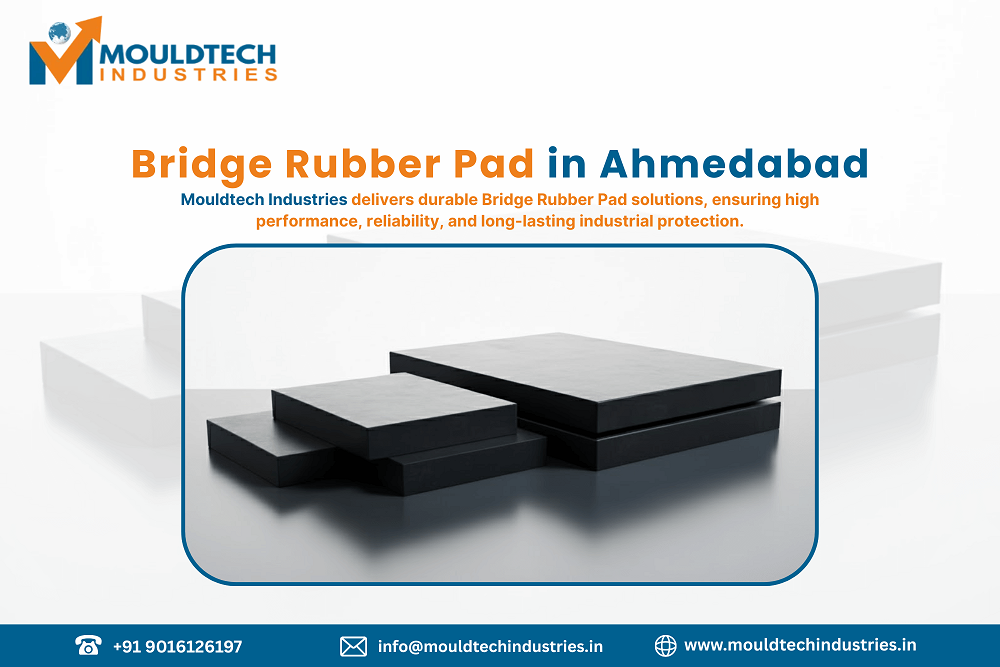
Bridge Rubber Pad Manufacturer, Supplier, And Exporter in India: Mouldtech Industries
Mouldtech Industries is a Manufacturer of Bridge Rubber pads in Ahmedabad.
Our Manufacturing Unit is in Vadodara, Gujarat, India.
Mouldtech Industries is a Manufacturer of Bridge Rubber Pad, Ball Mill Rubber Lining, Bridge Rubber Pad, Resistant Rubber Liner, Embedded Rubber Liners, Conveyors Solutions, Ceramic Lagging Sheet, Belt Cleaners, Bridge Rubber Pad, Ceramic Rubber Lagging Services, and Ceramic Rubber Lagging Sheet.
Bridge Rubber Pad: Boosting Equipment Dependability Across Major Industries
Introduction
In demanding industrial settings—such as mining, metal production, cement making, ceramics, and handling large volumes of materials—keeping machinery running reliably and protected from wear is essential for smooth operations. Constant rubbing, heavy impacts, and material corrosion continuously stress equipment, leading to unexpected shutdowns and higher repair costs. Experienced facility supervisors often notice that even minor hiccups or part malfunctions in these sectors can lead to significant output reductions.
Worldwide industrial shifts are driving an increasing focus on durable wear-safeguarding methods, as companies seek ways to make equipment last longer, reduce maintenance frequency, and maintain steady output. In this context, the Bridge Rubber Pad stands out as a sensible solution for reducing wear, absorbing high-impact forces, and improving the performance of various industrial setups.
Key Industrial Hurdles Driving the Need for Bridge Rubber Pads
Abrasion
Industries such as mining, ceramics, and cement often deal with gritty substances that wear down equipment surfaces. For instance, grinding equipment, storage bins, and delivery chutes are constantly subjected to friction that damages metal. Rubber-based shielding, such as the Bridge Rubber Pad, lessens direct contact with metal, extending the service life of machinery without causing significant operational pauses.
Impact Forces
In mining and bulk material handling, hard blows from rocks, coal, or other raw materials can damage structural components. Repeated impacts can cause tiny cracks, misshapen parts, and ultimately equipment failure. Bridge Rubber Pads function as shock absorbers, spreading the force and preventing excessive strain on machinery frames.
Corrosion
Cement and chemically treated materials accelerate rusting in the processing gear. Even steel machinery with protective coatings degrades over time in damp or chemically harsh surroundings. Using flexible pads offers a second line of defence, shielding contact areas from direct exposure.
Outages
Unexpected stops in heavy industry can cost a fortune every hour. Frequent equipment halts for servicing lower output and operational effectiveness. Supervisors have observed that incorporating wear-defence options, such as Bridge Rubber Pads, can significantly reduce such interruptions.
Repair Expenses
The recurring need to swap out worn parts, emergency fixes, and time-consuming maintenance schedules adds to rising operational costs. Using tough wear solutions proactively helps plants establish predictable service schedules and make better use of resources.
Around the globe, from coal pits in one region to steel works in another, these types of solutions are increasingly relied upon to maintain market edge and uninterrupted workflow.
Defining the Bridge Rubber Pad
The Bridge Rubber Pad is a specially engineered industrial flexible material designed to provide defence against wear, absorb impacts, and cushion the operation of heavy machines. Unlike standard metal linings, these pads blend flexibility with strength to withstand rubbing, shock, and repeated weight stress.
Made from carefully selected rubber blends, the pad maintains its shape even under intense pressure while providing controlled energy absorption. It’s a resolution based on real-world facility needs rather than just theoretical performance claims.
Uses Across Different Sectors
Mining
In mining operations across various locations, Bridge Rubber Pads are commonly fitted to grinders, feeding mechanisms, and chutes to reduce wear and absorb the rapid impacts from extracted minerals. This boosts equipment lifespan and reduces unexpected service needs.
Cement Factories
Cement processing involves handling rough materials like clinker and limestone. When positioned at drop-off points, storage units, and near the kiln exit, Bridge Rubber Pads reduce wear on vital parts and lessen the effects of vibrations caused by the material itself.
Metal & Steel Works
Steel slabs, cooled molten material, and slag present severe wear and impact challenges. Rubber pads are used on rollers, collection bins, and conveyor transfer areas to safeguard framework elements and minimise surface harm.
Ceramic Producers
During the production of ceramic tiles and plumbing fixtures, fine abrasive powders and raw clays wear down chutes, feeders, and mixing units. Bridge Rubber Pads present a wear-resistant yet impact-dampening option, preserving both the machinery surfaces and the final product quality.
Power Plants
Power generation facilities using coal or biomass benefit from the use of rubber pads in fuel bunkers, collection bins, and ash removal systems. The flexible material absorbs vibration, reduces wear, and helps prevent feed and discharge equipment from failing early.
Bulk Material Handling
Facilities that move items such as grain, sand, or fine powders utilise Bridge Rubber Pads to line chutes, bins, and conveyors. This aids steady material flow, reduces blockages, and limits wear on heavily contacted surfaces.
Material Science & Engineering Aspects
Understanding the properties of the materials used in wear protection is vital for designing successful solutions.
Rubber Traits
Industrial-grade rubber offers high stretch, pull strength, and resistance to abrasion and chemical contact. Selecting the right blend ensures the pad stays pliable while soaking up energy from heavy blows.
Ceramic Rigidity
While ceramics offer excellent hardness and wear resistance, their tendency to fracture under heavy loads makes them vulnerable to failure. Flexible options like Bridge Rubber Pads work well alongside ceramic parts by cushioning shocks and spreading out forces.
Wear Resistance Concepts
Effective wear defence depends on balancing hardness with pliability. The Bridge Rubber Pad achieves this by providing a firm outer layer for abrasion resistance while remaining flexible beneath to handle moving loads.
Impact Dampening
Rubber’s ability to both flow and store energy helps dissipate force during strikes, reducing stress on the underlying metal structures. This results in fewer tiny breaks, longer life, and less need for upkeep.
Layout & Customisation Needs
For peak effectiveness, Bridge Rubber Pads must be adapted to specific industry requirements:
- Machine Suitability: Sizes and mounting points need to fit the existing equipment layout.
- Variable Dimensions: Pads are made in different thicknesses and surface shapes based on material flow and impact severity.
- Use-Specific Design: Engineers factor in material type, load intensity, and surrounding conditions when planning pads to maximise benefit.
Manufacturing Quality & Process Control
The making of Bridge Rubber Pads demands accuracy and consistency:
- Precise Fabrication: Moulding procedures are tightly managed to guarantee uniform thickness, density, and surface feel.
- Quality Checks: Every batch is examined for material soundness, precise sizing, and mechanical performance.
- Uniformity Across Batches: Strict process oversight ensures steady performance across multiple production runs, which is crucial for large industrial setups.
Fitting & Upkeep Notes
Bridge Rubber Pads are designed to be straightforward to put in place:
- Simple Mounting: Sectional designs allow for fast swaps without disassembling large machines.
- Reduced Stoppage Time: Installation can often be done during scheduled service periods, minimising output disruption.
- Service Intervals: Pads require standard checks but generally allow more extended periods between replacements than liners made only of metal.
Safety & Operational Dependability
Worker well-being and consistent operation are top priorities:
- Worker Protection: Pads reduce exposure to sharp edges and prevent material from being launched during impacts.
- Equipment Safeguarding: The flexible layer absorbs jolts, protecting structural elements and delicate machinery.
- Facility Reliability: With fewer breakdowns and less downtime, overall facility efficiency improves, supporting predictable production schedules.
Cost Effectiveness Across Equipment Lifespan
Although the initial outlay for wear defence might seem considerable, the Bridge Rubber Pad delivers savings over the extended term:
- Fewer Stoppages: Less emergency halting leads to consistent production throughput.
- Maintenance Streamlining: Longer component service periods reduce costs for labour, materials, and part replacement.
- Enduring Savings: The pad’s resilience ensures consistent maintenance budgets, enabling more accurate financial forecasting for industrial ventures.
Export Readiness and Worldwide Acceptance
Producers with a long track record in the sector know that global purchasers require adherence to rigorous specifications:
- International Export Demands: Rubber pads satisfy ISO and established industry quality thresholds.
- Compliance Documentation Awareness: Complete traceability, material certifications, and relevant paperwork are furnished.
- Global Purchaser Needs: Facilities in regions such as Southeast Asia, the Middle East, and Africa can incorporate these pads into existing setups without encountering modification hurdles.
The Value of Established Manufacturers
Opting for a seasoned producer assures dependability and operational assurance:
- Design Prowess: A solid grasp of wear mechanics enables superior product tailoring.
- Sector Experience: Prolonged presence in industrial settings guides material choice, design formulation, and fabrication methods.
- Dependable Sourcing: On-time shipments and consistent quality are vital for primary industrial operations.
About Mouldtech Industries
Mouldtech Industries has supported industrial clientele throughout India and worldwide for numerous decades, specialising in products such as Ball Mill Rubber Liners, Ceramic Wear Protection Systems, Rubber Lining Solutions, and Conveyor Components. With production sites designed for precision manufacturing and strict quality oversight, Mouldtech guarantees that products like the Bridge Rubber Pad meet both facility-specific and international industrial benchmarks. Further details are available on their official website: https://www.mouldtechindustries.in/.
Summary
In rigorous industrial settings, the Bridge Rubber Pad serves a key role in reducing abrasion, absorbing shocks, and improving operational effectiveness. By implementing these pads, plants in the mining, cement, steel, ceramic, and bulk handling industries can improve reliability, reduce maintenance costs, and extend machinery service life. Seasoned plant engineers and purchasing managers recognise the need to select robust, specifically designed solutions for sustained industrial performance.
Core Insights
- Offers dependable defence against wear in abrasive settings
- Minimises unexpected outages and routine servicing intervals
- Applicable across mining, cement, metal, ceramic, and power sectors
- Improves long-term machine functionality and operational efficiency
- Complies with international industry specifications for global trade and substantial operations
Frequently Asked Questions
What is the usual service duration for a Bridge Rubber Pad?
Based on the material processed and operational circumstances, pads typically last multiple years.
Which sectors benefit most from Bridge Rubber Pads?
Mining, cement, steel, ceramic, bulk material transfer, and power generation facilities gain the most significant advantage.
How frequently should the pads be reviewed or serviced?
Regular visual checks every 3 to 6 months, along with in-depth assessments during scheduled maintenance windows, maintain peak function.
When should rubber systems be favoured over ceramic wear solutions?
Rubber excels in applications involving high impact and vibration, while ceramic is better suited for highly abrasive, lower-impact environments.
For expert solutions in wear protection, contact Mouldtech Industries today to learn more about our Bridge Rubber Pad and other industrial equipment solutions.
#BallMillRubberLiner #CeramicWearProtection #RubberLining #MiningSolutions #BulkMaterialHandling #ConveyorSolutions #MouldtechIndustries #WearProtection #IndustrialManufacturing