

Prevent Material Spillage with Advanced Skirt Rubber Solutions: Mouldtech Industries
Introduction
In heavy-duty industrial environments, sectors like mining, cement, metal processing, ceramics, and bulk material handling face constant exposure to abrasion, impact loads, and demanding material flow conditions. These challenges significantly influence equipment performance, plant efficiency, and uptime. One critical yet often underestimated issue is material spillage at conveyor transfer points, which leads to loss, safety risks, and higher maintenance efforts. 7 Advanced Skirt Rubber Tips Control Industrial Spillage highlights practical solutions, while Mouldtech Industries supports industries with reliable, application-focused conveyor sealing systems.
As global industries expand across regions such as India, Southeast Asia, the Middle East, and Africa, the demand for reliable wear protection and material control systems continues to grow. Plant operators are increasingly focusing on solutions that improve containment, reduce downtime, and enhance overall system reliability.
Skirt Rubber plays a vital role in achieving these objectives. It is a simple yet highly effective solution designed to control material spillage and improve conveyor belt sealing efficiency in demanding industrial environments.
Industrial Challenges That Drive Demand for Skirt Rubber
Across industries, several recurring operational challenges necessitate the use of skirt rubber systems:
- Abrasion: Bulk materials such as coal, limestone, clinker, iron ore, and silica create continuous abrasive wear on conveyor systems. Over time, this leads to gaps and leakages at transfer points.
- Impact Loads: At loading zones, materials drop from height onto conveyor belts, generating impact forces that disrupt material flow and cause spillage.
- Corrosion & Environmental Exposure: Moisture, chemicals, and temperature variations can degrade equipment surfaces, affecting sealing efficiency.
- Downtime & Maintenance Burden: Frequent cleaning of spilled materials and repair of damaged components increases downtime and labor costs.
- Material Loss & Housekeeping Issues: Spillage not only results in financial loss but also creates safety hazards and environmental concerns.
In mining and metal processing operations, these challenges are magnified due to continuous production cycles and high material volumes, making skirt rubber systems essential.
What Is Skirt Rubber?
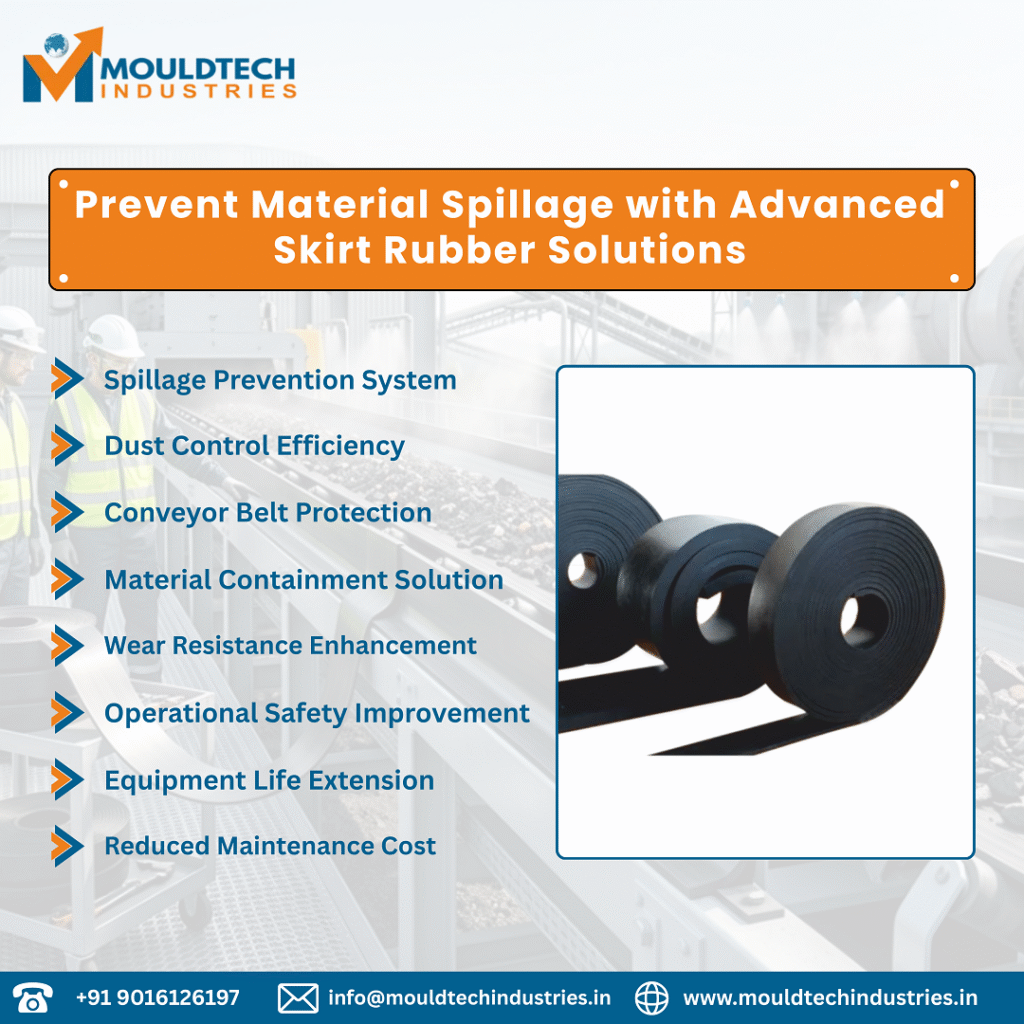
Skirt rubber is a specialized sealing material installed along the sides of conveyor belts, primarily at loading and transfer points. Its primary function is to contain bulk materials within the conveyor system and prevent spillage.
It acts as a flexible barrier between the conveyor belt and the chute structure, ensuring that materials remain aligned and controlled during movement.
Unlike rigid sealing systems, skirt rubber adapts to belt movement and surface irregularities, maintaining consistent contact without causing excessive wear on the belt.
Applications Across Industries
- Mining Industry: Used extensively in coal, iron ore, and mineral handling systems to control spillage at transfer points.
- Cement Plants: Prevents leakage of clinker, gypsum, and raw materials in high-temperature and dusty environments.
- Metal & Steel Plants: Ensures efficient handling of slag, pellets, and sinter materials.
- Ceramic Industry: Supports controlled handling of abrasive powders and granules used in tile and sanitaryware manufacturing.
- Power Plants: Applied in coal handling systems to maintain clean and efficient operations.
- Bulk Material Handling Systems: Used in ports, logistics hubs, and processing plants where continuous material flow is critical.
Experienced plant engineers often observe that effective sealing at conveyor transfer points significantly improves operational efficiency and reduces maintenance overhead.
To explore structured learning on cosmetic science and manufacturing processes, you can check relevant courses available on Coursera.
Material Science & Engineering Considerations
The performance of skirt rubber depends heavily on its material composition and engineering design.
Rubber Properties
- High elasticity for flexibility
- Abrasion resistance for longer service life
- Tear resistance under dynamic loads
- Temperature tolerance for varied environments
- Wear Resistance Principles: The ability to withstand continuous friction from moving materials and conveyor belts is critical.
- Impact Absorption: Rubber absorbs impact energy during material loading, reducing stress on conveyor components.
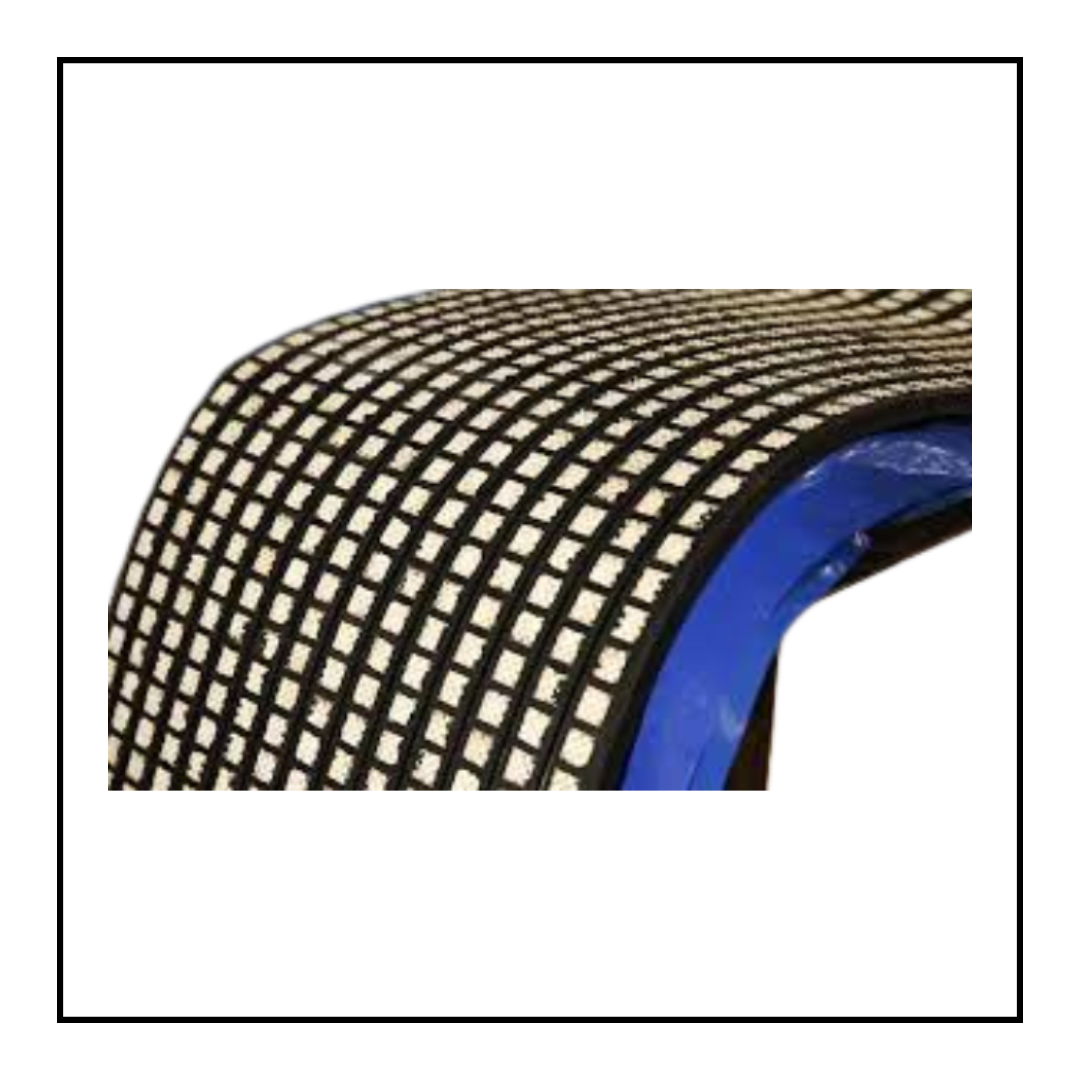
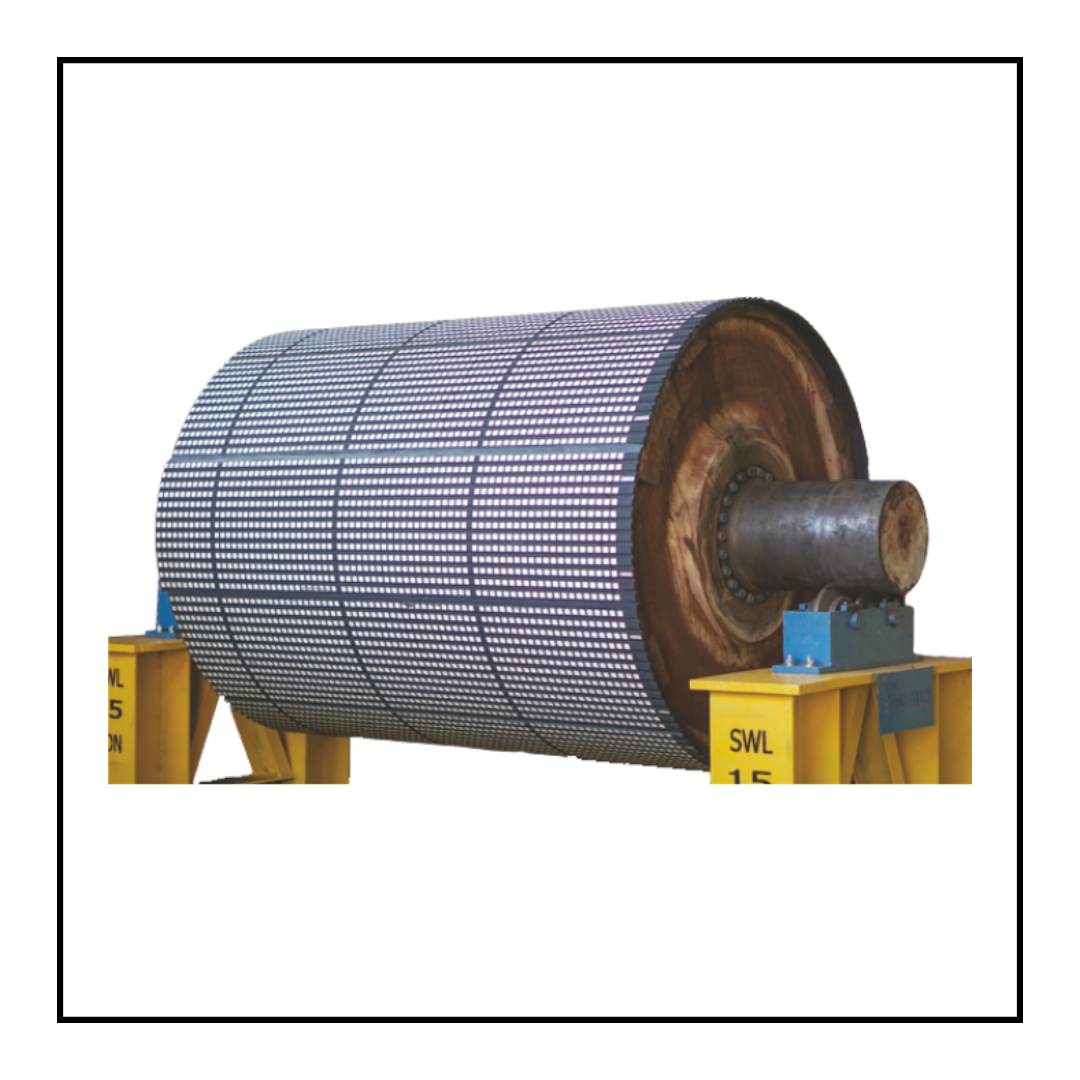
- Hybrid Solutions: In certain applications, skirt rubber may be combined with ceramic wear protection systems to enhance durability in extremely abrasive conditions.
Manufacturers with long-term industry exposure understand that selecting the right compound formulation is key to achieving optimal performance.
Design & Customization Requirements
Every industrial setup is unique, and skirt rubber systems must be tailored accordingly.
- Equipment Compatibility: Design must align with conveyor belt width, speed, and load capacity.
- Custom Sizing: Thickness, length, and profile are customized based on application requirements.
Application-Specific Design
- Single-layer or dual-layer configurations
- Clamp systems for easy adjustment
- Reinforced edges for durability
Proper design ensures effective sealing without causing excessive wear on the conveyor belt.
Manufacturing Quality & Process Control
Consistency in manufacturing plays a crucial role in product performance.
Precision Manufacturing: Uniform thickness and smooth surface finish are essential for effective sealing.
- Quality Checks
- Hardness testing
- Tensile strength validation
- Abrasion resistance testing
- Batch Consistency: Ensures that every unit performs reliably under similar operating conditions.
In industrial applications, even minor inconsistencies can lead to premature failure or inefficiencies.
Integrated Conveyor Wear Solutions for Efficient Material Control
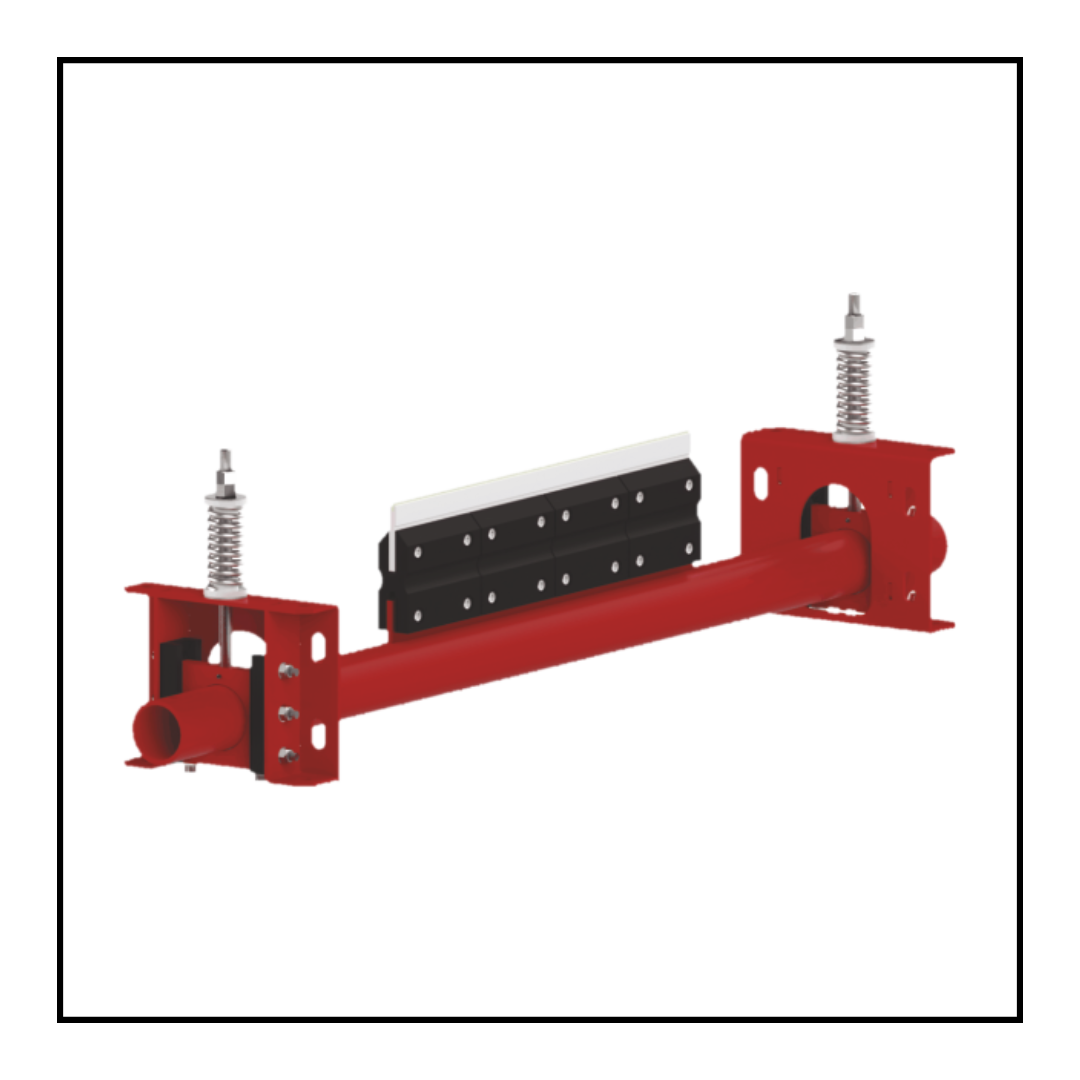
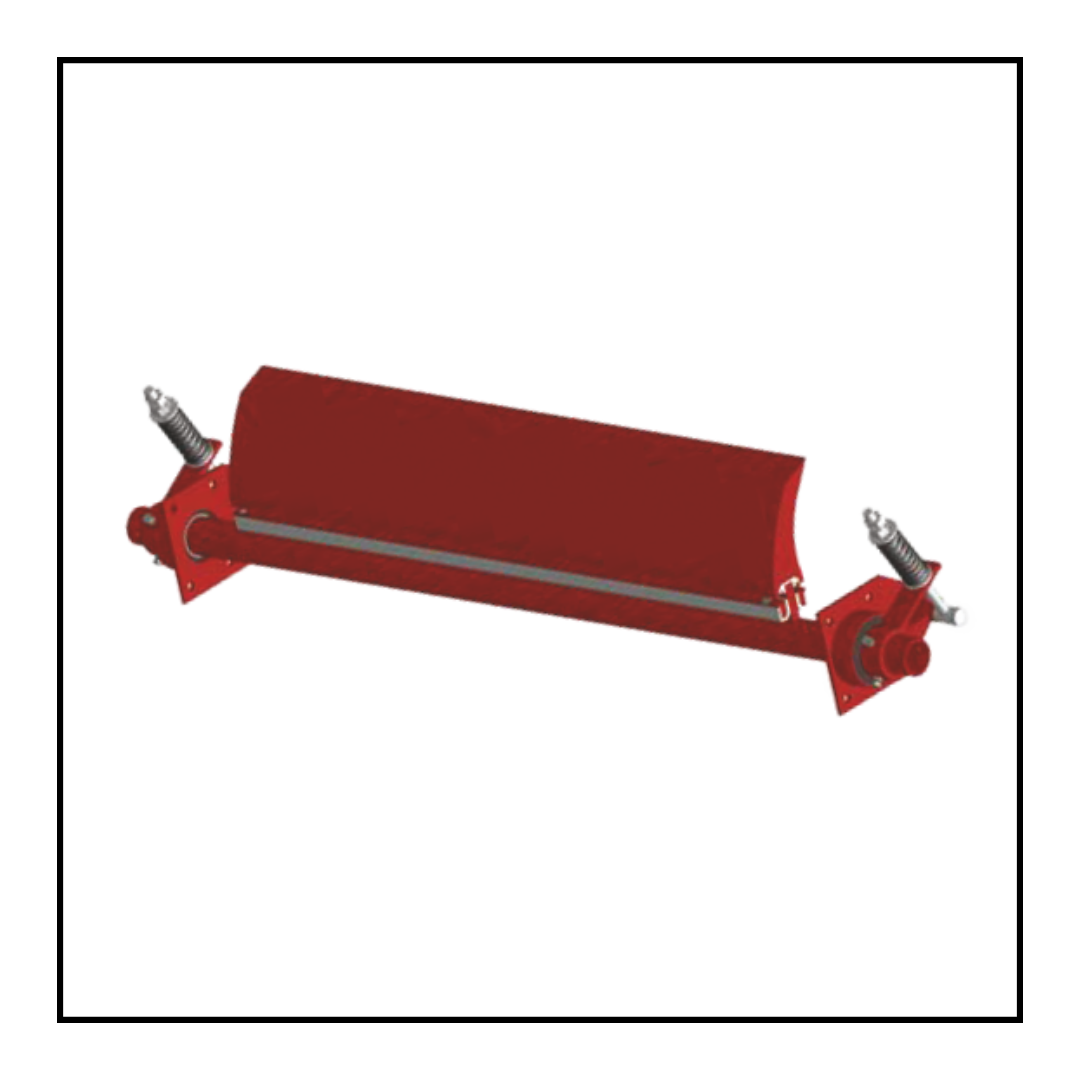
In addition to skirt rubber systems, effective conveyor performance depends on a combination of complementary wear protection products. Components such as belt cleaners, impact bars, ceramic wear liners, rubber lining systems, and conveyor sealing systems work together to ensure controlled material flow and reduced equipment wear. For example, belt cleaners help remove carryback material, while impact bars absorb loading forces at transfer points.
Ceramic liners provide high abrasion resistance in high-wear zones, and rubber linings protect chutes and hoppers from corrosion and impact damage. When integrated properly, these solutions enhance conveyor efficiency, reduce downtime, and support consistent plant operations across demanding industrial environments.
Installation & Maintenance Considerations
- Ease of Installation: Skirt rubber systems are typically designed for straightforward installation using clamp mechanisms.
- Reduced Downtime: Quick replacement and adjustment minimize production interruptions.
- Maintenance Cycles: Regular inspection ensures optimal performance and prevents unexpected failures.
Experienced maintenance teams often prioritize proper alignment and tensioning during installation to maximize effectiveness.
Safety & Operational Reliability
- Worker Safety: Reducing spillage minimizes slip hazards and exposure to dust.
- Equipment Protection: Prevents material buildup that can damage conveyor components.
- Plant Reliability: Improves consistency in material flow, supporting uninterrupted operations.
In heavy-duty industrial environments, safety and reliability are closely linked to effective material handling systems.
For a broader understanding of the cosmetic industry, you can refer to the detailed overview available on Wikipedia.
Cost Efficiency Over Equipment Life Cycle
While skirt rubber may seem like a small component, its impact on overall cost efficiency is significant.
- Long-Term Savings: Reduces material loss and cleaning costs.
- Reduced Shutdowns: Minimizes maintenance-related downtime.
- Maintenance Optimization: Extends the life of conveyor belts and related components.
Instead of focusing on initial cost, industries increasingly evaluate total lifecycle value.
Export Readiness & Global Acceptance
Global industrial markets demand consistency, reliability, and compliance.
- Industrial Expectations
- Durable materials
- Consistent quality
- Reliable performance
Documentation & Standards: Export-ready products must meet industry standards and include proper technical documentation.
Global Buyer Requirements: Buyers from mining regions in Africa, the Middle East, and Southeast Asia expect proven performance in harsh conditions.
Why Experienced Manufacturers Matter
Selecting the right manufacturer is critical for long-term success.
- Engineering Expertise: Understanding real plant challenges leads to better product design.
- Industry Experience: Proven track record across industries ensures reliability.
- Supply Consistency: Timely delivery and consistent quality support uninterrupted operations.
Manufacturers with deep industrial knowledge can provide solutions that align with real-world requirements rather than theoretical assumptions.
About Mouldtech Industries
Mouldtech Industries is an experienced manufacturer specializing in industrial wear protection and material handling solutions, including Ball Mill Rubber Liners, Ceramic Wear Protection Solutions, Rubber Lining Systems, Ball Mill Rubber Products, and Conveyor Solutions.
Serving industries across Pan India and global markets, the company focuses on delivering practical, performance-driven solutions tailored to demanding industrial environments.
For more information, visit: 👉 https://www.mouldtechindustries.in/
Conclusion
Skirt rubber plays a critical role in maintaining efficient and clean conveyor operations. By preventing material spillage, it directly contributes to improved plant productivity, reduced maintenance efforts, and enhanced safety.
In mining, cement, metal, and bulk material handling industries, where operational efficiency is essential, well-designed skirt rubber systems are not optional—they are necessary.
A structured approach to material containment, supported by quality manufacturing and proper installation, ensures long-term operational stability.
Key Takeaways
- Effective spillage control improves plant efficiency
- Enhances conveyor system reliability
- Suitable across multiple heavy industries
- Reduces maintenance and operational disruptions
- Supports long-term performance in demanding environments
- Plays a key role in global industrial operations
Trending FAQs
1. What is the typical lifespan of skirt rubber?
- The lifespan depends on material quality, application conditions, and maintenance practices, but it generally ranges from several months to a few years.
2. Where is skirt rubber most commonly used?
- It is widely used in conveyor systems across mining, cement, steel, and bulk material handling industries.
3. How often should the skirt rubber be replaced?
- Regular inspections are recommended, and replacement should be done when wear affects sealing performance.
4. What is the difference between rubber and ceramic wear solutions?
- Rubber provides flexibility and impact absorption, while ceramic offers higher hardness and abrasion resistance. Both are used based on application needs.
5. Can the skirt rubber handle high-temperature environments?
- Specialized rubber compounds can be designed for moderate temperature resistance, but extreme conditions may require hybrid solutions.
#BallMillRubberLiner #CeramicWearProtection #RubberLining #MiningSolutions #BulkMaterialHandling #ConveyorSolutions #MouldtechIndustries #WearProtection #IndustrialManufacturing