

Why Are Ceramic Liners Better Than Standard Rubber Liners?
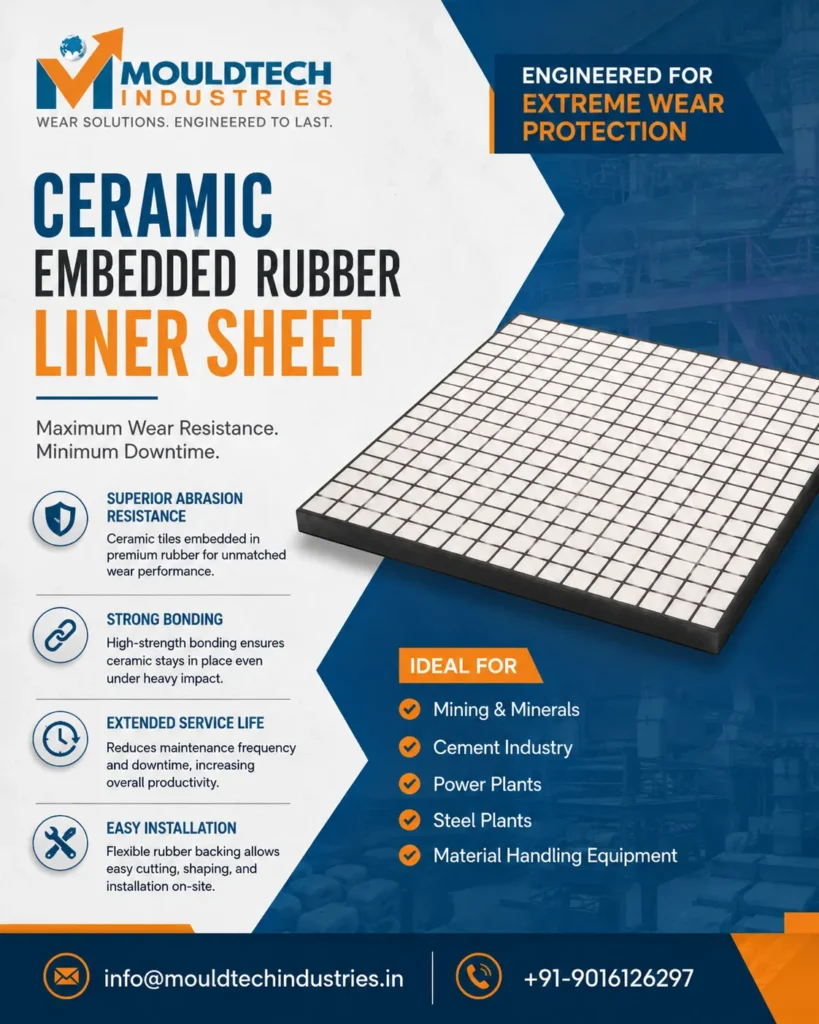
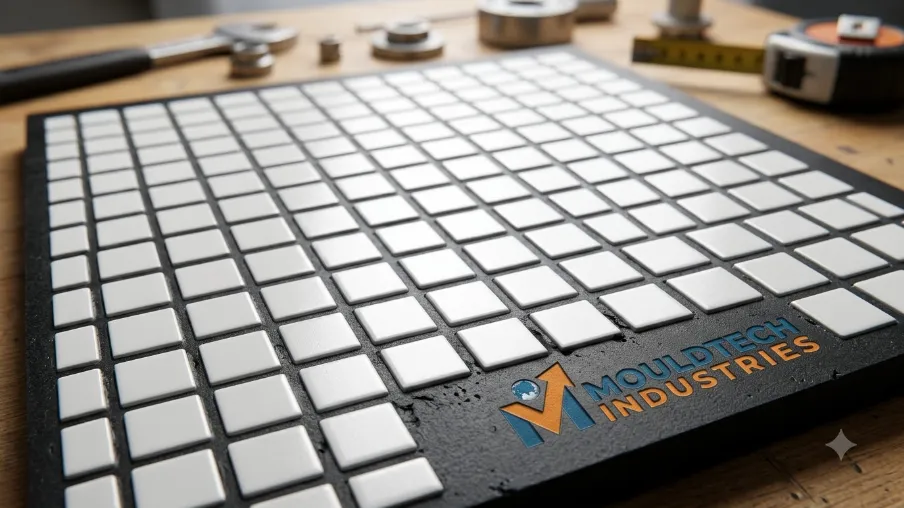
How Ceramic Liners Improve Wear Protection is demonstrated through the combination of high-hardness ceramic tiles and premium rubber backing, delivering exceptional abrasion resistance and impact absorption. Compared to standard rubber liners, ceramic liners last significantly longer in high-wear environments, reduce maintenance frequency, and improve equipment reliability. Mouldtech Industries manufactures high-performance Ceramic Embedded Rubber Liners engineered for mining, cement, steel, power plants, and bulk material handling applications, helping industries maximize productivity while minimizing downtime.
How Ceramic Liners Improve Wear Protection
When a cement or mining plant loses an entire shift because a mill liner failed early, the cost isn’t just the liner — it’s the missed production, the overtime crew, and the client waiting on the other end of the phone. Ceramic embedded rubber liners solve this exact headache. By combining the impact-absorbing flexibility of rubber with the abrasion resistance of high-alumina ceramic tiles, these liners cut down wear rates significantly compared to plain rubber or steel liners, especially in high-abrasion ore and clinker grinding applications. For plant engineers across India who are tired of replacing liners every few months, understanding how this hybrid technology actually works can change how they plan maintenance budgets for the next five years.
Why Choose Mouldtech Industries for How Ceramic Liners Improve Wear Protection
Mouldtech Industries has been working with rubber and ceramic wear systems since 2007, which means the team has seen almost every failure mode a ball mill liner can throw at them — from premature bolt hole tearing in Chennai’s cement plants to liner delamination in humid coastal conditions near Mumbai. That 18+ years of shop-floor experience matters more than most brochures let on, because ceramic liner performance depends heavily on bonding quality, tile placement geometry, and rubber compound selection — details that only come from actually installing hundreds of liners, not just reading a datasheet. The company has delivered custom rubber liners and industrial rubber products to over 200 clients across mining, cement, and heavy industries, and much of that repeat business comes from getting the ceramic-to-rubber bond right the first time. If you’re evaluating ball mill rubber liner manufacturers for a ceramic upgrade, ask them directly how they test bond adhesion — it’s a fair question, and one Mouldtech’s team is used to answering with actual lab data rather than marketing lines.
Our How Ceramic Liners Improve Wear Protection Manufacturing Capabilities
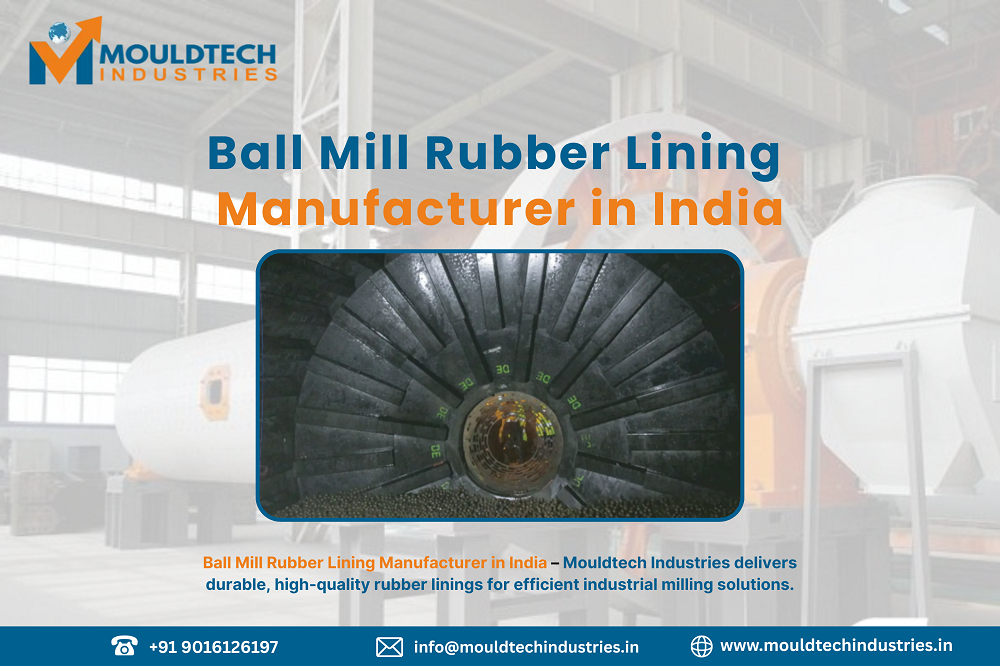
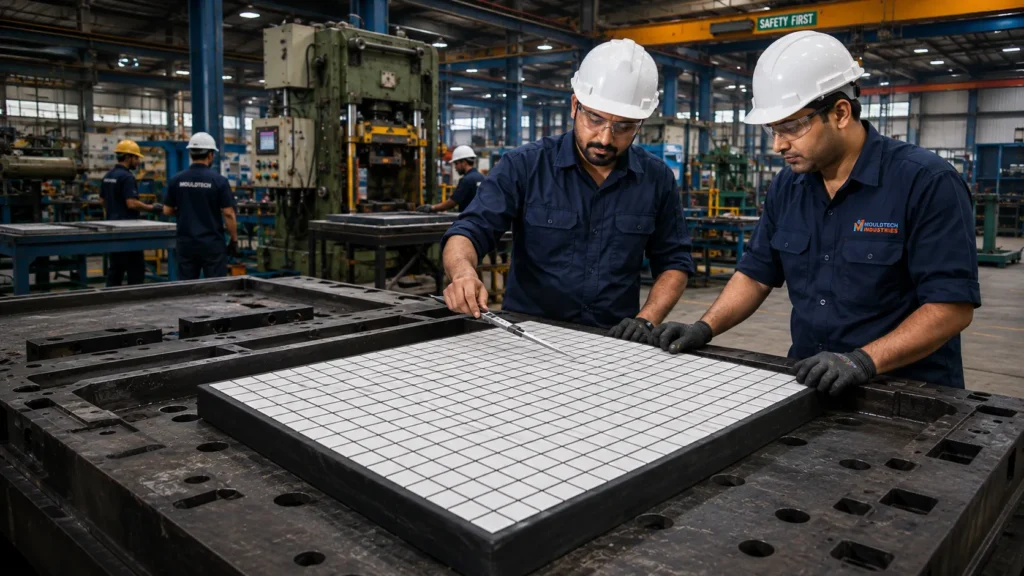
Mouldtech Industries approaches ceramic embedded rubber liner manufacturing. High-alumina ceramic tiles are embedded into a wear resistant rubber liner matrix during the vulcanization process itself. They’re not glued on afterward as a secondary step. This matters a lot. A liner molded as one unit resists tile pop-out far better under repeated impact loading. That’s the most common complaint plant managers raise about lower-quality ceramic liners bought on price alone. The facility handles everything in-house, from raw compound mixing to final quality inspection. This covers abrasion resistant liner production for cement mill grinding chambers, mining equipment rubber solutions for ore processing circuits, and impact pads for chute and hopper linings.
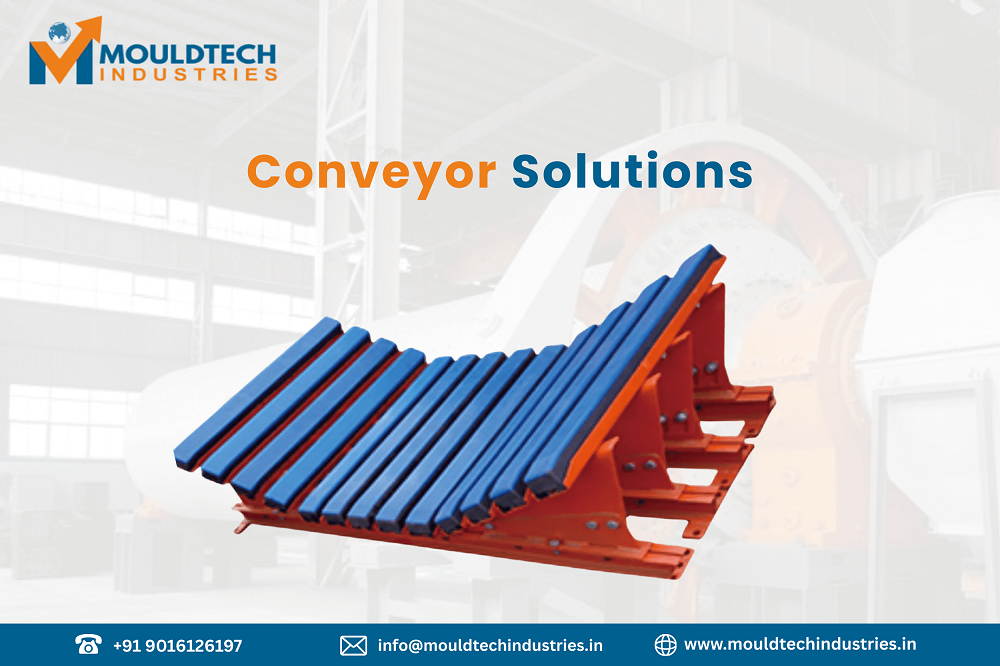
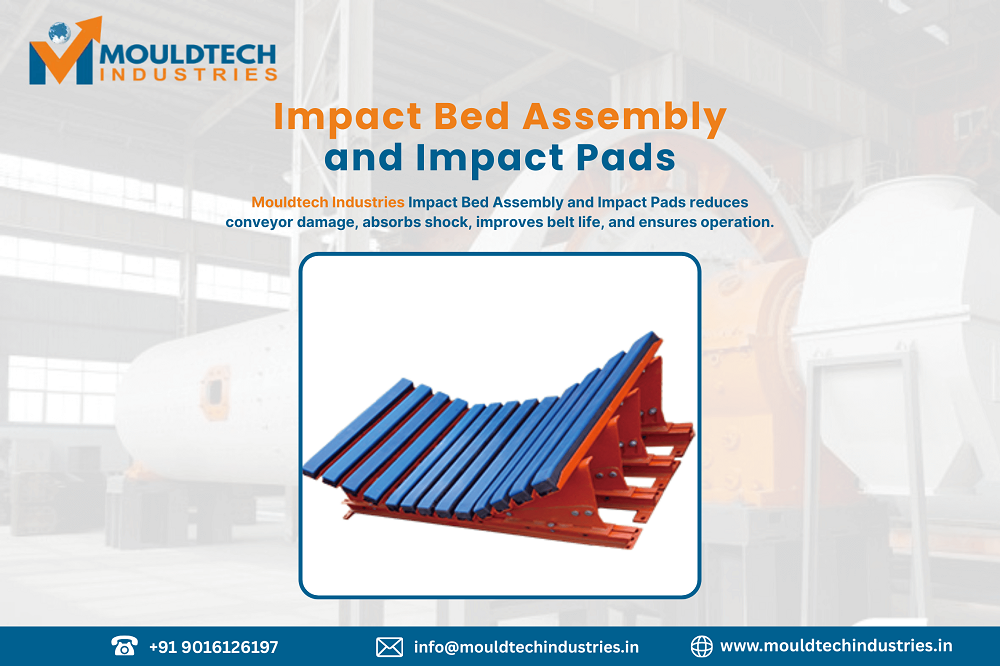
Plants in Ahmedabad and Surat running high-silica ore frequently ask for ceramic-heavy configurations in the high-wear zones. Standard rubber lagging stays in the lower-impact sections. It’s a hybrid approach that balances cost against wear life. For teams exploring what fits their specific mill, Mouldtech’s Ceramic Embedded Rubber Liners page breaks down tile density options and typical wear-life ranges by application. On the conveyor side, wear doesn’t stop at the mill. Material carryback and belt damage are equally costly. That’s why many clients pair liner upgrades with Conveyor Wear Protection Solutions to address the full material handling chain, not just the grinding mill.
Navigating Quality Standards & ISO 9001:2015 Certification
Mouldtech Industries is ISO 9001:2015 certified, which sets baseline expectations around documented quality control processes, incoming raw material checks, and traceability — standards defined by the International Organization for Standardization for consistent manufacturing quality management. For ceramic liners specifically, this certification framework requires documented testing at each production stage: rubber compound hardness verification, ceramic tile bond strength testing, and dimensional accuracy checks before dispatch. Procurement teams in Delhi and Bangalore handling large mining contracts often need this paperwork for their own internal vendor approval processes, and having it readily available speeds up onboarding considerably. It’s worth noting that certification alone doesn’t guarantee performance — it guarantees a repeatable process, which is really what large industrial buyers should be evaluating when comparing suppliers.
Local Manufacturers vs Mouldtech Industries (Comparison Table)
| Parameter | Typical Local Manufacturer | Mouldtech Industries |
|---|---|---|
| Ceramic Tile Bonding | Post-molding adhesive bonding, higher pop-out risk | Co-vulcanized during molding for stronger bond integrity |
| Custom Mill Specifications | Limited to standard sizes | Fully customized as per mill drawing and shell dimensions |
| Certification | Varies, often unverified | ISO 9001:2015 certified process |
| Noise Reduction | Not typically measured | Up to 70% noise reduction reported in field applications |
| Pan-India / Export Supply | Usually regional only | Pan-India supply with export-ready packaging |
Real Client Case Study
A mid-sized cement plant near Indore was replacing standard rubber liners every seven months. The downtime was quietly becoming an expensive line item. After switching to ceramic embedded rubber liners custom-built to their mill’s shell dimensions, replacement intervals stretched to roughly fourteen months in the high-wear feed zone. The maintenance head also noted a quieter mill room. The engineering team linked lower vibration on adjacent equipment to the rubber matrix’s improved impact dampening. This kind of result is fairly typical when ceramic configuration is matched correctly to feed material. It comes down to engineering fit, not the ceramic being “better” on its own. Clients planning a broader liner overhaul often start with Mouldtech’s Ball Mill Solutions page for a full-mill assessment.
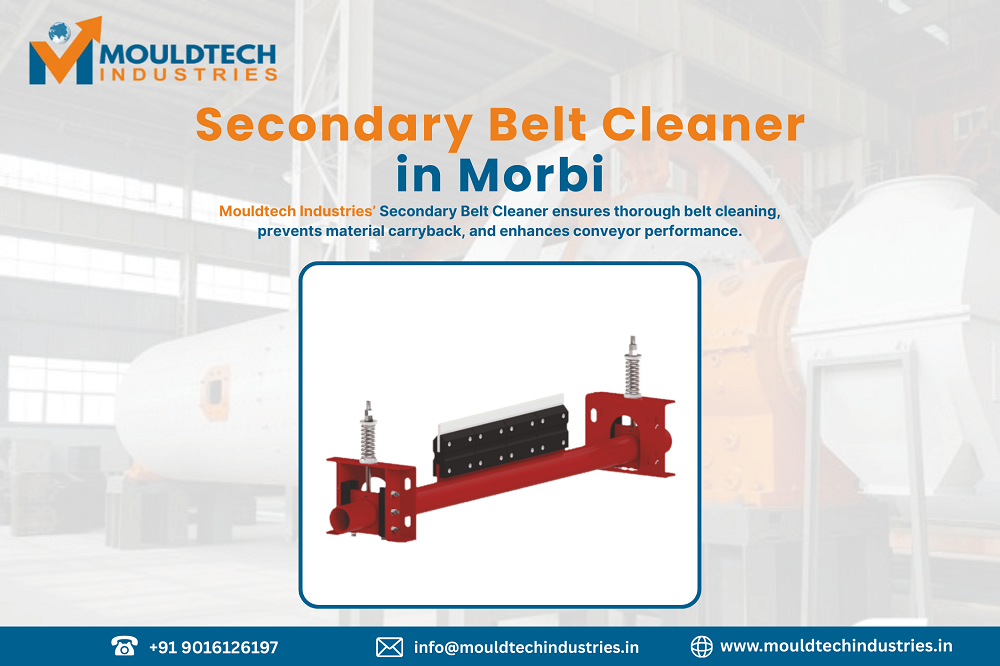
A free rubber liner consultation and downloadable Ball Mill Liner Cost Guide are available to help compare ceramic versus standard economics before budgeting. WhatsApp is usually the fastest way for engineers in Hyderabad, Jaipur, and Vadodara to get same-day answers. That’s a turnaround most rubber liner manufacturers in Vadodara don’t match, but it’s routine for repeat clients here. For plants with heavy primary crushing loads, carryover fines often re-enter the circuit and accelerate liner wear. Mouldtech’s Primary Belt Cleaners range is a common pairing worth checking during the same planning cycle.
Frequently Asked Questions
Q1. Ceramic Embedded Rubber Liners standard rubber liners se better kyun hote hain wear protection ke liye?
- Ceramic Embedded Rubber Liners me ceramic tiles premium rubber ke andar embedded hote hain, jo normal rubber liners ke comparison me kaafi zyada abrasion aur wear resist karte hain. Yeh especially high-silica ore, clinker aur abrasive materials ke liye best hote hain. Isse liner ki life badhti hai aur maintenance kam hoti hai.
Q2. Ceramic liners ki life standard liners ke comparison me kitni hoti hai?
- Liner ki life material type aur operating conditions par depend karti hai. Lekin kaafi industries ne report kiya hai ki ceramic liners use karne ke baad service life lagbhag 6–7 months se badhkar 12–14 months tak pahunch gayi, jisse replacement aur downtime dono kam ho jate hain.
Q3. Kya ceramic liners har ball mill size ke liye customize kiye ja sakte hain?
- Haan. Mouldtech Industries har Ceramic Embedded Rubber Liner ko customer ke ball mill shell drawings aur dimensions ke hisaab se customize karta hai. Isse perfect fitting, better performance aur long-lasting protection milti hai.
Q4. Kya ceramic liners mill room ka noise bhi kam karte hain?
- Bilkul. In liners ka rubber base impact aur vibration ko absorb karta hai, jiski wajah se steel liners ke comparison me noise level kaafi kam ho jata hai. Kai industrial applications me 70% tak noise reduction observe kiya gaya hai.
Q5. Liner manufacturer choose karte waqt ISO 9001:2015 certification important hoti hai?
- Haan. ISO 9001:2015 Certification yeh ensure karti hai ki manufacturer quality control, testing aur production process ko standard guidelines ke according follow karta hai. Lekin final decision lene se pehle product performance, customer references aur field results bhi check karne chahiye.
Q6. Kya ceramic liners cement mills aur mining ball mills dono ke liye suitable hain?
- Haan. Ceramic Embedded Rubber Liners mining ball mills ke saath-saath cement mills me bhi widely use hote hain. Yeh clinker grinding aur abrasive material handling applications me wear ko kam karte hain, maintenance cost reduce karte hain aur equipment ki overall service life badhate hain.
Ready to reduce downtime and improve mill output? Contact Mouldtech Industries at +91-9925618287, +91-7600030602, +91-9427444465, or +91-9016126297, or email mouldtechindia@gmail.com / acc.mouldtech@gmail.com. Ask for the Free Rubber Liner Consultation or Download Ball Mill Liner Cost Guide — or simply WhatsApp us your mill specifications for a quick response.