

Improve Conveyor Efficiency Using Primary Belt Cleaners in Heavy Industries: Mouldtech Industries
Introduction
In heavy-duty industrial environments, maintaining consistent conveyor performance is a persistent challenge across mining, cement, steel, ceramic, and bulk material handling industries. Issues like material carryback, belt wear, and spillage often reduce efficiency and increase maintenance demands. Experienced plant engineers often note that even advanced systems underperform without proper cleaning solutions. Carryback buildup along return paths raises operational risks and downtime. Implementing effective solutions to increase conveyor lifespan using Primary Belt Cleaners, supported by expertise from Mouldtech Industries, helps improve reliability and reduce maintenance burdens.
Globally, industrial sectors across India, including Maharashtra, Gujarat, Odisha, Tamil Nadu, Karnataka, Rajasthan, West Bengal, Chhattisgarh, Jharkhand, and Andhra Pradesh, are focusing on improving equipment reliability and reducing downtime. This trend is also seen in mining hubs and cement clusters worldwide.
Industrial Challenges That Drive Demand for Primary Belt Cleaners
In mining and metal processing operations, several recurring issues increase the demand for effective conveyor cleaning systems:
- Abrasion: Continuous movement of abrasive materials such as ore, clinker, and aggregates causes rapid wear of belts and components.
- Impact Loads: Heavy material loading results in shock impact, affecting belt alignment and cleaning efficiency.
- Corrosion: Moisture, chemicals, and environmental exposure contribute to material degradation.
- Downtime: Uncontrolled carryback leads to frequent stoppages for cleaning and maintenance.
- Maintenance Costs: Manual cleaning increases labor costs and reduces plant productivity.
In global industrial environments—from Indian cement plants to Southeast Asian mining operations—these challenges directly impact operational efficiency, making Primary Belt Cleaners an essential component.
What Is Primary Belt Cleaners?
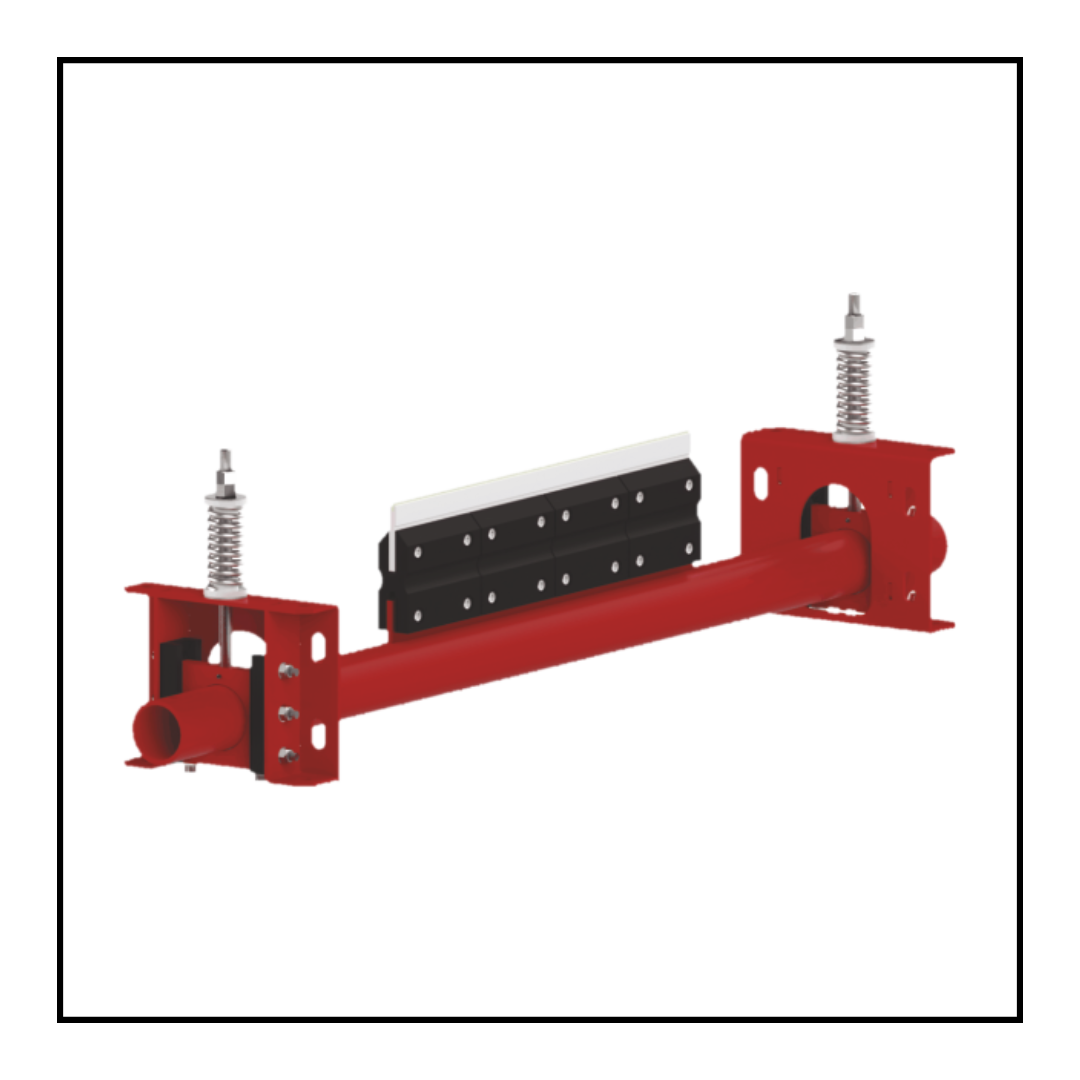
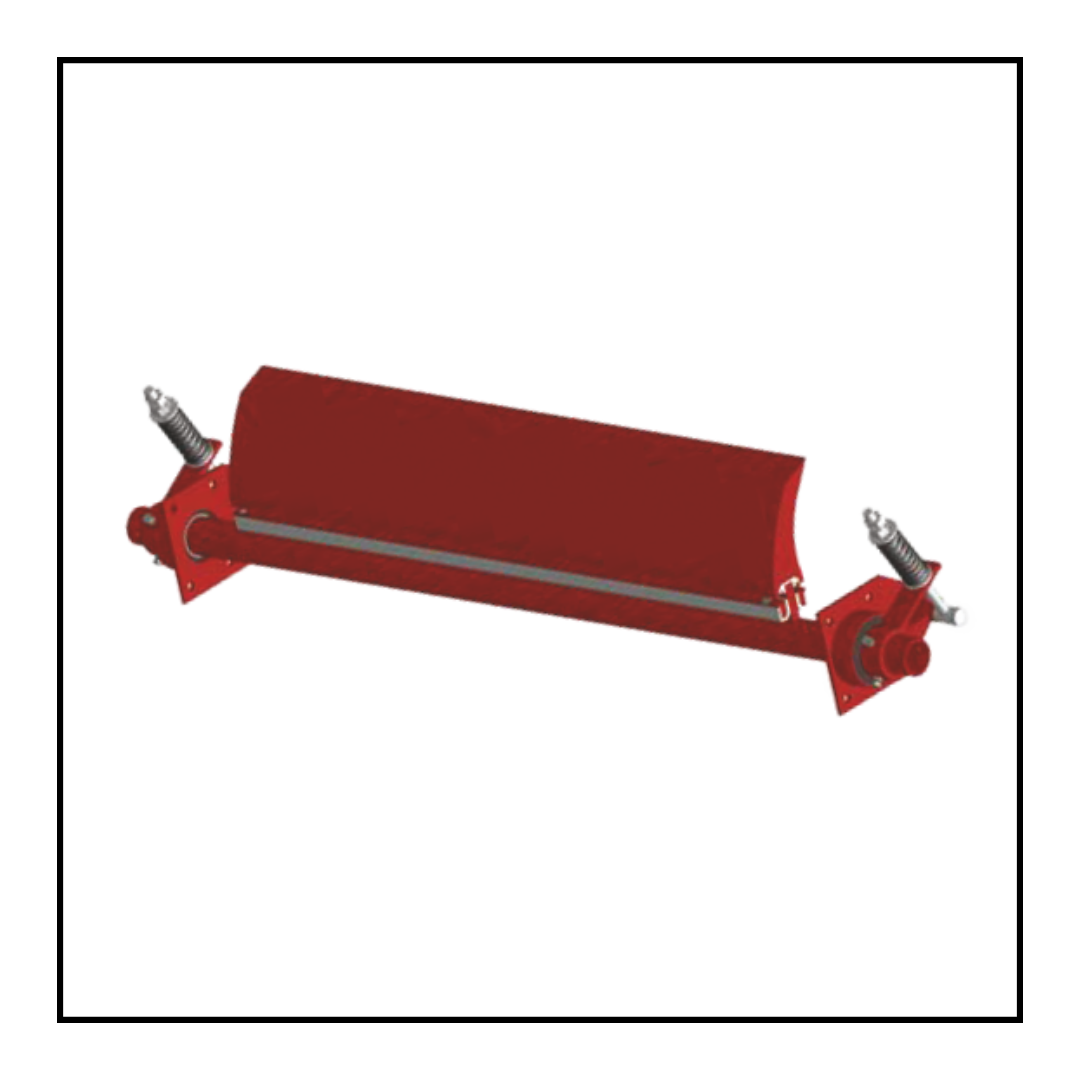
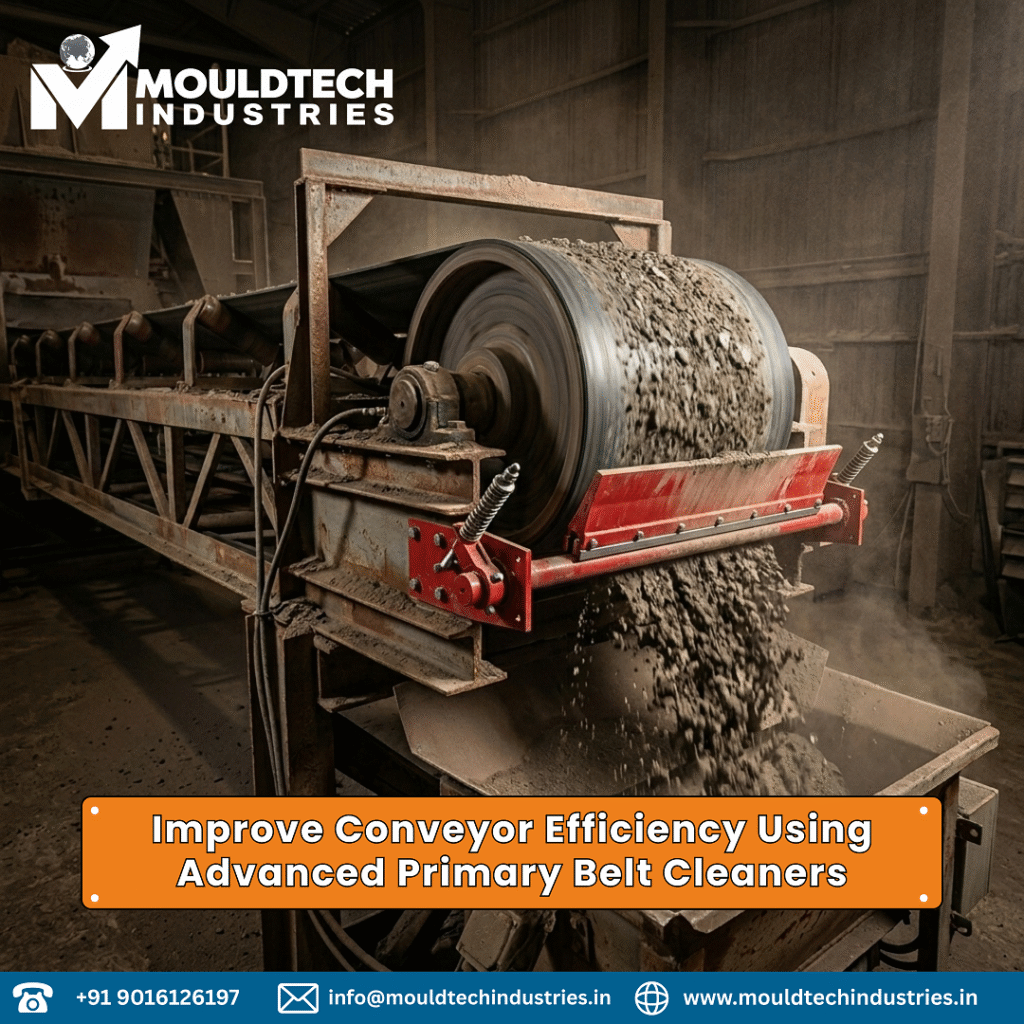
Primary Belt Cleaners are mechanical devices installed at the head pulley of a conveyor system. Their function is to remove bulk material adhered to the conveyor belt after discharge.
They typically consist of:
- A mounting system
- A blade (rubber, polyurethane, or ceramic-tipped)
- A tensioning mechanism
Unlike secondary cleaners, primary cleaners handle the initial and bulk removal of material. Their effectiveness directly influences downstream conveyor cleanliness and maintenance frequency.
Applications Across Industries
- Mining Industry: Used in coal, iron ore, bauxite, and mineral handling systems to reduce carryback and prevent material buildup.
- Cement Plants: Applied in clinker and raw material conveyors where dust and fine particles are prevalent.
- Metal & Steel Plants: Essential in handling sinter, slag, and other high-temperature abrasive materials.
- Ceramic Industry: Used in raw material transport systems where fine powders require precise handling.
- Power Plants: Coal handling systems rely heavily on belt cleaners to maintain efficiency.
- Bulk Material Handling: Ports, logistics hubs, and processing units use these systems to ensure continuous operations.
Material Science & Engineering Considerations
Manufacturers with long-term industry exposure understand that material selection significantly impacts cleaner performance.
Rubber Properties
- High flexibility
- Good impact absorption
- Suitable for general-purpose applications
Ceramic Hardness
- High wear resistance
- Suitable for abrasive materials
- Longer operational life
Wear Resistance Principles
The interaction between belt surface and cleaner blade determines wear rate. Proper hardness balance is critical.
Impact Absorption
Rubber-based systems absorb shocks, while ceramic inserts resist abrasion.
In practical plant scenarios, hybrid solutions combining rubber and ceramic elements are often used for optimal performance.
For deeper technical insights and real-world engineering references on conveyor system optimization, you can explore open-source resources available on GitHub.
Design & Customization Requirements
Each industrial setup requires tailored solutions based on:
- Conveyor belt width and speed
- Material type and particle size
- Environmental conditions
- Space constraints
Custom sizing and adjustable tensioning systems ensure compatibility with existing conveyor systems.
Supporting Conveyor Components for Enhanced System Efficiency
Impact Bars are installed at conveyor loading zones to absorb the force of falling material. They combine a low-friction surface with a shock-absorbing rubber base, helping protect conveyor belts from damage caused by heavy impact loads. This reduces belt wear, minimizes maintenance, and improves system stability.
Secondary Belt Cleaners are positioned after the primary cleaner to remove any remaining fine material from the belt surface. While primary cleaners handle bulk removal, secondary cleaners ensure a higher level of cleanliness, reducing carryback and preventing material buildup along the return path.
Manufacturing Quality & Process Control
Precision manufacturing is essential for consistent performance.
Key considerations include:
- Dimensional accuracy
- Blade uniformity
- Material bonding quality
- Batch consistency
Quality checks at each stage ensure reliability in demanding industrial environments.
Installation & Maintenance Considerations
Ease of installation is crucial in minimizing downtime.
Installation
- Typically mounted at the head pulley
- Requires proper alignment and tension adjustment
Maintenance
- Periodic blade inspection
- Replacement based on wear levels
- Minimal manual cleaning required
Well-installed systems significantly reduce maintenance frequency.
Safety & Operational Reliability
Worker safety is a major concern in industrial plants.
Primary Belt Cleaners contribute to:
- Reduced spillage and slip hazards
- Lower manual cleaning requirements
- Improved equipment protection
Reliable cleaning systems also prevent belt misalignment and damage.
For practical troubleshooting tips and real-world discussions on conveyor system challenges, platforms like Stack Overflow offer valuable insights from engineers and industry professionals.
Cost Efficiency Over Equipment Life Cycle
While initial installation is a standard part of conveyor design, long-term benefits include:
- Reduced maintenance costs
- Lower downtime
- Improved productivity
- Extended belt life
In large-scale operations, these factors contribute to significant operational savings.
Export Readiness & Global Acceptance
Global buyers expect:
- Consistent product quality
- Documentation and traceability
- Compliance with industrial standards
Manufacturers supplying to international markets must ensure reliability across varied operating conditions.
Why Experienced Manufacturers Matter
Manufacturers with strong industry experience provide:
- Application-specific solutions
- Reliable product performance
- Technical support
- Consistent supply chain
Experienced plant engineers often rely on trusted manufacturers for critical components like belt cleaners.
About Mouldtech Industries
Mouldtech Industries is an experienced industrial manufacturer specializing in wear protection and conveyor solutions, including:
- Ball Mill Rubber Liners
- Ceramic Wear Protection Solutions
- Rubber Lining Systems
- Conveyor Components & Belt Cleaners
Serving industries across Pan India—including Gujarat, Maharashtra, Tamil Nadu, Odisha, Karnataka, Rajasthan, and beyond—the company supports mining, cement, and bulk material handling sectors with practical, engineering-driven solutions.
For more details, visit: 👉 https://www.mouldtechindustries.in/
Conclusion
Primary Belt Cleaners play a critical role in improving conveyor system efficiency in heavy industries. By effectively removing carryback material, they help reduce downtime, enhance safety, and optimize maintenance practices.
In demanding industrial environments, selecting the right cleaning system based on material characteristics and operating conditions is essential for long-term performance.
Key Takeaways
- Improve conveyor efficiency by reducing material carryback
- Enhance operational reliability across industries
- Suitable for mining, cement, steel, and bulk handling
- Reduce maintenance efforts and downtime
- Ensure long-term performance in demanding environments
- Support global industrial standards and applications
Trending FAQs
1. What is the typical lifespan of Primary Belt Cleaners?
- Lifespan depends on material type, operating conditions, and blade composition, typically ranging from several months to over a year.
2. Are Primary Belt Cleaners suitable for all industries?
- Yes, they are widely used in mining, cement, steel, ceramics, and power plants.
3. How often should maintenance be performed?
- Routine inspections are recommended every few weeks, with replacements based on wear.
4. What is the difference between rubber and ceramic cleaners?
- Rubber offers flexibility and impact resistance, while ceramic provides superior abrasion resistance.
5. Can they be customized for specific conveyors?
- Yes, customization is common based on belt width, material type, and operating conditions.
#BallMillRubberLiner #CeramicWearProtection #RubberLining #MiningSolutions #BulkMaterialHandling #ConveyorSolutions #MouldtechIndustries #WearProtection #IndustrialManufacturing