

Heavy Duty Pulp Lifter in Grinding Systems for Improved Throughput and Reliability: Mouldtech Industries
Introduction
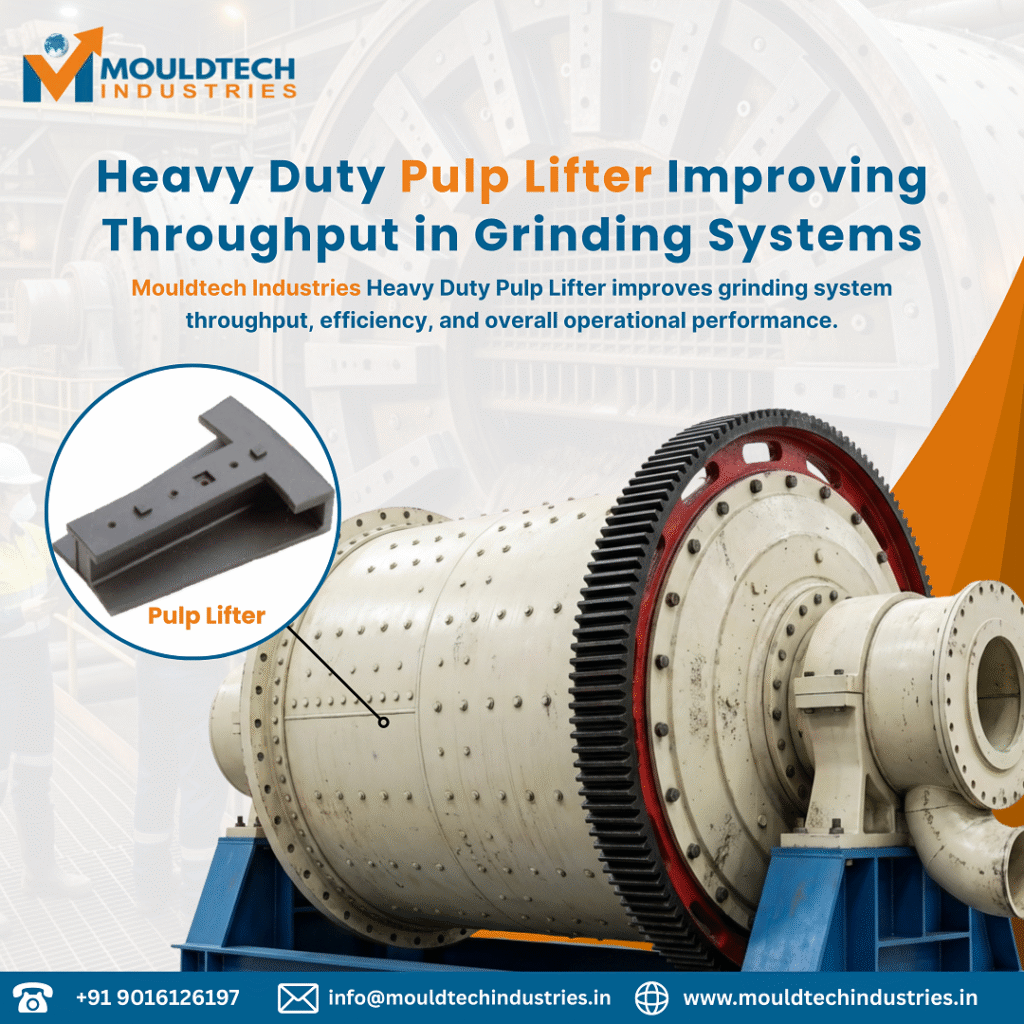
In heavy industrial environments such as mining, cement production, steel manufacturing, ceramic processing, and bulk material handling, grinding systems operate under continuous stress while processing large volumes of highly abrasive materials with consistent output demands. However, plant engineers often face challenges like liner wear, reduced grinding efficiency, slurry imbalance, and frequent maintenance shutdowns, which affect productivity and increase operational costs. Industrial Pulp Lifter Enhances Grinding Throughput Capacity, improving material flow stability and mill performance. Mouldtech Industries delivers engineered wear protection solutions for such demanding applications.
In such demanding conditions, wear protection components play a crucial role in maintaining equipment reliability. One such critical component is the Pulp Lifter, which significantly influences the internal material flow and grinding efficiency inside ball mills.
With increasing industrial demand across India and global mining regions, equipment reliability and wear-resistant system design have become central to plant optimization strategies.
Industrial Challenges That Drive Demand for Pulp Lifter
In mining and metal processing operations, grinding mills are exposed to extreme mechanical and chemical conditions. These environments create multiple challenges:
- Abrasion: Continuous contact with hard ores and minerals leads to severe wear on internal mill components.
- Impact loads: Large feed particles generate heavy impact stress during milling operations.
- Corrosion: Moisture and chemical content in the slurry can degrade internal surfaces over time.
- Downtime: Frequent maintenance interruptions reduce overall plant productivity.
- Maintenance cost: Replacing worn-out liners and components increases operational expenditure.
Across industrial hubs in India, such as Odisha (mineral-rich belt), Jharkhand, Chhattisgarh, Rajasthan (cement and mining), Gujarat (ceramic and chemical clusters), Maharashtra (steel and engineering), Karnataka, Tamil Nadu, and Andhra Pradesh, these challenges are consistently observed in large-scale processing plants.
Experienced plant engineers often observe that inefficient slurry discharge and poor pulp circulation inside mills are key contributors to reduced throughput. This is where optimized pulp handling components become essential.
What Is Pulp Lifter?
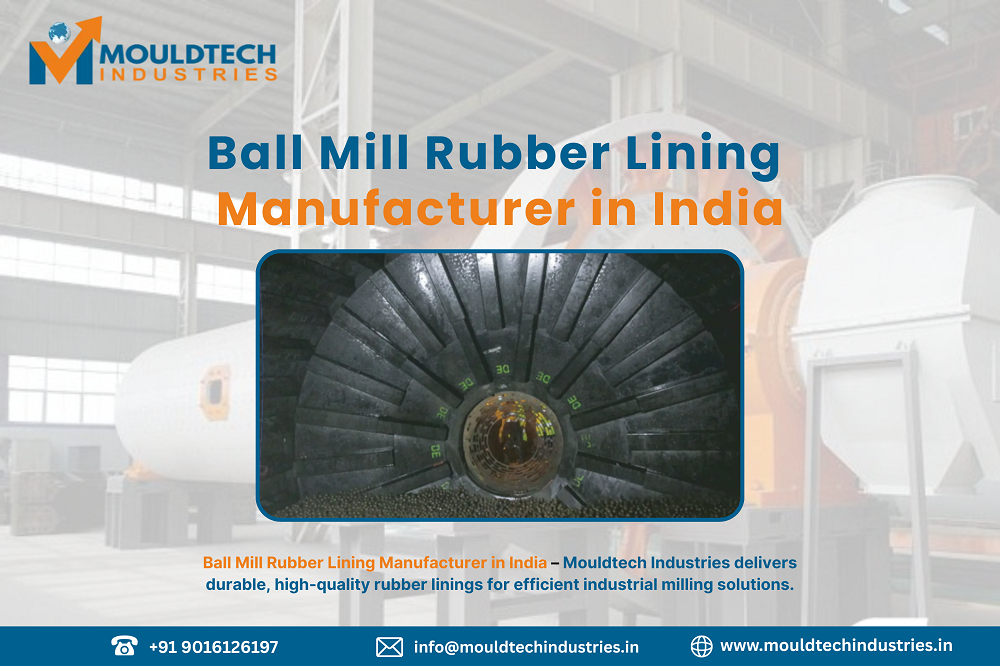
A Pulp Lifter is an engineered internal component used in ball mills to assist the movement of slurry (pulp) and grinding media within the rotating shell.
In simple engineering terms, it helps:
- Lift and redirect material inside the mill
- Improve mixing and circulation of slurry
- Assist in the controlled discharge of ground material
- Maintain uniform grinding conditions
It is not just a structural part but a flow-control element that influences grinding efficiency. In heavy-duty industrial applications, pulp lifters are designed to withstand abrasion, impact, and continuous cyclic loading.
Manufacturers with long-term industry exposure understand that even small design variations in pulp lifters can significantly impact mill performance.
Applications Across Industrie
Pulp lifters are broadly utilized in sectors where crushing and material size reduction are crucial:
- Mining Sector: Employed in ore crushing mills for processing iron ore, copper, gold, and bauxite.
- Cement Sector: Supports clinker grinding units and raw material mills.
- Metal & Steel Facilities: Found in beneficiation and mineral refinement lines.
- Ceramic Production: Assists in the fine grinding of primary ceramic substances.
- Power Stations: Used in coal pulverizing setups.
- Bulk Material Conveyance Systems: Aids slurry conveyance and regulated discharge mechanisms.
Across India’s industrial infrastructure—encompassing metro areas like Ahmedabad, Surat, Rajkot, Mumbai, Pune, Nagpur, Bengaluru, Chennai, Hyderabad, Visakhapatnam, Kolkata, and Delhi NCR—these assemblies are frequently deployed in mid to large-scale processing facilities.
Material Science & Engineering Aspects
The operational effectiveness of a pulp lifter is significantly influenced by the choice of materials and the engineering blueprint.
Primary considerations encompass:
- Rubber characteristics: High flexibility, shock absorption, and vibration dampening
- Ceramic augmentation: Superior hardness for resisting abrasive wear
- Wear resistance philosophy: Balancing toughness with pliability to curb fracture spread
- Impact handling: Capacity to endure recurring heavy stress cycles without distortion
In demanding industrial settings, composite designs merging rubber and ceramic elements are often favored to strike a balance between longevity and consistent performance.
Design & Bespoke Requirements
Given that every grinding apparatus functions under distinct parameters, pulp lifters necessitate tailoring based on:
- Mill diameter and cyclical velocity
- Characteristics of the input material
- Slurry thickness and flow dynamics
- Operating temperature and load sequences
Specific sizing ensures seamless integration with existing mill internals and prevents performance deficits. Inaccurate placement can result in uneven wear patterns and diminished crushing efficiency.
Manufacturing Excellence & Process Oversight
Precise fabrication is vital for achieving optimal pulp lifter functionality.
A regulated production workflow commonly involves:
- Initial material vetting and classification
- Precision control of the molding tools
- Verification of exact dimensions
- Testing for hardness and elasticity
- Confirmation of batch uniformity
Rigorous quality assurance guarantees that every segment performs dependably during continuous industrial service. Discrepancies in density or composition can markedly impact service life and mill efficiency.
You can also explore industry discussions and practical insights on grinding system challenges and pulp lifter performance on Quora.
Setup & Servicing Needs
Simplicity of mounting is a key factor in minimizing production stoppage time.
Contemporary pulp lifters are engineered for:
- Rapid mounting and exchange
- Minimal alterations to the current mill framework
- Shorter periods of inactivity during upkeep intervals
Maintenance personnel frequently favor sectional designs enabling targeted replacement over complete system refurbishment, thus helping sustain uninterrupted plant operation.
Safety & Operational Dependability
In industrial settings, safety is intrinsically tied to equipment trustworthiness.
A soundly conceived pulp lifter contributes to:
- Steady internal mill dynamics
- Decreased potential for mechanical imbalance
- Safeguarding of adjacent liner plates and parts
- Enhanced operator security during maintenance breaks
Reliable wear parts reduce unforeseen failures, ensuring smoother cycles of plant activity.
Economic Value Across the Equipment Lifespan
Rather than concentrating on immediate outlay, industrial purchasers assess overall lifecycle utility.
A robust pulp lifter helps by:
- Lowering the frequency of scheduled outages
- Prolonging the service life of interconnected mill elements
- Minimizing unscheduled maintenance actions
- Boosting overall stability in plant output
In prolonged mining and cement operations, optimizing the equipment lifecycle plays a much larger role than initial acquisition choices.
Export Preparedness & Global Acceptance
International industrial purchasers anticipate:
- Standardized technical documentation
- Certifications confirming material adherence
- Reports detailing dimensional exactness
- Uniform quality across different production runs
Manufacturers in India supplying worldwide must align with international benchmarks in the mining, cement, and bulk material handling domains. For heavy industrial exports, consistent reliability outweighs singular specification adherence.
The Significance of Experienced Fabricators
Producers with extensive sector involvement grasp actual plant hurdles, beyond mere product specifications.
Seasoned plant engineers often observe that subtle refinements in wear component design can yield substantial efficiency uplifts over time.
Key advantages of experienced manufacturers:
- Application-based engineering approach
- Understanding of real operating conditions
- Proven material selection expertise
- Stable long-term supply capability
For visual insights and industrial design references related to grinding systems and pulp lifters, you can explore curated content on Pinterest.
About Mouldtech Industries
Mouldtech Industries is an experienced industrial manufacturer specializing in wear protection systems, rubber lining solutions, and grinding mill components used across mining, cement, ceramic, and bulk material industries.
With a strong focus on engineering reliability and application-based design, the company serves industrial clients across India and international markets.
👉 https://www.mouldtechindustries.in/
Conclusion
The Pulp Lifter plays a critical role in improving grinding system performance by stabilizing internal material flow, reducing wear stress, and supporting consistent throughput.
In heavy-duty industrial operations, its importance extends beyond a simple component—it directly influences plant efficiency, maintenance cycles, and long-term operational reliability.
A well-engineered pulp lifter ensures smoother mill operation and contributes to overall process stability in demanding industrial environments.
Professional CTA:
For engineering consultation or application-specific wear protection solutions, industries can evaluate system requirements in alignment with operational conditions and material characteristics.
Key Takeaways
- Improves wear protection and internal mill flow stability
- Enhances operational reliability in grinding systems
- Suitable for mining, cement, ceramic, and steel industries
- Reduces downtime and maintenance frequency
- Supports long-term industrial performance efficiency
Trending FAQs
Q1. What is a pulp lifter in a ball mill?
- A pulp lifter is an internal component of a ball mill designed to assist the movement and discharge of slurry (pulp) during the grinding process. It helps maintain proper material flow and stable grinding conditions.
Q2. Why is a pulp lifter important in grinding systems?
- A pulp lifter plays a key role in improving internal circulation of slurry, reducing material buildup, and supporting consistent grinding efficiency. It helps maintain smooth mill operation under continuous load conditions. Mouldtech Industries provides wear protection solutions that are designed to enhance reliability and operational stability in such demanding systems.
Q3. Where are pulp lifters commonly used?
- Industries use pulp lifters widely in mining plants, cement facilities, steel and metal processing units, ceramic manufacturing plants, and bulk material handling systems.
Q4. What materials are used in pulp lifter manufacturing?
- Manufacturers produce pulp lifters using high-wear-resistant rubber, ceramic-reinforced rubber, or composite materials to handle abrasion and impact loads effectively. Mouldtech Industries selects material combinations based on actual site conditions to ensure durability and performance efficiency.
Q5. What is the expected lifespan of a pulp lifter?
- The lifespan of a pulp lifter depends on operating conditions such as ore hardness, grinding load, moisture content, and duty cycle. Regular inspection helps optimize performance and replacement timing. Mouldtech Industries focuses on optimized design and material selection to improve service life in industrial operations.
#BallMillRubberLiner #CeramicWearProtection #RubberLining #MiningSolutions #BulkMaterialHandling #ConveyorSolutions #MouldtechIndustries #WearProtection #IndustrialManufacturing #PulpLifter