
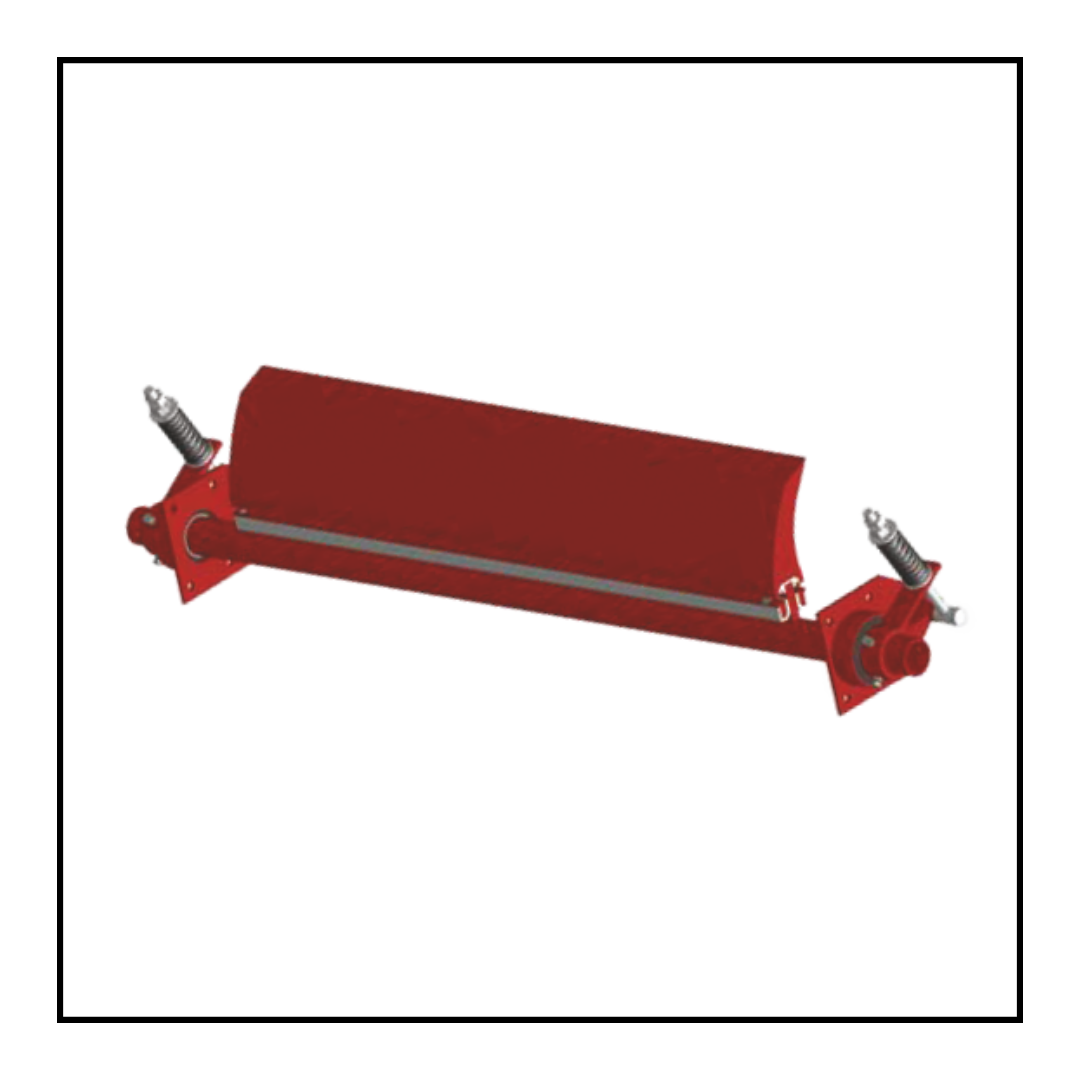
Primary Belt Cleaner Manufacturer, Supplier, And Exporter in India: Mouldtech Industries
Mouldtech Industries is a Manufacturer of Primary Belt Cleaner in Ahmedabad.
Our Manufacturing Unit is in Vadodara, Gujarat, India.
Mouldtech Industries is a Manufacturer of Ball Mill Solutions, Ball Mill Rubber Lining, Wear Protection Line, Resistant Rubber Liner, Embedded Rubber Liners, Conveyors Solutions, Diamond Pulley Lagging, Belt Cleaners, Pulley Lagging, Ceramic Rubber Lagging Services, and Ceramic Rubber Lagging Sheet.
Primary Belt Cleaner: Improving Conveyor Efficiency in Mining, Cement, and Bulk Material Handling Industries
Introduction
Throughout major industrial sectors—such as extraction, cement production, metalworking, ceramics, and extensive bulk material movement—conveyor setups are vital for transporting raw inputs efficiently between processing phases. Whether moving excavated ore, cement clinker, or ceramic raw materials, these belts function constantly under severe stresses.
Yet, these fields constantly encounter operational obstacles. Hard, granular substances, airborne dust, dampness, and high throughput rates generate conditions where equipment degradation and material residue clinging to the belt are frequent problems. When material doesn’t fully clear the belt at discharge points and travels back along the return path, it causes unnecessary dropping, contamination, and increased servicing needs.
With expanding industrial facilities across India—including regions like Maharashtra, Gujarat, Odisha, Jharkhand, Chhattisgarh, Tamil Nadu, Karnataka, West Bengal, Rajasthan, and Andhra Pradesh—effective conveyor cleaning methods are evolving into a crucial aspect of contemporary plant design.
Operational Hurdles Fueling Demand for Primary Belt Cleaners
Conveyor systems operate where transported goods are frequently rough, heavy, and difficult to manage. Over time, these working circumstances create issues affecting both the lifespan of the equipment and overall facility productivity.
Friction from Bulk Goods
In mining and metal refinement, materials like iron ore, bauxite, limestone, coal, and clinker possess abrasive grains that gradually erode machinery surfaces. Material clinging to the belt accelerates wear on idlers and other conveyor parts.
Stress from Material Falling
Bulk items frequently drop onto belts from considerable heights at transfer locations. These sudden impacts can force particles deeply into the belt surface, making them harder to release at the discharge zones.
Dampness and Sticky Residue
In humid climates or during wet periods, materials can become tacky. Clay-heavy ores, moist coal, and fine minerals often adhere to conveyor belts, worsening carry-around issues.
Deterioration in Plant Atmosphere
Numerous processing sites function amidst corrosive atmospheres. Cement works, fertilizer plants, and mineral processors may expose conveyor parts to dust and chemical traces that speed up rusting.
Production Halts and Servicing Load
If cleaning systems are inadequate, leftover material builds up beneath conveyors and around machinery. This demands frequent manual cleanup, increasing workforce requirements and interrupting output.
These practical operational facts explain the widespread adoption of conveyor cleaning assemblies, especially primary belt scrapers, in industrial sites globally.
Defining a Primary Belt Cleaner
A Primary Belt Cleaner is a mechanical unit mounted near the head pulley of a conveyor setup. Its main purpose is to clear away leftover material still stuck to the belt after the primary discharge.
This cleaner typically comprises:
- A blade or scraping edge
- A supporting framework
- A mechanism to maintain tension
The scraper edge keeps controlled contact with the belt surface. As the belt wraps around the head pulley, the cleaner removes stuck material before the belt begins its backward run.
The dislodged material falls back into the collection chute or transfer point rather than accompanying the belt on its return journey.
This straightforward yet productive method helps lessen carryback, limit material buildup, and generally improve the cleanliness of the conveyor system.
Uses Across Different Sectors
Primary belt cleaners see extensive use in industries where bulk material conveyors run continuously.
- Mining Sector: Extraction activities rely heavily on conveyors for moving ore and topsoil. Primary cleaners help strip away residual ore particles from belts carrying hematite, coal, copper, and bauxite.
- Cement Factories: Cement creation involves several conveyor phases, including hauling limestone, managing clinker, and dry grinding processes. Carryback can cause significant dust and contamination issues if not properly managed.
- Metal and Steel Mills: Steel production sites use heavy-duty conveyors to handle inputs like coal, coke, iron ore, and slag. Belt cleaning systems prevent buildup that could damage conveyor components.
- Ceramic Production: Ceramic facilities move materials like clay, feldspar, quartz, and mineral powders. Conveyor cleaning aids maintain material integrity and prevent mixing between different batches.
- Power Stations: Thermal power facilities utilize conveyors for coal supply chains. Primary cleaners contribute to maintaining conveyor reliability and reducing dropped coal.
- Bulk Freight Terminals: Ports and industrial hubs dealing with minerals, fertilizers, and aggregates depend on dependable conveyor cleaning to avoid material loss and machinery damage.
Safety & Operational Dependability
Conveyor cleaning setups enhance both equipment trustworthiness and personnel safety.
Material falling back can accumulate under conveyor belts, creating tripping hazards for site workers. Furthermore, material buildup around rollers can heighten the possibility of conveyor misalignment.
From an equipment standpoint, removing stuck material lessens undue strain on return rollers and conveyor frameworks.
Cost Effectiveness Over the Equipment Lifespan
While belt scrapers form a relatively small part of the overall conveyor system expenditure, their influence on running costs can be substantial.
Efficient cleaning methods help lessen:
- Wear on conveyor parts
- Manual cleanup labor expenses
- Unscheduled stoppages
- How often do conveyors need servicing
Across extended operational periods, these elements lead to better facility performance and a lighter maintenance load.
Instead of focusing only on the purchase price, many facility supervisors evaluate conveyor cleaning solutions, including Italic Liners and Lifter Bars, based on their performance over the entire service life.”
The Importance of Seasoned Manufacturers
Conveyor systems run non-stop in challenging industrial settings. Consequently, choosing experienced makers is important for sustained equipment dependability.
Producers possessing engineering know-how grasp:
- How industrial materials behave
- Issues regarding equipment compatibility
- The practicalities of installation in active plants
Dependable material sourcing and technical assistance further play a crucial part in sustaining facility operations.
About Mouldtech Industries
Mouldtech Industries is an established manufacturer specializing in industrial wear protection and conveyor solutions. The firm develops a range of items such as:
- Rubber Liners for Ball Mills
- Solutions for Ceramic Wear Protection
- Rubber Lining Systems
- Rubber Goods for Ball Mills
- Conveyor Parts and Belt Cleaners
Serving various sectors across India, Mouldtech Industries provides support in states including Gujarat, Maharashtra, Tamil Nadu, Karnataka, Odisha, Jharkhand, Rajasthan, Andhra Pradesh, Telangana, West Bengal, Madhya Pradesh, and Chhattisgarh.
More specifics on their industrial offerings are accessible at 👉 https://www.mouldtechindustries.in/
Summary
Conveyor systems remain a core aspect of industrial activities across the mining, cement, metals, ceramics, and power generation sectors. However, optimal conveyor function demands more than simply belt movement—it requires appropriate material management, defense against wear, and cleaning setups.
The Primary Belt Cleaner has a vital function in sustaining conveyor efficiency by removing fallen material, minimizing equipment abrasion, and helping maintain safer site environments.
For facility engineers and operational teams, opting for thoughtfully designed conveyor cleaning parts can lead to enhanced reliability, reduced servicing effort, and superior long-term equipment performance.
Key Takeaways
- Primary belt scrapers help decrease conveyor belt carryback and material accumulation
- Effective cleaning boosts conveyor trustworthiness and cuts down on upkeep
- Suitable for mining, cement, ceramic, steel, and power sectors
- Appropriate material choice improves resistance to wear and longevity
- Dependable conveyor cleaning supports sustained facility operational effectiveness
Trending FAQs
1. How long does a primary belt cleaner typically last?
- The lifespan of a belt cleaner depends on factors such as material abrasiveness, conveyor speed, and operating hours.
2. Where should a primary belt cleaner be installed?
- Primary belt cleaners are installed at the head pulley, where the conveyor belt discharges material.
3. How often should belt cleaners be inspected?
- Most industrial plants include belt cleaner inspections in routine conveyor maintenance schedules.
4. What is the difference between rubber and ceramic belt cleaner blades?
- Rubber blades offer flexibility and impact resistance, making them suitable for moderate abrasion environments.
5. Can belt cleaners be used in high-moisture environments?
- Yes. Belt cleaners are commonly used in environments where materials may become sticky due to moisture.
#BallMillRubberLiner #CeramicWearProtection #RubberLining #MiningSolutions #BulkMaterialHandling #ConveyorSolutions #MouldtechIndustries #WearProtection #IndustrialManufacturing