
Industrial Belt Cleaner Manufacturer in India: Experience Mouldtech Industries
In heavy-duty industrial environments such as mining, metal processing, cement production, ceramics manufacturing, and bulk material handling, equipment reliability is not just a convenience—it is a necessity. Plants operating in these sectors contend with abrasive materials, high-impact loads, corrosive substances, and continuous operational cycles. These challenges place significant stress on conveyors, mills, and other material handling systems, often resulting in unplanned downtime, high maintenance costs, and reduced operational efficiency. For operations seeking to optimize conveyor performance and reduce wear, partnering with a trusted Primary Belt Cleaner Manufacturer in India ensures that material handling systems maintain reliability, minimize downtime, and deliver long-term operational efficiency.
Industrial Challenges That Drive Demand for Primary Belt Cleaner
Operational efficiency in industrial plants is heavily influenced by the performance of conveyor systems. Key challenges include:
- Abrasion: Bulk materials such as coal, ores, clinker, and ceramic powders are inherently abrasive. Continuous material movement over belt surfaces wears down traditional rubber belts and support structures.
- Impact Loads: Heavy lumps of material dropped from hoppers or crushers generate high impact forces, leading to premature wear and potential damage to conveyor belts.
- Corrosion: In cement, chemical mineral processing, and metal industries, corrosive environments accelerate material degradation, compromising equipment integrity.
- Downtime: Every hour of unscheduled shutdown in mining or steel operations can cost tens of thousands of dollars. Reducing maintenance downtime is a top priority for procurement and operations managers.
- Maintenance Costs: Frequent replacement of worn components and labor-intensive maintenance cycles drive operational costs upward, making wear-resistant solutions a practical investment.
In mining and metal processing operations, conveyors are often the first point of contact with material. Protecting these systems is therefore critical to ensuring plant-wide efficiency. Manufacturers with long-term industry exposure understand that robust wear protection systems directly influence maintenance budgets and operational reliability.
What Is Primary Belt Cleaner?
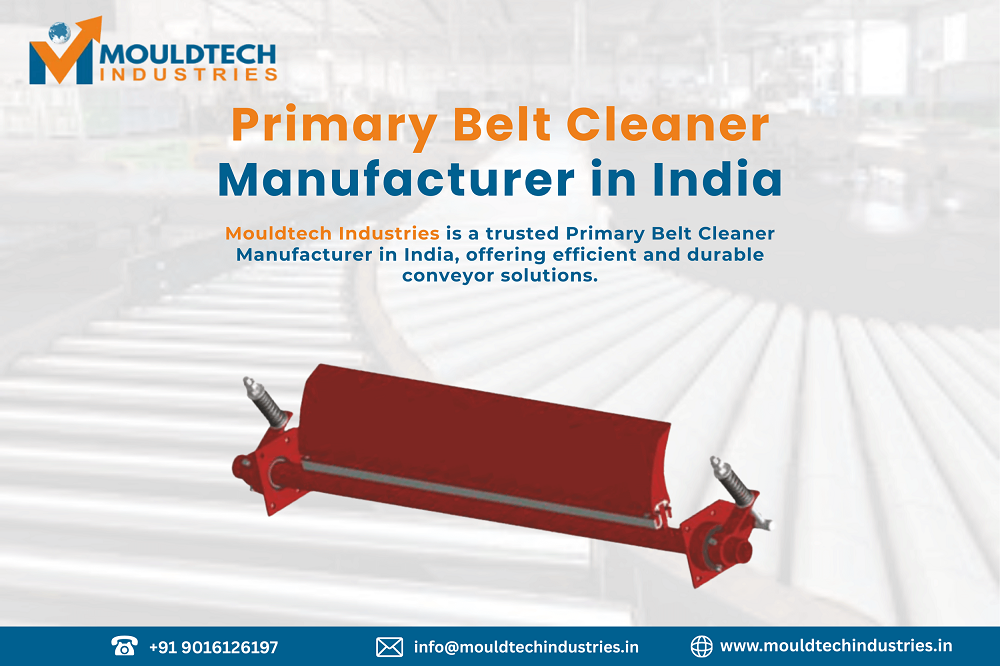
A Primary Belt Cleaner is a specialized industrial component designed to clean conveyor belts effectively while mitigating wear and impact-related damage. Unlike standard scrapers, it combines the elasticity of rubber with the hardness of embedded ceramics to ensure both abrasion resistance and impact absorption.
Key engineering considerations include:
- Proper tensioning and alignment to optimize cleaning efficiency
- Material selection to balance wear resistance and flexibility
- Compatibility with varying conveyor widths, belt speeds, and material types
In practice, the Primary Belt Cleaner is not just a maintenance accessory—it is an engineered solution aimed at enhancing the lifespan of the entire conveyor system, protecting downstream equipment, and maintaining consistent material flow.
Applications Across Industries
Primary Belt Cleaners find extensive use in heavy industries where continuous bulk material handling is critical:
- Mining: Protecting conveyors from high-impact ore, coal, and mineral transport; reducing belt wear and spillage.
- Cement Plants: Handling abrasive clinker and raw materials; preventing buildup on belts and rollers.
- Metal & Steel Plants: Maintaining smooth transport of slag, iron ore, and finished metals; reducing downtime caused by belt misalignment and wear.
- Ceramic Manufacturing: Transporting fine powders and aggregates while preventing cross-contamination and belt damage.
- Power Plants: Handling coal, ash, and other abrasive fuels efficiently, minimizing material losses and environmental impact.
- Bulk Material Handling: Ports, logistics hubs, and warehouses rely on durable belt cleaners to maintain operational flow in large-scale operations.
Experienced plant engineers often observe that well-installed Primary Belt Cleaners drastically reduce maintenance frequency, enhancing overall operational reliability.
Material Science & Engineering Considerations
The performance of a Primary Belt Cleaner depends heavily on its material composition:
- Rubber Properties: Rubber provides elasticity, impact absorption, and flexibility. It allows the cleaner to conform to the belt surface while reducing stress on the structure.
- Ceramic Hardness: Embedded ceramic elements offer exceptional wear resistance, protecting the rubber and underlyingconveyor surface from abrasive particles. Ceramic hardness is often rated to withstand the toughest industrial conditions.
- Wear Resistance Principles: Effective cleaners distribute abrasive loads evenly, reducing localized wear. In heavy-duty industrial environments, combining rubber and ceramic creates a synergy that extends the operational life of both the belt and cleaner.
- Impact Absorption: Rubber layers absorb shock from material drops, minimizing damage to conveyor idlers and belt joints.
Understanding these principles helps plant engineers specify solutions that maximize both equipment life and operational efficiency.
Design & Customization Requirements
Primary Belt Cleaners are rarely off-the-shelf solutions. They must be engineered to meet specific operational needs:
- Equipment Compatibility: Each conveyor has unique dimensions, belt speeds, and material characteristics. Custom-designed cleaners ensure optimal alignment and tension.
- Custom Sizing: Industrial applications vary from small-scale ceramic plants in Rajasthan to large iron ore conveyors in Odisha. Sizing adjustments are critical to ensure consistent cleaning and wear protection.
- Application-Specific Design: Drop height, material abrasiveness, belt width, and operational environment dictate the type and density of ceramic embedding, rubber thickness, and mounting design.
Manufacturers with deep industry experience understand that design customization directly influences the cleaner’s lifespan and plant efficiency.
Manufacturing Quality & Process Control
Precision manufacturing is essential to achieve the desired balance between wear resistance and flexibility:
- Precision Manufacturing: Advanced molding techniques ensure uniform rubber thickness and accurate ceramic placement.
- Quality Checks: Each component undergoes strict dimensional and material testing to meet operational specifications.
- Batch Consistency: In large plants, consistency across multiple belt cleaners ensures uniform performance, reducing uneven wear and operational discrepancies.
Industrial decision-makers often note that robust manufacturing standards reduce failures and unplanned maintenance.
Cost Efficiency Over Equipment Life Cycle
Investing in a Primary Belt Cleaner reduces long-term operational costs:
- Long-Term Savings: Lower wear rates extend belt life, reducing replacement frequency.
- Reduced Shutdowns: Maintenance intervals are lengthened, allowing plant operations to continue uninterrupted.
- Maintenance Optimization: Predictable performance simplifies planning, labor allocation, and spare part inventory management.
While upfront costs are a consideration, lifecycle savings often outweigh initial investment, especially in high-throughput industrial operations.
Export Readiness & Global Acceptance
For plants sourcing equipment internationally:
- Industrial Export Expectations: Products meet rigorous standards for material composition, mechanical properties, and quality control.
- Documentation & Standards Awareness: Compliance with ISO and ASTM standards ensures compatibility with global operational requirements.
- Global Buyer Requirements: Mining and metal industries in Australia, South Africa, and Southeast Asia demand consistent, high-quality wear protection systems.
Manufacturers serving international markets must understand both technical specifications and operational conditions to meet global acceptance.
Why Experienced Manufacturers Matter?
Experienced manufacturers bring unique advantages:
- Engineering Expertise: Understanding material behavior under extreme conditions ensures optimal performance.
- Industry Experience: Long-term exposure to mining, metal, cement, and ceramic sectors enables tailored solutions for plant-specific challenges.
- Reliable Supply: Predictable delivery, consistent quality, and after-sales support are critical for uninterrupted operations.
Manufacturers with long-term industry exposure understand the practical realities of heavy-duty operations, which translates into better product design and service.
About Mouldtech Industries
Mouldtech Industries is a leading manufacturer specializing in Ball Mill Rubber Liners, Ceramic Wear Protection Solutions, Rubber Lining Systems, Ball Mill Rubber Products, Conveyor Solutions, and Primary Belt Cleaner systems. Serving industrial markets across Pan India, including major cities such as Mumbai, Pune, Kolkata, Delhi, Chennai, Bengaluru, Hyderabad, Ahmedabad, Jaipur, Bhubaneswar, Jamshedpur, Rourkela, Durgapur, and steel & mining hubs in Odisha, Jharkhand, Chhattisgarh, and Madhya Pradesh, Mouldtech Industries combines engineering expertise with advanced manufacturing practices.
Global buyers recognize the company for its precision, quality, and reliability. Learn more about their solutions here: https://www.mouldtechindustries.in/.
Conclusion
In heavy-duty industrial operations, the Primary Belt Cleaner is a vital component for ensuring wear protection, operational reliability, and long-term plant efficiency. By combining rubber flexibility with ceramic hardness, these systems reduce maintenance, minimize downtime, and enhance material handling performance. Selecting experienced manufacturers like Mouldtech Industries ensures that plants in mining, metal, cement, ceramics, and bulk material handling sectors receive tailored, durable, and high-performing solutions.
Key Takeaways
- Wear Protection Benefits: Combines rubber and ceramic for optimal abrasion resistance.
- Operational Reliability: Reduces downtime and maintenance interventions.
- Industry Suitability: Applicable to mining, cement, metal, ceramics, power plants, and bulk material handling.
- Long-Term Performance: Designed for extended service life under high-impact and abrasive conditions.
- Global Industrial Relevance: Meets international standards and export expectations.
FAQs
1. What is the typical lifespan of a Primary Belt Cleaner?
- Lifespan varies with material abrasiveness and operational conditions but typically ranges from 3–7 years with regular inspection and maintenance.
2. Which industries can use Primary Belt Cleaners effectively?
- Mining, cement, steel and metal plants, ceramics, power plants, and bulk material handling facilities benefit from these cleaners.
3. How often should maintenance be performed?
- Experienced plant engineers recommend routine inspections every 3–6 months, depending on material load and environmental conditions.
4. When should I choose rubber over ceramic wear solutions?
- Rubber excels in impact absorption, while ceramic provides superior abrasion resistance. Combined solutions are ideal for heavy-duty operations.
5. Are Primary Belt Cleaners used globally?
- Yes, mining and metal operations in Australia, South Africa, Southeast Asia, and the Middle East widely adopt them.
#BallMillRubberLiner #CeramicWearProtection #RubberLining #MiningSolutions #BulkMaterialHandling #ConveyorSolutions #MouldtechIndustries #WearProtection #IndustrialManufacturing