
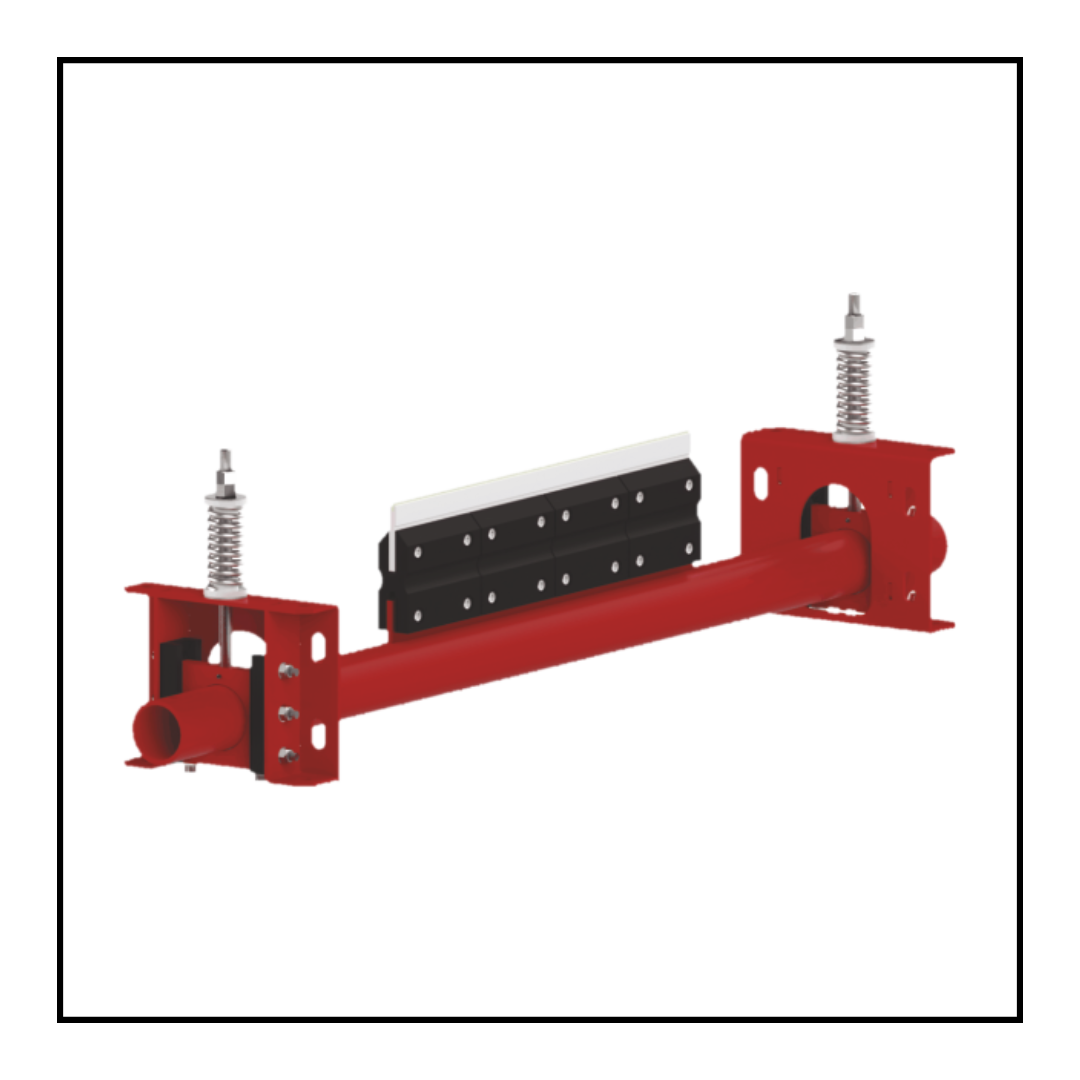
Secondary Belt Cleaner Manufacturer, Supplier, And Exporter in India: Mouldtech Industries
Mouldtech Industries is a Manufacturer of Secondary Belt Cleaner in Ahmedabad.
Our Manufacturing Unit is in Vadodara, Gujarat, India.
Mouldtech Industries is a Manufacturer of Ball Mill Solutions, Ball Mill Rubber Lining, Wear Protection Line, Resistant Rubber Liner, Embedded Rubber Liners, Conveyors Solutions, Diamond Pulley Lagging, Belt Cleaners, Pulley Lagging, Ceramic Rubber Lagging Services, and Ceramic Rubber Lagging Sheet.
Secondary Belt Cleaner: Improving Conveyor Efficiency in Demanding Industrial Environments
Introduction
In demanding industrial settings, how materials move underpins all production. Sectors like mining, cement works, metal making, ceramics, and bulk handling rely significantly on conveyor belts to transport large quantities of inputs and outputs through the process.
Yet, conveyors in these fields face tough service. Gritty substances, heavy loads, dampness, dust, and non-stop running put substantial strain on the machinery parts. When leftover material stays on the belt past the point of discharge, it causes spills, belt deterioration, material mixing, and increases the need for upkeep.
Firms such as Mouldtech Industries have created specialized belt cleaning solutions tailored to tackle the real-world issues faced by processing sites, mining ventures, and bulk material centers.
Operational Hurdles Driving the Need for a Secondary Belt Cleaner
Conveyor setups across different industries encounter various operational difficulties. These problems directly fuel the demand for effective belt cleaning methods.
Grinding from Bulk Items
Substances like iron ore, limestone, cement clinker, coal, and fine ceramic dust are highly abrasive. As these flow over conveyor belts, they gradually wear down the surfaces and parts.
Material residue clinging to the belt after unloading keeps grinding against the conveyor frame, rollers, and idlers.
Force from Heavy Material Transit
Mining and cement work often manage high volumes and weighty goods. The impact forces during loading and unloading can cause material bits to grip firmly onto the belts.
If not properly cleaned, these bits travel back on the belt’s underside, leading to early wear.
Rust and External Elements
In facilities near the coast, or those dealing with fertilizers or chemicals, corrosion adds another layer of complexity. Moisture, salt, and chemical contact exacerbate carryback buildup and equipment breakdown.
Production Stoppages
Material carryback results in spills along the conveyor path. Cleaning up dropped material demands manual effort and halts operations, cutting into plant output.
In mining and metal sectors, even brief pauses can throw off entire production plans.
Growing Service Expenses
Built-up material forces the belt out of line, harms rollers, and accelerates wear on structural elements. Maintenance crews must dedicate more time to fixing and cleaning gear.
A wisely chosen Secondary Belt Cleaner helps lessen these recurring upkeep problems.
What Is a Secondary Belt Cleaner?
A Secondary Belt Cleaner is a physical unit fitted on the return side of a conveyor belt, usually after the main cleaner and a little distance from the drive pulley.
Unlike primary cleaners, which focus on major removal near the drop-off point, secondary cleaners focus on detailed cleaning. They scrape off finer particles that stick to the belt due to wetness, pressure, or the material’s nature.
The unit typically comprises:
- A cleaning edge or scraping part
- A holding framework
- Systems for applying pressure
- Fittings to attach to the conveyor structure
Secondary belt cleaners are widely employed in continuous material handling where belt cleanliness and dependable operation are vital.
Where They Are Used Across Sectors
Secondary belt cleaners are crucial parts in many heavy industries that move rough or sticky products via conveyors.
Mining Sector
Mining sites manage vast amounts of minerals like iron ore, coal, bauxite, and copper concentrates.
Conveyors carry these over long routes, and leftover material can damage gear and reduce how well things run.
Cement Works
Cement making involves inputs such as limestone, clay, gypsum, and clinker. These materials often create dust and fine particles that stick to the belts.
Effective belt cleaning enhances site tidiness and cuts down on material loss.
Metal & Steel Sites
In steel production, conveyors move inputs like coke, sinter, iron ore, and slag.
High heat and abrasive matter increase the rate of wear, making good belt cleaning necessary to keep equipment running reliably.
Ceramic Production
Ceramic factories convey powders, minerals, and finished goods on belts.
Even a minor carryback can soil work areas or compromise product quality.
Power Stations
Coal-fueled power plants depend heavily on conveyors for fuel movement. Coal dust and fine remnants easily collect on belts.
Secondary cleaners help maintain operational order and prevent coal spills.
Bulk Material Handling Centers
Ports, logistics hubs, and bulk terminals shift products like grains, fertilizers, minerals, and aggregates.
Clean conveyor belts reduce service interruptions and keep facility efficiency up.
Safety & Operational Dependability
Safety is a paramount consideration in industrial activities.
Material escaping from conveyors can generate hazardous situations, such as:
- Hazards causing slips for personnel
- Dust buildup
- Machinery obstructions
Ancillary belt scrapers aid in maintaining cleaner conveyor systems, lessening the chance of these risks.
Economic Value Across the Equipment’s Life
Though conveyor parts are minor relative to total facility systems, their effectiveness greatly impacts running expenses.
Efficient belt cleaning lowers:
- Product wastage
- Machinery deterioration
- Labor needed for cleaning
- Unexpected downtime
Seasoned facility engineers often see that preventative measures like belt cleaners are wiser investments than repeated fixes and servicing.
The Value of Experienced Producers
Selecting the right manufacturer is crucial for the sustained performance of industrial hardware.
Producers with deep familiarity in protection against wear and conveyor fixes grasp the real-world challenges of industrial sites.
Their skill aids in assuring:
- Suitable material choices
- Precise engineering design
- Dependable supply chains and support
Manufacturers with long industry experience understand that actual site conditions differ from theoretical projections, making components like Filling Segments and Head End Liners essential for reliable performance.
About Mouldtech Industries
Mouldtech Industries is a seasoned industrial producer focusing on wear defense and conveyor system parts.
The firm develops specialized solutions, including:
- Mill Lining Components (Rubber)
- Ceramic Wear Defenses
- Rubber Lining Frameworks
- Mill Rubber Goods
- Conveyor Provisions
Serving sectors across India—including major commercial centers like Ahmedabad (Gujarat), Mumbai (Maharashtra), Chennai (Tamil Nadu), Kolkata (West Bengal), Hyderabad (Telangana), Bengaluru (Karnataka), Pune, Jaipur, Bhubaneswar (Odisha), Raipur (Chhattisgarh), Ranchi (Jharkhand), Durgapur (West Bengal), and Visakhapatnam (Andhra Pradesh)—the company supports mining, cement, metal processing, and bulk material handling functions.
For further details, visit the official web portal: 👉 https://www.mouldtechindustries.in/
Summary
Secondary belt scrapers serve a vital function in preserving the efficiency and trustworthiness of conveyor installations in taxing industrial settings. By removing leftover material from transport belts, they help curb apparatus wear, prevent material escape, and enhance site tidiness. In sectors like mining, cement, steel, ceramics, and power production, even modest gains in conveyor performance can substantially affect overall output.
With thoughtful design, material selection, and proper mounting, secondary belt cleaners contribute to safer and more streamlined plant operations. Industrial sites aiming for dependable conveyor service should regard belt cleaning setups as a necessary component of their material handling framework.
Essential Takeaways
- Secondary belt scrapers boost conveyor cleanliness and lessen material “carryback.”
- They help guard conveyor parts against abrasive degradation
- Appropriate for mining, cement, steel, ceramic, and power sectors
- Decrease the burden of upkeep and operational halts
- Add to long-run equipment dependability and facility performance
Trending FAQs
1. How long does a secondary belt cleaner typically last?
- The lifespan depends on operating conditions, material abrasiveness, and maintenance practices. In well-maintained systems, blades can last several months before replacement.
2. Where should a secondary belt cleaner be installed?
- Secondary cleaners are usually installed on the return side of the belt, after the primary cleaner and slightly away from the head pulley.
3. How often should belt cleaners be inspected?
- Routine inspections are typically performed during scheduled conveyor maintenance checks, often weekly or monthly, depending on plant operations.
4. What is the difference between rubber and ceramic belt cleaner blades?
- Rubber blades provide flexibility and gentle cleaning, while ceramic inserts offer higher wear resistance in extremely abrasive environments.
5. Are secondary belt cleaners suitable for all conveyor systems?
- Most industrial conveyor systems can benefit from secondary cleaners, but design specifications should match belt width, speed, and material characteristics.
#BallMillRubberLiner #CeramicWearProtection #RubberLining #MiningSolutions #BulkMaterialHandling #ConveyorSolutions #MouldtechIndustries #WearProtection #IndustrialManufacturing