
Mouldtech Industries Pvt. Ltd.: Top Ceramic Lagging Sheet Solutions in India
In heavy-duty industries like mining, metal processing, cement, ceramic, and bulk material handling, equipment reliability is everything! Abrasion, impact, and high-volume operations can cause wear, downtime, and higher maintenance costs. That’s why choosing the right wear protection matters. Ceramic Lagging Sheets from a trusted Ceramic Lagging Sheet Manufacturer in India help boost equipment life, reduce downtime, and keep your operations running smoothly.
Global industrial trends show a growing demand for materials that combine durability with low maintenance requirements. Countries with prominent mining hubs, steel clusters, ceramic industries, and bulk material operations—including India, Australia, Canada, Brazil, Germany, and the UAE—are increasingly prioritizing wear-resistant equipment components. In India, industrial centers such as Jamshedpur, Bhilai, Durgapur, Bokaro, Hyderabad, Pune, Ahmedabad, and Ludhiana are implementing high-performance wear protection to optimize plant operations. Against this backdrop, the Ceramic Lagging Sheet is a practical solution that addresses multiple industrial challenges.
Industrial Challenges That Drive Demand for Ceramic Lagging Sheet
In mining and metal processing operations, equipment is subjected to extreme abrasion, heavy impact, and exposure to corrosive environments. The challenges can be summarized as follows:
- Abrasion: Continuous movement of complex ores, minerals, and bulk materials causes progressive wear on conveyor belts, chutes, and mills. Without adequate protection, metal surfaces erode rapidly.
- Impact Loads: Drop points in conveyors, feed hoppers, and crushing systems experience repeated high-velocity impacts, which can lead to cracks and premature component failure.
- Corrosion: Moisture, chemical additives, and environmental factors accelerate surface degradation, particularly in cement, steel, and ceramic processing plants.
- Downtime: Unexpected equipment failures cause production halts, affecting supply chains and contractual obligations.
- Maintenance Cost: Frequent replacement or repair of worn components increases operational expenditures and diverts skilled manpower.
Manufacturers with long-term industry exposure understand that these challenges are universal across heavy industries. Solutions like Ceramic Lagging Sheet address wear, impact, and corrosion while supporting sustained operational efficiency.
What Is a Ceramic Lagging Sheet?
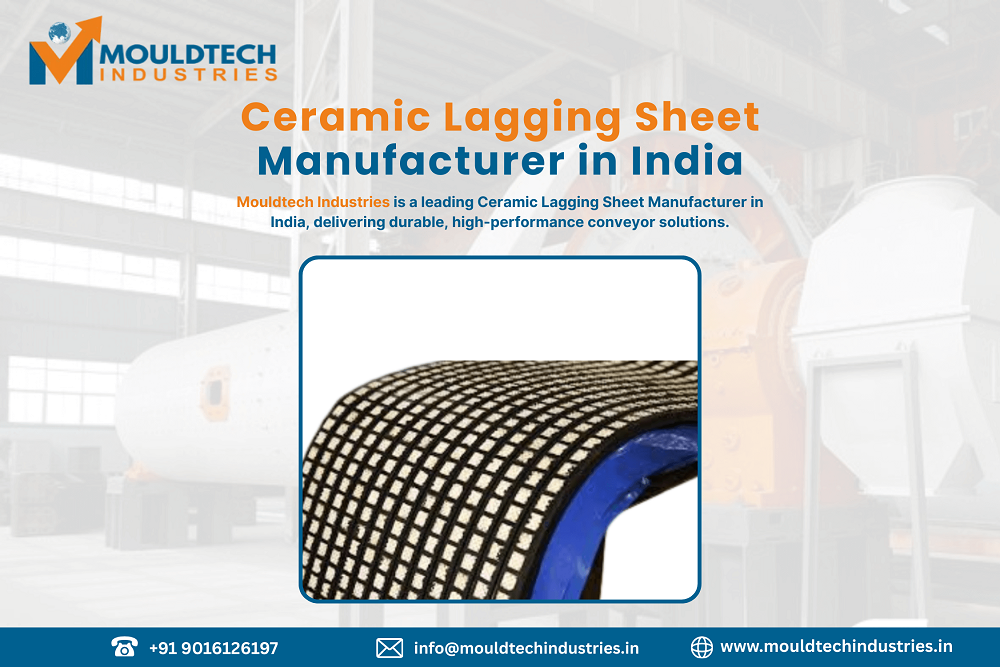
A Ceramic Lagging Sheet is an engineered composite panel designed to protect industrial equipment from wear and impact. It typically consists of high-hardness ceramic tiles embedded in a rubber or polymer matrix, combining the hardness of ceramics with the resilience of elastomers. This hybrid structure allows the sheet to absorb shocks, resist abrasion, and extend the service life of underlying equipment components.
In practical plant terms, it is not merely a protective layer—it functions as a maintenance strategy, enabling operators to reduce replacement frequency and minimize unplanned downtime. Its design reflects an understanding of industrial load patterns, material flow behavior, and operational stress points.
Applications Across Industries
- Mining Operations: In heavy mining environments, conveyors, chutes, and mill liners are subjected to abrasive ores and high-impact loading. Ceramic Lagging Sheets protect these surfaces, maintaining throughput efficiency and reducing maintenance interventions.
- Cement Plants: Raw material handling, clinker transport, and crusher discharge points experience severe wear. Ceramic lagging shields conveyor belts, hoppers, and chutes, preventing premature erosion.
- Metal & Steel Plants: Slag, ore concentrates, and metallic powders are highly abrasive. Rubber-ceramic lagging prevents damage to feeders, mills, and transfer points, ensuring consistent plant operation.
- Ceramic Manufacturing: High-temperature ceramic processing requires materials that are abrasion-resistant against raw powders and kiln discharge. Ceramic Lagging Sheets maintain equipment integrity while reducing contamination risks.
- Power Plants & Bulk Material Handling: Coal, fly ash, and other bulk solids cause significant wear on handling equipment. Lagging sheets enhance conveyor and chute lifespan, reduce maintenance frequency, and improve operational reliability.
In all these environments, experienced plant engineers often observe that strategic wear protection significantly improves material flow efficiency and reduces overall operational risks.
Material Science & Engineering Considerations
The performance of a Ceramic Lagging Sheet depends on careful engineering of both the ceramic and rubber components:
- Rubber Properties: The elastomeric matrix absorbs impact, mitigates vibration, and maintains adhesion to the substrate. Different rubber compounds are selected for temperature tolerance, chemical resistance, and hardness.
- Ceramic Hardness: High-density alumina or zirconia ceramics provide wear resistance against abrasive materials. The hardness ensures longevity under repetitive mechanical stress.
- Wear Resistance Principles: Combining hardness with elasticity allows the sheet to resist surface erosion while accommodating deformation from impact.
- Impact Absorption: The composite structure distributes force, reducing stress on underlying equipment and preventing cracking or failure.
Understanding these properties is critical when specifying lagging sheets for complex industrial applications.
Design & Customization Requirements
Adequate wear protection requires engineering that aligns with operational needs:
- Equipment Compatibility: Sheets must match belt widths, chute angles, and mill liners precisely.
- Custom Sizing: Standard dimensions may not suffice; industrial plants often need bespoke designs for optimal coverage.
- Application-Specific Design: Drop heights, material abrasiveness, and temperature conditions dictate tile thickness, ceramic hardness, and rubber compound selection.
Manufacturers with long-term industry exposure understand that one-size-fits-all solutions rarely work in heavy-duty industrial environments.
Manufacturing Quality & Process Control
Producing Ceramic Lagging Sheets involves precision engineering:
- Precision Manufacturing: Ceramic tiles must be consistently shaped and bonded to the rubber matrix with uniform adhesion.
- Quality Checks: Dimensional accuracy, hardness testing, and bonding strength are verified at each batch stage.
- Batch Consistency: Standardized production ensures predictable performance across multiple units, critical for large-scale industrial installations.
Quality control in manufacturing directly correlates with the reliability and service life of the installed lagging.
Installation & Maintenance Considerations
Installation and ongoing maintenance determine the real-world efficiency of wear protection solutions:
- Ease of Installation: Panels must allow quick replacement and secure attachment to equipment surfaces, minimizing operational interruptions.
- Reduced Downtime: Engineered installation reduces labor hours and operational stoppages.
- Maintenance Cycles: Properly selected and installed lagging sheets extend maintenance intervals, reducing total operating costs.
In mining and metal processing operations, predictable maintenance cycles are key to sustaining production efficiency.
Safety & Operational Reliability
Worker safety and plant reliability are integral to industrial operations:
- Worker Safety: Ceramic Lagging Sheets prevent sharp metal exposure and reduce hazards associated with equipment failure.
- Equipment Protection: Protecting critical components ensures uninterrupted operations and lowers the risk of catastrophic damage.
- Plant Reliability: Consistent material flow and reduced wear incidents improve overall operational predictability.
Export Readiness & Global Acceptance
Industrial operations worldwide demand compliance with performance standards and documentation:
- Industrial Export Expectations: Sheets must meet international standards for wear resistance, bonding integrity, and safety.
- Documentation & Standards Awareness: Compliance with ISO and industrial standards facilitates procurement for multinational projects.
- Global Buyer Requirements: Plants in Europe, North America, and the Middle East require certified performance data for specification.
Manufacturers with industry exposure understand these nuances and ensure their products meet global acceptance criteria.
Why Experienced Manufacturers Matter?
Selecting an experienced manufacturer ensures reliability and engineering competence:
- Engineering Expertise: Proper material selection, design, and installation guidance are critical for long-term performance.
- Industry Experience: Knowledge of plant-level challenges enables solutions that integrate seamlessly into operations.
- Reliable Supply: Consistent product quality and timely delivery maintain production schedules and reduce operational risk.
About Mouldtech Industries
Mouldtech Industries has decades of experience serving India’s industrial manufacturing sector and international markets. Offering solutions across Ball Mill Rubber Liners, Ceramic Wear Protection, Rubber Lining Systems, Ball Mill Rubber Products, and Conveyor Solutions, the company is recognized for engineering excellence, precision manufacturing, and consistent quality. Serving mining, cement, metal & steel, and ceramic industries in cities across India—including Jamshedpur, Bhilai, Durgapur, Hyderabad, Pune, Ahmedabad, Ludhiana, Chennai, Bengaluru, and Kolkata—Mouldtech Industries ensures plant engineers receive reliable wear protection solutions.
For more details, visit: 👉 https://www.mouldtechindustries.in/
Conclusion:
In heavy-duty industrial environments, protecting equipment from wear, impact, and corrosion is essential. Ceramic Lagging Sheet offers a practical solution to improve plant efficiency, reduce maintenance cycles, and extend equipment life. By combining ceramic hardness with rubber resilience, it addresses real operational challenges across mining, metal, cement, ceramic, and bulk material handling sectors. Partnering with experienced manufacturers like Mouldtech Industries ensures reliable supply, engineering guidance, and globally compliant solutions that integrate seamlessly into plant operations.
Key Takeaways
- Enhanced wear protection for industrial equipment
- Improved operational reliability and reduced downtime
- Suitable for mining, metal, cement, ceramic, and bulk handling industries
- Long-term performance optimization and maintenance efficiency
- Compliance with global industrial standards
FAQS
1. What is the typical lifespan of a Ceramic Lagging Sheet?
- In heavy-duty industrial environments, properly installed sheets last 3–7 years, depending on the material’s abrasiveness and impact loads.
2. Which industries benefit most from Ceramic Lagging Sheets?
- Mining, cement, metal & steel, ceramic manufacturing, power plants, and bulk material handling operations.
3. How often should Ceramic Lagging Sheets be maintained?
- Experienced plant engineers often schedule inspections every 6–12 months, with adjustments based on wear patterns.
4. Should I choose rubber or ceramic wear solutions?
- Rubber offers impact absorption and flexibility, while ceramics provide hardness and abrasion resistance. Composite sheets combine the benefits of both materials for heavy-duty applications.
#BallMillRubberLiner #SecondaryBeltCleaner #RubberLining #MiningSolutions #BulkMaterialHandling #ConveyorSolutions #MouldtechIndustries #WearProtection #IndustrialManufacturing