
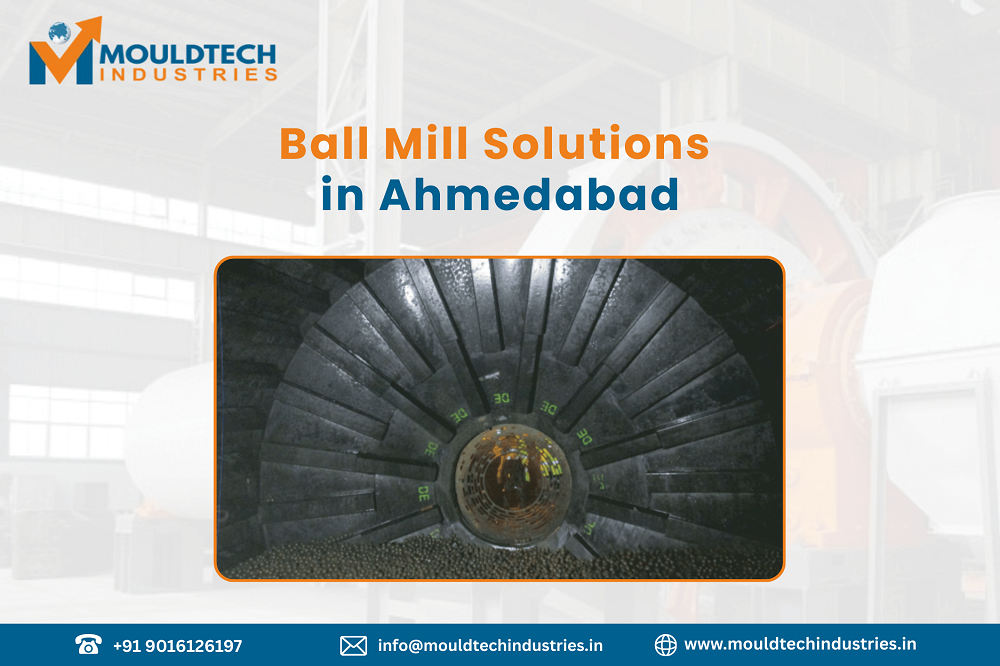
Heavy Duty Ball Mill Rubber Liner: Practical Buying Guide for Indian Plants
A heavy-duty ball mill liner does much more than protect the shell. It affects grinding efficiency, shutdown frequency, noise on the shop floor, liner handling time, and long-term maintenance cost. In many Indian cement and mining units, I have seen one small liner mismatch lead to repeated stoppages, uneven wear, and a lot of avoidable frustration for the maintenance team. This article will help you understand what matters when selecting a liner, how manufacturing quality changes field performance, and what to compare before placing an order.
If you are evaluating suppliers, this guide covers:
- liner material and design basics
- quality and certification checks
- supplier comparison points
- delivery and installation workflow
- a real Indian case study and FAQs
Why Choose Mouldtech Industries for Heavy Duty Ball Mill Rubber Liner?
The first thing most plant teams want to know is simple: can the liner handle impact, abrasion, and real operating conditions without creating fresh maintenance issues? Mouldtech Industries has been working in this space since 2007, with 18+ years of practical experience in wear protection solutions for mining, cement, and heavy industry applications.
Yes, buyers searching for ball mill rubber liner manufacturers near me usually compare three things first: fitment accuracy, liner life, and response time during shutdown windows. In Indian plants, especially across Mumbai, Vadodara, Ahmedabad, Pune, Hyderabad, and Chennai, downtime planning is tight. A supplier must understand mill dimensions, feed characteristics, operating loads, and installation realities, not just quote a part number.
The team at Mouldtech Industries is led by experienced rubber technology and engineering professionals and has served 200+ clients. That matters because heavy-duty liners are rarely standard items. They often need shell profile matching, bolt-hole precision, thickness balancing, and material selection based on ore type or clinker grinding conditions.
A practical point many procurement teams miss: a liner should not only last longer, it should also make maintenance easier. A properly designed wear resistant rubber liner can reduce metal-on-metal impact, lower handling effort, and help control noise. In many installations, rubber-based systems also support up to 70% noise reduction, which is a serious operational advantage, not just a comfort feature.
For readers comparing solutions, you can review their main mill offerings here: Ball Mill Solutions.
Our Heavy Duty Ball Mill Rubber Liner Manufacturing Capabilities
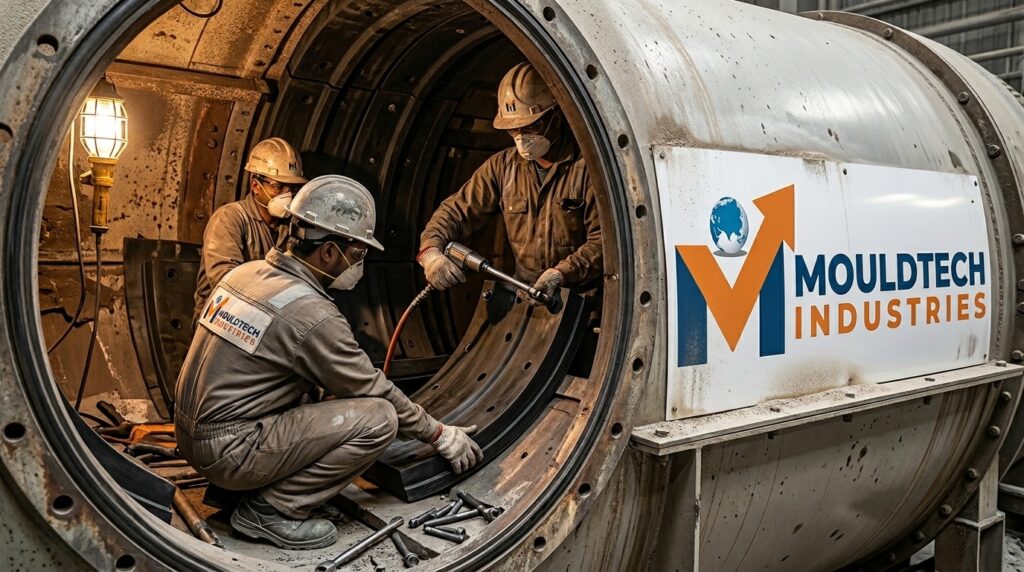
Here’s how Mouldtech Industries approaches liner manufacturing in a way that plant teams can actually use. The work starts with operating data, not assumptions. Mill diameter, RPM, grinding media, feed size, slurry or dry application, discharge pattern, and expected wear zones all influence liner geometry.
The product range includes custom rubber liners, ceramic-backed options, and heavy wear components designed for severe applications. In real terms, this means support for:
- shell liners and lifter bars
- ceramic embedded rubber liner options for high-abrasion duty
- abrasion resistant liner designs for aggressive material handling
- low maintenance rubber liners for faster shutdown planning
- related mining equipment rubber solutions
- support products like conveyor belt cleaners, rubber lagging, and impact pads
This matters because many plants do not buy liners in isolation. A unit in Surat may be facing belt slippage and transfer point wear along with mill lining issues. A cement unit near Jaipur may need liner replacement and conveyor housekeeping improvements in the same maintenance cycle. That is why integrated understanding of industrial rubber products Vadodara manufacturers can be useful during vendor shortlisting.
One more practical reality: not all mills fail at the highest wear point alone. I have seen liners in clinker grinding applications wear unevenly because feed distribution was not consistent. Good manufacturers ask uncomfortable but necessary questions before production starts.
For product-specific reference, see Ball Mill Rubber Lining Manufacturer and Supplier in Vadodara.
A quick example. A procurement manager from Bangalore once asked whether custom rubber liner India supply really makes a difference if the old drawing is available. The answer was yes. Old drawings help, but mills change over time. Shell condition, bolt seating, and actual wear patterns often tell a different story from archived data.
Get a Quote for Heavy Duty Ball Mill Rubber Liner
If you want a broader overview of applications and configurations, this page helps: Ball Mill Solutions Overview.
Navigating Quality Standards & ISO 9001:2015 Certification
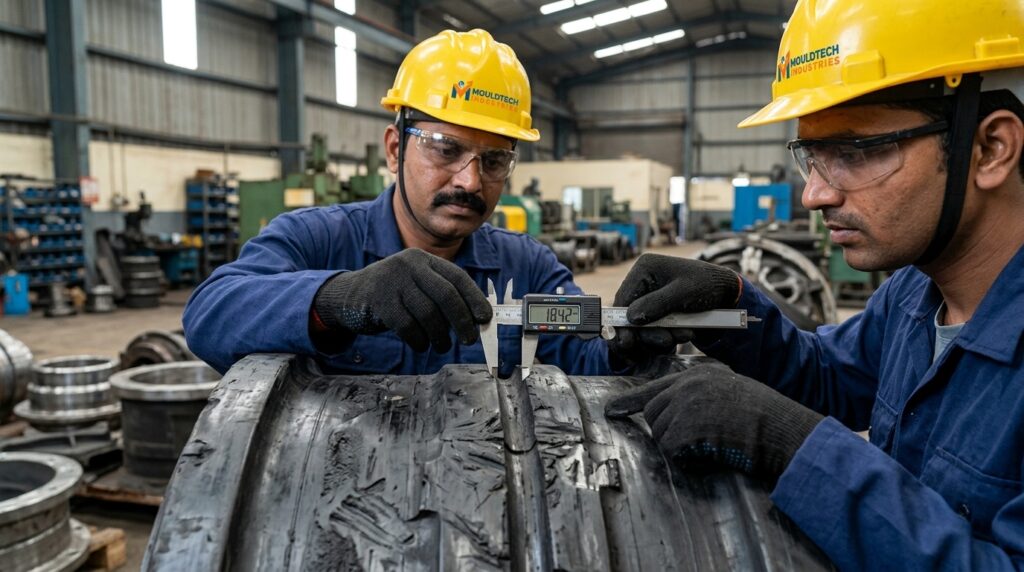
The direct answer is that certification alone does not guarantee field performance, but it does show whether the manufacturing system is disciplined. Mouldtech Industries is ISO 9001:2015 certified, and that is relevant because liner quality depends on repeatable process control. Material consistency, mould accuracy, dimensional checks, curing controls, and final inspection all need structure.
External ISO 9001:2015 standards are widely used as a benchmark for quality management systems. In liner manufacturing, this translates into documented production methods, traceable inspection processes, and better control over rework risk. For the buyer, that reduces uncertainty.
When plants compare rubber liner manufacturers in Vadodara, I usually suggest checking these points:
- Is the design based on real mill specifications?
- Are material and hardness suited to your application?
- Can the supplier support pan-India dispatch?
- Do they understand mining as well as cement mill liners use cases?
- Are they able to deliver export ready documentation if needed?
A mini success story makes this easier to understand. An anonymized cement customer from Indore was facing frequent liner loosening and a noisy mill section that was creating operator complaints. After reviewing the mill condition and application, a revised rubber liner set with better fit and wear planning was supplied. The result was not a miracle claim, but a practical one: smoother operation, fewer shutdown interruptions, and easier maintenance scheduling over the next cycle.
For readers exploring older technical references and use cases, this page adds context: Top Ball Mill Rubber Lining Manufacturer in India.
Local Manufacturers vs Mouldtech Industries
The best comparison is not based on brochure language. It is based on process, customization depth, and support during actual plant pressure.
| Comparison Point | Typical Local Supplier | Mouldtech Industries |
|---|---|---|
| Industry experience | May vary; often product-only focus | Established in 2007 with 18+ years in wear protection solutions |
| Customization | Limited to standard sizes | Precise customization as per mill specifications |
| Quality system | Not always documented | ISO 9001:2015 certified process approach |
| Product range | Single-product supply common | Rubber liners, ceramic embedded options, lagging, cleaners, impact pads |
| Application understanding | General fabrication view | Mining and cement operating condition focus |
| Supply capability | Regional only in many cases | Pan-India supply and export ready support |
If your plant also wants conveyor-side wear support, see Conveyor Solutions Provider in Ahmedabad, Gujarat, India.
Step-by-Step Process – How We Deliver Heavy Duty Ball Mill Rubber Liner
Here’s how Mouldtech Industries typically handles a heavy-duty liner requirement from first enquiry to dispatch.
1. Requirement study
- The process starts with mill data, drawings, present liner details, and site issues. If the buyer says “liner life is low,” that is only the beginning. The actual cause may be feed pattern, impact zone loading, or fitment error.
2. Design and recommendation
- The next step is selecting the right liner configuration. This may include standard rubber lining, a hybrid layout, or a ceramic embedded rubber liner where abrasion is severe.
3. Manufacturing and inspection
- Raw materials, moulding, curing, and dimensional checks are handled under a controlled system. This is where real supplier discipline shows up.
4. Dispatch planning
- For customers in Delhi, Kolkata, Chandigarh, or Ahmedabad, dispatch planning matters because shutdown windows are fixed. Delayed supply can cost far more than the liner itself.
5. Installation support and follow-up
- Plants usually want practical guidance on bolt tightening, liner sequencing, and inspection intervals. Good follow-up improves actual service life.
A common question is whether ball mill rubber liner manufacturers can support both replacement and new mill requirements. Yes, if they have the drawings, operating data, and enough technical understanding. Another frequent question is whether Ball Mill Rubber Liner Suppliers India can handle urgent dispatches across states. In serious industrial supply, pan-India logistics is now expected, especially for shutdown-driven maintenance.
Real Client Case Study
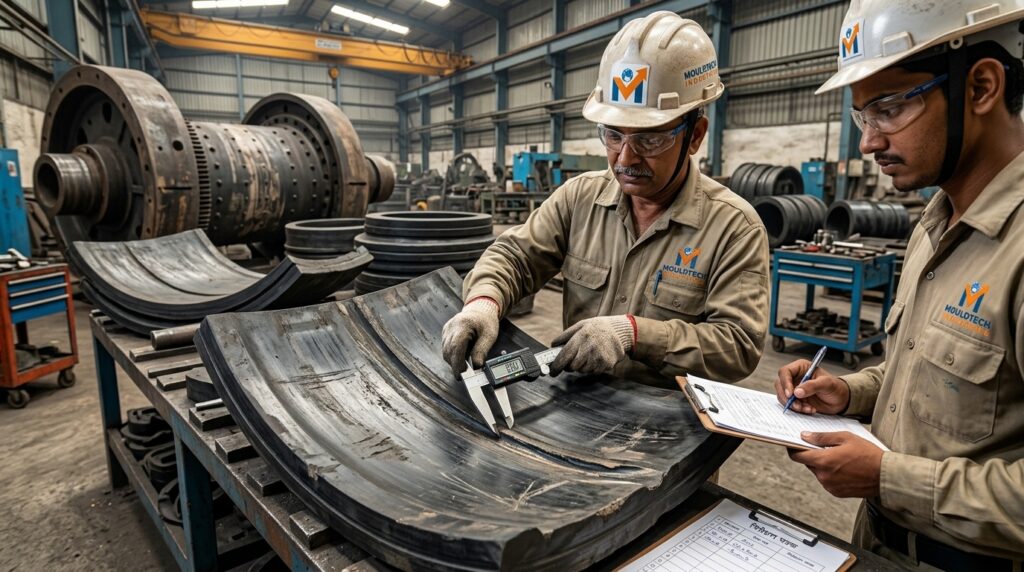
Here’s a realistic case from western India. An anonymized mineral processing client near Ahmedabad was running a ball mill with repeated shell liner wear and rising maintenance hours. The plant had already tried a low-cost local option, but liner fitment and wear uniformity were poor. Shutdown extension was becoming a monthly headache.
A fresh review was done using operating conditions, past failure pattern, and shell dimensions. A revised heavy-duty rubber liner system with targeted wear-zone planning was supplied by Mouldtech Industries. The goal was simple: improve service life, reduce noise, and make maintenance more predictable.
Over the next operating cycle, the plant reported:
- better wear consistency
- lower shutdown stress for the maintenance team
- reduced noise around the mill area
- improved confidence in planning spares and replacement intervals
Key point: the value was not in a flashy claim. It was in solving a practical maintenance problem with better fit and material selection.
FAQs
1. What is a heavy-duty ball mill rubber liner used for?
- It protects the mill shell, improves wear resistance, reduces impact damage, and can help lower operating noise.
2. How do I know if I need a rubber liner instead of metal?
- If noise, handling weight, and wear-related shutdowns are major concerns, rubber-based lining is often worth evaluating.
3. Can liners be made as per existing mill drawing?
- Yes, but actual site condition and wear pattern should also be checked before final manufacturing.
4. Are these liners suitable for cement and mining both?
- Yes. The design and material grade should be chosen based on application, feed, and abrasion level.
5. Do you offer pan-India supply?
- Yes, supply can be planned across major industrial cities and states based on shutdown schedule.
6. What support is available before ordering?
- You can ask for a Free Rubber Liner Consultation and also Download Ball Mill Liner Cost Guide for planning discussions.
7. How can I contact the team quickly?
- You can call directly or connect on WhatsApp for urgent enquiry and drawing review.
To discuss your requirement, contact Mouldtech Industries at +91-9925618287, +91-7600030602, +91-9427444465, or +91-9016126297. You can also email mouldtechindia@gmail.com or acc.mouldtech@gmail.com. If your team is comparing options now, ask for a Free Rubber Liner Consultation, request to Download Ball Mill Liner Cost Guide, or share your mill details on WhatsApp for a faster technical discussion.