

Mouldtech Industries: Leading Bridge Rubber Pad Manufacturer and Supplier in India
In heavy-duty industrial environments, the challenges faced by mining, metal processing, cement, and ceramic industries are complex and multifaceted. As a leading Bridge Rubber Pad Manufacturer in India, Mouldtech Industries understands that abrasion, impact loads, corrosion, and mechanical wear continuously threaten equipment reliability. Experienced plant engineers know that even minor equipment failures can escalate into prolonged downtime, maintenance delays, and significant operational costs.
Across India and key manufacturing centers globally, there’s a growing need for safeguards against wear that blend toughness, precise design, and flexibility for various industrial operations. Among these, the Bridge Rubber Pad has emerged as a vital element for maintaining steady performance, easing strain on machinery, and boosting overall facility dependability.
Mouldtech Industries, a reliable producer serving all of India—including major metropolitan areas like Mumbai, Delhi, Bengaluru, Chennai, Kolkata, Hyderabad, Pune, Ahmedabad, and industrial zones in Gujarat, Maharashtra, Tamil Nadu, and Karnataka—provides technically advanced Bridge Rubber Pads crafted for the mining, cement, metal, steel, ceramic, and bulk material handling sectors.
Industrial Hurdles Driving Demand for Bridge Rubber Pads
Heavy industry faces numerous mechanical and operational difficulties that directly affect output and how long equipment lasts:
- Friction: The constant movement of rough substances like ores, cement clinker, and ceramic dust causes rapid deterioration in key machinery. Without adequate shielding, components such as ball mills, chutes, and conveyors wear out more quickly.
- Impact Forces: Loading points, hoppers, and transfer sections in mining and cement facilities are subjected to powerful impacts. These stresses can lead to early cracking, surface damage, and equipment failure.
- Chemical Attack: In metal refining and other settings with chemical processes, equipment surfaces are exposed to moisture, chemical agents, and extreme heat. This demands wear-resistant materials that retain their structural integrity.
- Outages & Repair Expenses: Even minor breakdowns can halt operations in continuous workflows, such as cement manufacturing or handling large volumes of material, resulting in costly downtime. Seasoned facility engineers often point out that minimizing unplanned repairs is a top goal.
- Worldwide Industrial Settings: From the steel mills in Jamshedpur to the ceramic collection in Morbi, Gujarat, operational consistency is paramount. Producers with extensive backgrounds in the sector recognize the crucial nature of reliable wear protection solutions that can adapt to diverse operational conditions worldwide.
These issues highlight why high-caliber wear-defense solutions like Bridge Rubber Pads are indispensable for modern industrial operations.
What is a Bridge Rubber Pad?
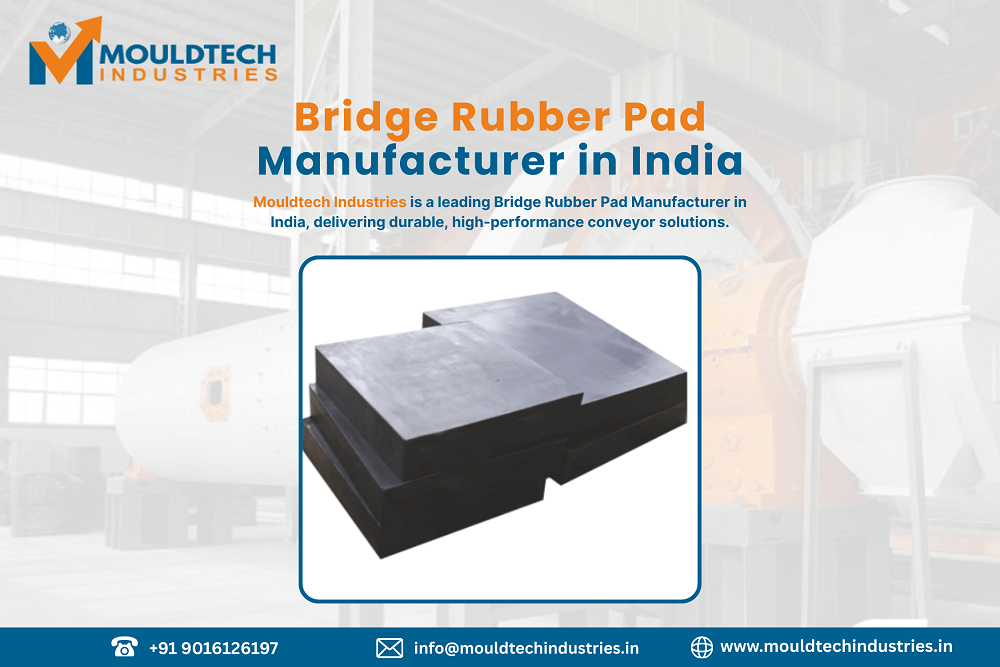
A Bridge Rubber Pad is a precisely engineered component that absorbs shock, resists surface wear, and protects equipment surfaces in demanding applications. It is usually constructed from premium industrial-grade rubber, formulated to endure repeated stress while offering controlled flexibility.
Practically speaking, Bridge Rubber Pads act as a cushion between the machinery and the rough material being processed. Unlike solid metal linings or standard rubber sheeting, these pads combine pliability with wear resistance, enabling them to dampen vibrations, spread loads, and extend machinery lifespan.
Bridge Rubber Pads are not universally applicable. Their design is customized to suit the operational requirements of specific equipment, such as ball mills, conveyor assemblies, hoppers, and chutes. This design accuracy ensures the pads function reliably under various industrial circumstances.
Uses Across Different Sectors
- Mining: In extractive industries—whether handling iron ore, coal, or bauxite—the Bridge Rubber Pad offers essential defense in ball mills, feeders, and transfer sites. By absorbing impact and minimizing surface wear, it reduces maintenance frequency and averts costly plant stoppages.
- Cement Production: Cement making involves managing highly abrasive clinker and raw feedstocks. Bridge Rubber Pads line transfer chutes, ball mills, and grinding mechanisms, safeguarding structural surfaces and improving operational consistency in hot, dusty settings.
- Metal & Steel Plants: In metal processing, Bridge Rubber Pads protect hoppers, crushers, and conveyors from impact and abrasion during ore crushing, sintering, or managing hot materials. Their chemical fortitude also shields equipment from degradation caused by industrial vapors and slurries.
- Ceramic Sector: Ceramic dusts and tiles can be highly abrasive during production. Bridge Rubber Pads prevent wear in chutes, storage bins, and ball mills, maintaining smooth material flow and reducing equipment downtime in ceramic hubs like Morbi and Gujarat.
- Power Stations & Bulk Material Conveyance: Facilities that burn coal or biomass depend on reliable systems for moving large quantities of material. Bridge Rubber Pads absorb tremors and lessen impact on feeders, conveyors, and storage areas, ensuring smooth facility operation.
Material Science & Engineering Aspects
The effectiveness of Bridge Rubber Pads is built upon careful material selection and design:
- Rubber Attributes: Top-grade industrial rubber is chosen for its pliability, pulling strength, and resistance to fatigue. These qualities allow the pad to absorb knocks and lessen vibrations in ball mills and conveyor systems.
- Ceramic Hardness: In composite setups that combine rubber and ceramic inserts, ceramic toughness enhances wear protection in high-friction areas. This pairing maximizes both shock absorption and surface protection.
- Wear Resistance Principles: The pad’s depth, hardness measurement (durometer), and density are designed to align with specific operational demands, ensuring steady wear resistance over time.
- Impact Dissipation: Bridge Rubber Pads are engineered to dissipate kinetic energy from falling material, reducing mechanical strain on equipment and extending operational service life.
This methodical design approach guarantees that Bridge Rubber Pads meet the demanding requirements of industrial tasks.
Design & Customization Requirements
Bridge Rubber Pads are created to integrate precisely with equipment outlines:
- Machine Fit: Pads are tailored to fit ball mill linings, conveyor supports, and hopper contours for faultless incorporation.
- Bespoke Sizing: Based on material flow rate, impact load, and equipment dimensions, pads can be cut to exact measurements and thicknesses.
- Use-Specific Layouts: For areas subject to intense wear, layered designs incorporating rubber and ceramic inserts can be used to boost surface resilience.
Seasoned facility managers stress that accurately matching the design to equipment specifications is vital for achieving the desired operational dependability.
Manufacturing Quality & Process Oversight
Mouldtech Industries employs rigorous quality assurance and precise manufacturing methods:
- Accurate Production: Every Bridge Rubber Pad is cast with high precision to ensure consistent dimensions and uniform material properties.
- Quality Verification: Industrial-grade testing assesses hardness, tensile strength, impact resilience, and bonding for every production run.
- Uniformity Across Batches: Sophisticated molding methods and strict process management ensure every pad adheres to industry benchmarks and facility needs.
In strict industrial settings, these quality protocols are essential for sustaining operational uptime.
Fitting & Upkeep Considerations
Ease of mounting and minimal upkeep are key advantages of expertly designed Bridge Rubber Pads:
- Assembly: Pads are designed for straightforward retrofitting or replacement with little interruption to equipment operations.
- Reduced Downtime: Quick installation minimizes facility interruptions, improving overall production flow.
- Maintenance Intervals: Durable materials and engineered wear surfaces stretch the time between maintenance actions, optimizing labor use and cutting operational expenditure.
Facility engineers often note that systematic maintenance plans aligned with pad performance indicators significantly boost facility dependability.
Safety & Operational Dependability
Bridge Rubber Pads contribute to better operational safety and facility reliability:
- Worker Security: By lessening vibration and absorbing impact, pads lower the risk of hazards arising from equipment malfunctions.
- Machine Defense: The pads guard valuable machinery against deterioration, preventing major failures.
- Facility Consistency: Uninterrupted protection ensures continuous material handling, critical for plants operating at high capacity.
Cost Effectiveness Across the Equipment Lifecycle
Long-term industrial activities benefit from strategic defense against wear:
- Future Savings: Fewer replacements and less equipment harm result in considerable cost reductions.
- Fewer Stoppages: Unbroken operations reduce production losses from unexpected downtime.
- Maintenance Streamlining: Predictable wear patterns allow for better scheduling of repair periods and easier inventory control.
Producers with deep industry knowledge understand that an initial investment in superior wear protection yields quantifiable savings over the product’s lifetime.
Export Readiness & Worldwide Acceptance
Bridge Rubber Pads made by Mouldtech Industries adhere to international industrial benchmarks:
- Global Export Expectations: The pads are designed to meet the specifications required by mining and metal industries worldwide.
- Documentation & Standards Knowledge: Conformance with ISO, ASTM, and other relevant norms ensures smooth international sourcing.
- Global Buyer Suitability: The pads are appropriate for shipment to mining centers and industrial zones in nations such as Australia, the USA, and certain European territories.
Why Proven Manufacturers Are Important?
Selecting a producer with a demonstrated track record is essential:
- Design Acumen: Understanding material properties and industrial use cases ensures the best product layout.
- Sector History: Long-standing engagement with mining, cement, metal, and ceramic processes guarantees practical, real-world solutions.
- Dependable Supply: Consistent manufacturing quality and timely delivery are crucial for sustaining plant functions.
About Mouldtech Industries
Mouldtech Industries is a trusted name in industrial wear protection solutions, serving mining, metal & steel, cement, ceramic, and bulk material handling sectors across India and select international markets. With decades of industry experience, they specialize in Ball Mill Rubber Liners, Ceramic Wear Protection Tiles, Rubber Lining Systems, and Conveyor Solutions, including the versatile Bridge Rubber Pad.
For detailed product information, visit their official website: https://www.mouldtechindustries.in/.
Conclusion:
In mining, metal processing, cement, and ceramic operations, operational reliability and wear protection are critical. Bridge Rubber Pads provide a technically engineered solution to manage abrasion, impact, and vibration. By enhancing equipment life, reducing maintenance cycles, and supporting safe plant operations, they play a pivotal role in improving plant efficiency and operational performance.
Industrial engineers and procurement teams should prioritize high-quality wear protection solutions to ensure long-term operational reliability.
Key Takeaways
- Wear protection is essential for heavy-duty industrial equipment.
- Bridge Rubber Pads enhance operational reliability and reduce downtime.
- Suitable for mining, cement, metal & steel, ceramic, and bulk handling industries.
- High-quality materials ensure long-term performance under impact and abrasion.
- Internationally relevant and export-ready for industrial buyers.
FAQS
Q1: What is the typical lifespan of a Bridge Rubber Pad?
- A1: Depending on material composition, load conditions, and maintenance, Bridge Rubber Pads typically last 3–5 years in heavy-duty industrial environments.
Q2: Are Bridge Rubber Pads suitable for high-abrasion applications?
- A2: Yes. Rubber pads, often combined with ceramic inserts, offer excellent abrasion resistance for ball mills, chutes, and conveyor impact zones.
Q3: How frequently should Bridge Rubber Pads be inspected?
- A3: Experienced plant engineers recommend visual inspection every 3–6 months, with detailed checks during scheduled maintenance shutdowns.
Q4: How do rubber solutions compare with ceramic wear protection?
- A4: Rubber offers impact absorption and vibration damping, while ceramic provides superior hardness. Hybrid solutions combine both for optimal performance.
#BallMillRubberLiner #CeramicWearProtection #RubberLining #MiningSolutions #BulkMaterialHandling #ConveyorSolutions #MouldtechIndustries #WearProtection # IndustrialManufacturing