
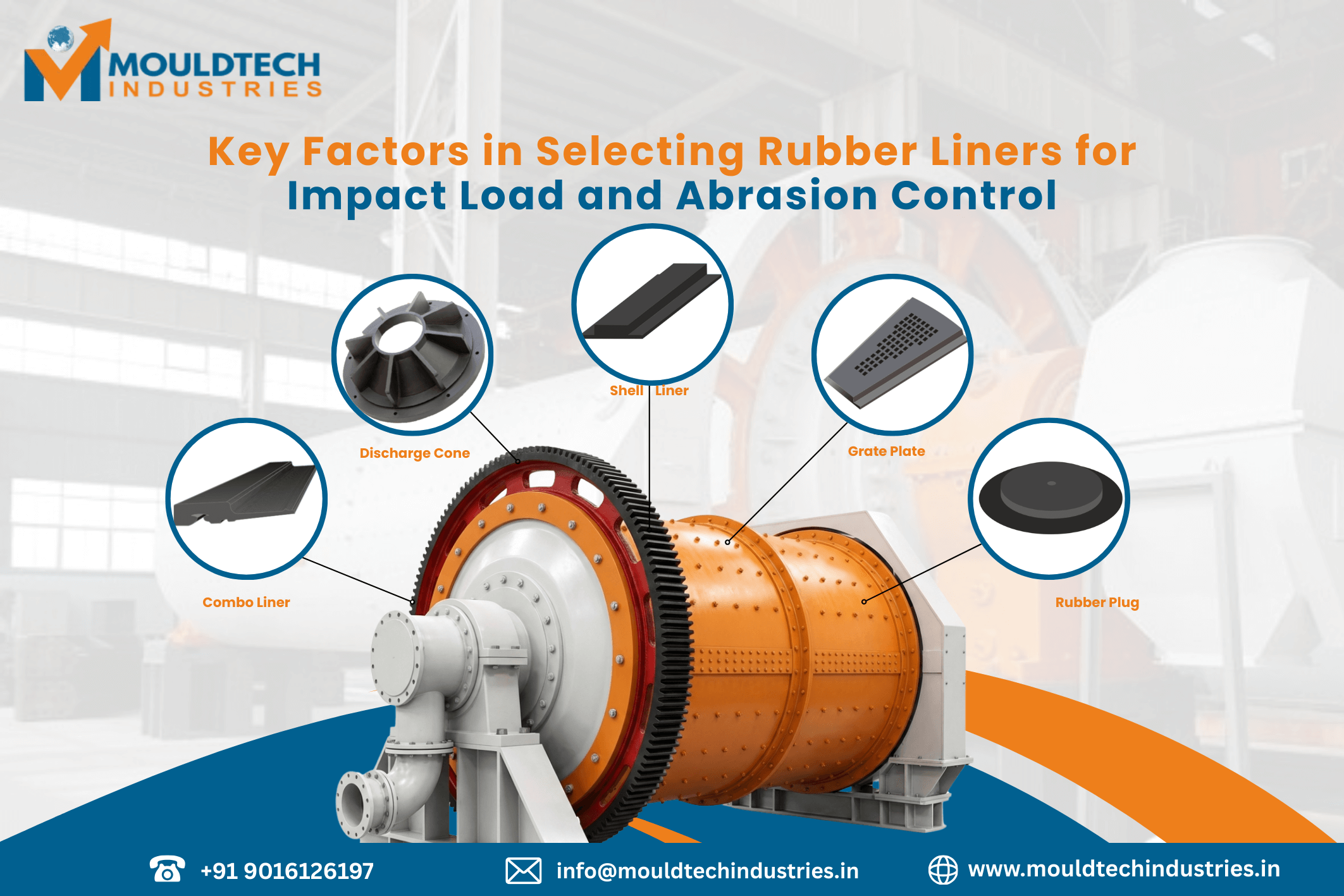
The best way to reduce unplanned grinding mill downtime and heavy maintenance expenditure is by installing a precisely engineered wear protection system. For over 15 years on the industrial shop floor, I have observed plant managers struggle with premature wear, heavy noise pollution, and frequent shutdowns caused by substandard mill internals. Upgrading to a specialized grinding mill rubber liner drastically alters a plant’s operational efficiency. Rather than relying on rigid metal liners that crack under severe impact, modern milling operations demand flexible, highly durable elastomeric compounds. By absorbing heavy kinetic energy, an optimized rubber lining not only protects the steel shell of the mill but also significantly optimizes the grinding trajectory of the media.
If your facility operates heavy-duty grinding equipment, finding reliable ball mill rubber liner manufacturers near me becomes a critical procurement objective. A well-designed liner setup delivers up to 70% noise reduction, creating a safer environment for workers while extending the functional lifespan of the equipment. Through careful material formulation and structural design, modern industrial rubber products provide the exact abrasion resistance required for high-tonnage environments. For further insights on how these setups improve material grinding efficiency, you can explore detailed ball mill solutions.
Why Choose Mouldtech Industries for Rubber Liner for Grinding Mill?
Here’s how Mouldtech Industries systematically approaches grinding mill wear protection. Having established our manufacturing foundation in 2007, we bring over 18+ years of expertise to the table. We do not believe in a one-size-fits-all approach; every mill operates under different parameters involving varied ore hardness, slurry density, and rotational speeds. Our engineering team designs custom rubber liner India solutions that perfectly match the specific operational dynamics of your grinding equipment. This precise customization as per mill specifications ensures a tighter fit, eliminates slurry racing behind the plates, and prevents localized shell washouts.
We recently worked with a mid-sized sponge iron facility in Kolkata that faced recurring issues with their discharge grates and lifter bars. They were changing out traditional manganese steel liners every six months due to aggressive wear. After conducting a detailed mill audit, we supplied a custom-engineered rubber lining system. The result was a dramatic shift in their maintenance schedule—liner life increased by over 40%, and the plant reported an immediate drop in decibel levels, complying with local safety norms. It is real-world results like these that make working with a dedicated ball mill rubber lining manufacturer essential for your plant’s long-term profitability.
Our Rubber Liner for Grinding Mill Manufacturing Capabilities
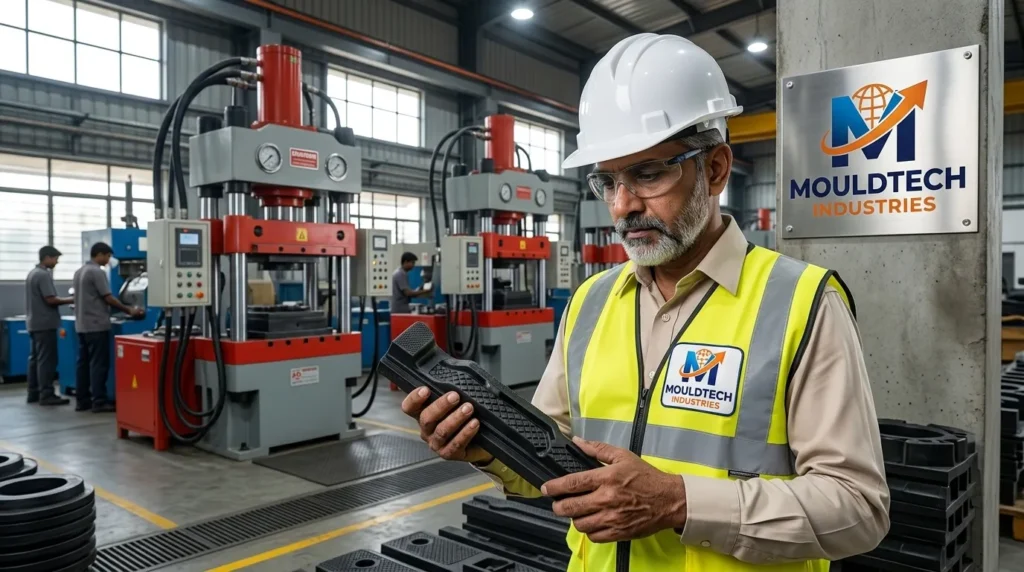
Yes, we provide an extensive array of wear protection solutions backed by advanced manufacturing infrastructure right here in Vadodara. Our facility is equipped with heavy-duty hydraulic presses, precision mold-making equipment, and modern testing laboratories that allow us to produce high-density elastomeric compounds. For extreme wear zones, we manufacture a specialized ceramic embedded rubber liner that combines the sliding abrasion resistance of alumina ceramics with the impact-absorbing properties of specialized rubber. This hybrid approach is highly effective in primary grinding applications where both heavy impact and sliding friction are present.
Beyond standard mill internals, our production capabilities extend to a full suite of industrial rubber products. We regularly manufacture and supply heavy-duty impact pads for transfer chutes, precision-engineered conveyor belt cleaners to reduce material carryback, and high-friction rubber lagging sheets for drive pulleys. Whether you are operating a massive cement plant near Mumbai or a small mineral processing unit, we ensure that every component is tailored to your throughput requirements. Our deep understanding of polymer blending allows us to offer the ideal wear resistant rubber liner for both wet and dry grinding environments. To see our broader manufacturing scope, review our complete wear protection line.
Navigating Quality Standards and ISO 9001:2015 Certification
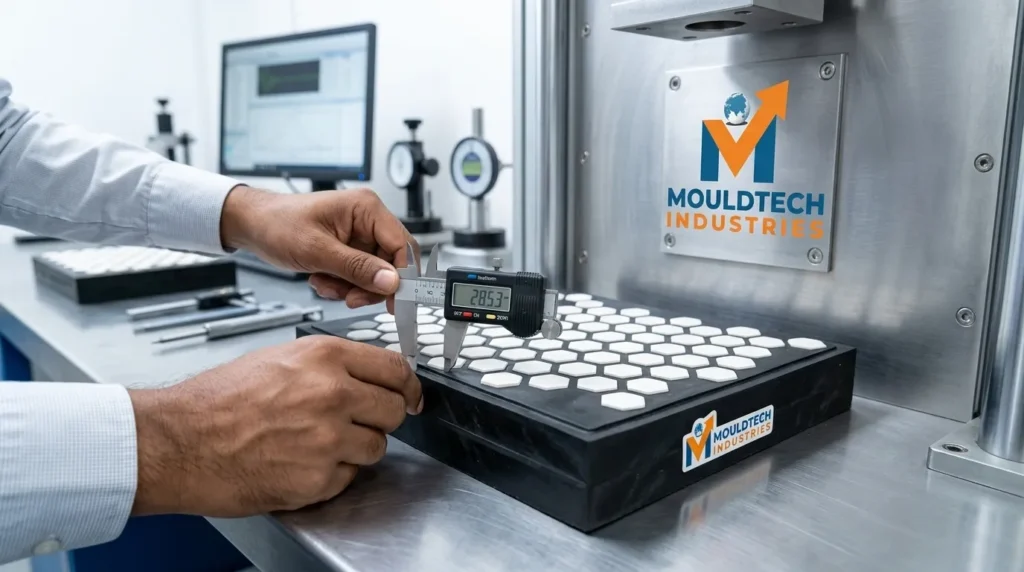
The best way to guarantee consistent performance from rubber mill internals is strict adherence to international quality management systems. As an ISO 9001:2015 certified organization, we maintain rigorous quality checks at every stage of the production cycle. From testing the tensile strength and elongation of raw natural rubber batches to verifying the Shore A hardness of the final cured plates, our quality assurance protocols leave nothing to chance. We document every batch, ensuring complete traceability for our mining equipment rubber solutions.
Because of these stringent standards, our low maintenance rubber liners are fully export ready, though we maintain a strong focus on pan-India supply. Plant engineers in Chennai and other industrial hubs trust our testing data because it directly correlates with actual shop-floor performance. We simulate accelerated wear conditions in our laboratory to ensure the compound will withstand the harsh realities of your cement mill liners. When you partner with a top-tier manufacturing partner, you are investing in documented reliability and peace of mind.
Get a Quote for Rubber Liner for Grinding Mill
Local Manufacturers vs Mouldtech Industries
When evaluating Rubber Liner Manufacturers in Vadodara, procurement teams often weigh organized, certified manufacturers against unorganized local workshops. Based on decades of observing plant shutdowns, the initial cost savings of uncertified liners are quickly wiped out by premature failures and extended mill downtime. The table below outlines the clear operational differences.
| Parameter | Unorganized Local Suppliers | Mouldtech Industries |
|---|---|---|
| Customization | Standard off-the-shelf sizes | Precise customization as per mill specifications |
| Material Selection | Generic commercial rubber blends | Application-specific elastomeric compounds |
| Lifespan | Frequent replacement cycles | Proven longer liner life (up to 40% more) |
| Mill Fitment | Often requires on-site cutting/adjusting | CAD-designed for zero-gap fitment |
| Service Coverage | Limited regional delivery | Reliable pan-India supply and export ready |
| Quality Tracking | No formal documentation | ISO 9001:2015 certified traceability |
Plant managers in heavy aggregate zones like Hyderabad frequently report that precision fitment is just as critical as the rubber compound itself. If a liner plate does not sit perfectly flush against the mill shell, slurry will eventually bypass the seam and erode the steel housing. You can read more about how proper engineering prevents these failures in our overview of specialized milling solutions.
Step-by-Step Process – How We Deliver Rubber Liner for Grinding Mill?
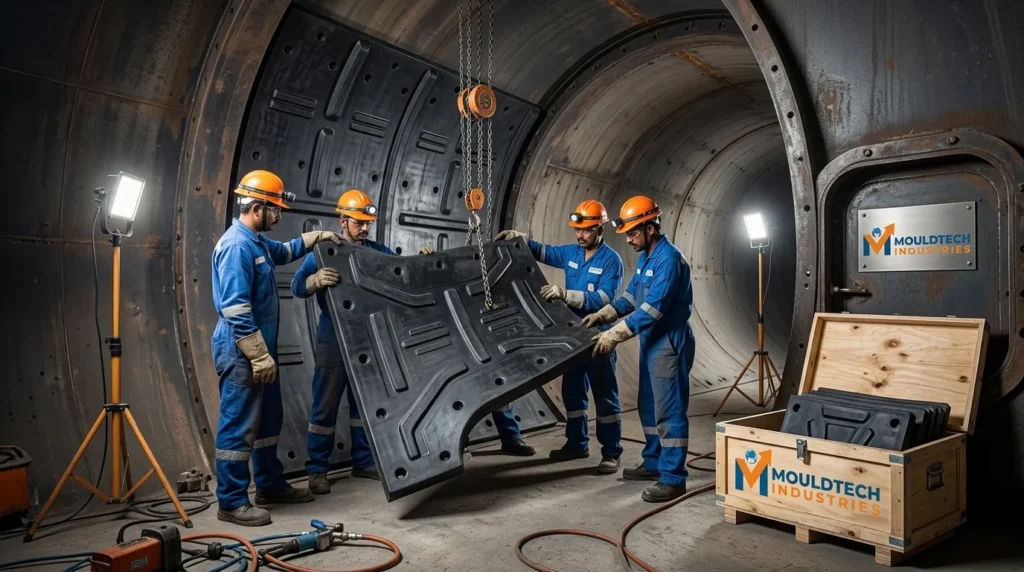
The engineering and supply of a heavy-duty abrasion resistant liner is a highly systematic process that demands exact technical execution. When a client approaches us, our engineering team immediately requests the mill’s general arrangement (GA) drawings, operational RPM, ball charge ratio, and the specific work index of the material being ground. From there, we design the optimum lifter bar face angle and shell plate thickness. Once the CAD drafts are approved by the client’s technical team, we move into compounding, molding, and curing within our advanced manufacturing infrastructure.
Real Client Case Study: Cement Plant Expansion
Consider a recent project involving a major cement clinker grinding unit situated on the outskirts of Jaipur. The facility was upgrading its tonnage capacity and needed to switch from heavy cast iron liners to a lighter, noise-reducing alternative without sacrificing wear life. They reached out to us while searching for reliable Ball Mill Rubber Liner Suppliers India. Our team conducted an extensive site audit and proposed a custom high-profile lifter bar design paired with heavy-duty rubber shell plates.
The manufacturing was completed within a strict shutdown window of 25 days. Upon installation, the total weight of the mill internals dropped significantly, which immediately reduced the electrical draw on the main drive motor. Furthermore, the operators noted up to 70% noise reduction in the grinding bay. The plant maintenance head in Bangalore who oversaw the corporate procurement later confirmed that reduced maintenance downtime directly boosted their quarterly production volumes. If your facility is planning an upcoming shutdown and needs expert assessment, it is best to contact a qualified technical team early in the planning phase.
Frequently Asked Questions
1. How much does a rubber liner for a grinding mill cost?
- The cost varies based on the mill diameter, length, and the specific polymer compound required. A custom-engineered rubber lining generally offers a lower total cost of ownership compared to steel due to longer wear life and significantly reduced installation time. Claim your Download Ball Mill Liner Cost Guide by contacting our team.
2. What is the lifespan of ceramic embedded rubber liners?
- Depending on the aggressiveness of the ore and the ball charge, ceramic embedded liners can last 2 to 3 times longer than standard rubber or steel liners, especially in primary grinding scenarios with high sliding abrasion.
3. Can rubber liners reduce mill noise?
- Yes, installing a high-quality elastomeric liner can result in up to 70% noise reduction inside the plant. Rubber naturally absorbs the acoustic shock generated by the tumbling grinding media, creating a much safer work environment.
4. Do you supply cement mill liners pan-India?
- Absolutely. We have successfully delivered custom rubber liners to over 200+ clients across the mining and cement sectors, with a robust logistics network supporting seamless pan-India supply and international exports.
5. Are your abrasion resistant liners suitable for wet grinding?
- Yes, our industrial rubber products are specially formulated to resist chemical degradation, hydrolysis, and abrasive slurry wash in wet grinding applications, preventing premature shell corrosion.
6. How do I choose between rubber and steel liners?
- Rubber is preferred for secondary and tertiary milling where noise reduction, lower mill weight, and rapid installation are priorities. Steel is sometimes retained for very large primary SAG mills, though hybrid ceramic-rubber solutions are rapidly replacing steel. Schedule a Free Rubber Liner Consultation with us to evaluate your specific mill.
7. Is it possible to retrofit low maintenance rubber liners into older mills?
- Yes. Our engineering team specializes in mapping the bolt-hole patterns of legacy mills and custom-manufacturing rubber backing plates and lifter bars that fit perfectly without requiring any modifications to your existing steel shell.