



Ceramic Lagging Sheet Manufacturer in India: Mouldtech Industries
Mouldtech Industries is a Manufacturer, Supplier, and Exporter of Types of Ceramic Lagging sheets.
Our Manufacturing Unit is in Vadodara, Gujarat, India.
Mouldtech Industries is a Manufacturer of Ball Mill Solutions, Ball Mill Rubber Lining, Wear Protection Line, Resistant Rubber Liner, Embedded Rubber Liners, Conveyors Solutions, Ceramic Lagging Sheet, Belt Cleaners, Pulley Lagging, Ceramic Rubber Lagging Services, and Ceramic Rubber Lagging Sheet.
Ceramic Lagging Sheet: Engineered Defence Against Wear in Tough Industrial Settings
Introduction
Industries such as mining, metal fabrication, cement production, ceramics, and bulk conveyance are among the most demanding in terms of mechanical stress in modern manufacturing. Constant material movement, abrasive digging materials, high belt strains, exposure to dampness, and recurring impact forces put significant strain on conveyor belts and moving machinery.
In harsh industrial settings, unexpected stops from wear problems are more than just a maintenance headache—they impact output, energy use, and site security. As worldwide production expands and equipment use increases, sectors in India and globally are prioritising dependable wear defence systems over just fixing things after they break.
Wear protection is no longer seen as a simple add-on. It is now a calculated engineering decision intended to extend equipment lifespan, keep things running smoothly, and manage costs over time. In this light, Ceramic Lagging Sheet has become a key solution for safeguarding conveyor pulleys and drive mechanisms subjected to intense scraping, moisture, and heavy loads.
The need for ceramic-rubber composite solutions is growing across mining belts in regions like Odisha and Chhattisgarh, cement factories in Rajasthan and Andhra Pradesh, steel mills in Maharashtra and Jharkhand, ceramic production centres in Gujarat, and bulk-handling hubs at ports and power stations nationwide.
Industrial Pains Driving the Need for Ceramic Lagging Sheet
Across industrial settings worldwide—from iron ore mines to the handling of cement materials—several common issues drive the adoption of advanced lagging options.
- Scraping and Material Deterioration: Conveyor pulleys moving crushed rock, limestone, coal, or cement clinker are constantly exposed to abrasive fine particles. Standard rubber lagging alone may struggle to endure steady sliding friction over long work periods.
- Impact Forces and Belt Strain: High-capacity conveyors are subjected to significant belt tension. Sudden shifts in load during start-up, stopping, or material surges create localised impact stresses that speed up surface breakdown.
- Wetness, Slurry, and Rust: Damp settings are frequent in mining, processing plants, and coastal bulk depots. Moisture reduces grip, worsens belt slippage, and encourages rust on pulley surfaces if not properly guarded.
- Downtime and Maintenance Burden: Seasoned plant personnel often note that frequent pulley relagging causes more extended stoppages, reliance on cranes, and work-intensive upkeep—especially in tight conveyor spaces.
- Increasing Maintenance Expenses: Unexpected wear failures lead to belt damage, pulley repairs, and lost production, all of which far exceed the cost of preventive wear protection.
These combined difficulties make ceramic lagging setups a practical requirement rather than an optional upgrade.
What Exactly Is a Ceramic Lagging Sheet?
A Ceramic Lagging Sheet is a composite material for wear defence, featuring very hard ceramic pieces set within a flexible rubber base. It is made explicitly for lagging conveyor pulleys operating under heavy scraping, wet conditions, and substantial loads.
The ceramic parts offer outstanding resistance to abrasive wear, while the rubber base absorbs impacts, conforms to pulley shell unevenness, and holds fast under moving forces.
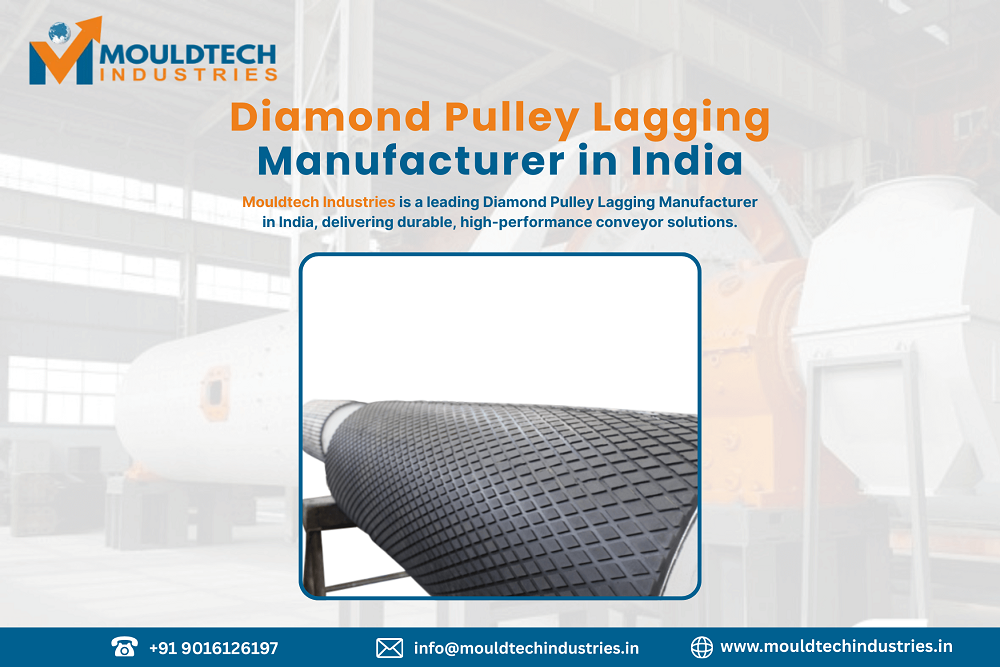
Unlike typical rubber lagging, ceramic lagging doesn’t just depend on friction. The raised ceramic tile shape increases the grip between the belt and pulley, boosting power transfer and reducing slip—especially in wet or muddy conditions.
From an engineering viewpoint, ceramic lagging sheets are intended to control wear predictably and lengthen service intervals, stabilising conveyor performance over extended use rather than stopping all wear.
Uses Across Different Sectors
- Mining Sector: In mining and metal processing operations, ceramic lagging sheets are widely used on drive pulleys handling iron ore, bauxite, coal, manganese, and limestone. They function reliably under high tonnage, abrasive fines, and slurry conditions typical in processing circuits.
- Cement Factories: Cement plants use ceramic lagging on clinker conveyors, belts feeding raw mills, and coal-handling systems, where abrasive dust and constant operation demand a steady pulley grip.
- Metal & Steel Mills: Steel plants running sinter, coke, and raw-material conveyors benefit from ceramic lagging’s resistance to abrasive particles and its ability to withstand higher surface temperatures.
- Ceramic Production: Handling ceramic feedstocks—such as feldspar, quartz, and clay—introduces sharp, abrasive particles that quickly wear down standard lagging. Ceramic lagging meets the operational needs of ceramic centres in Morbi, Wankaner, and other hubs in Gujarat.
- Power Plants: Thermal power stations use ceramic lagging on coal-handling conveyors, where moisture, dust, and extended operating hours can cause slip and wear.
- Bulk Material Handling: Ports, fertiliser plants, and projects managed by EPC firms use ceramic lagging for heavy-duty conveyors that move large volumes of solids across various environmental conditions.
Material Science & Engineering Views
From a materials engineering angle, ceramic lagging effectiveness relies on a balanced interplay between firmness and flexibility.
- Ceramic Attributes: High-alumina ceramics provide extreme hardness, usually surpassing that of most bulk minerals. This firmness resists cutting, digging, and the abrasive actions that degrade rubber surfaces.
- Rubber Attributes: The rubber structure offers pliability, shock absorption, and bonding strength. It accounts for minor flaws in the pulley shell and reduces shaking during use.
- Wear Resistance Concepts: Wear is managed by allowing the ceramic tiles to bear the abrasive load while the rubber shields concentrated stresses. This combined design avoids quick breakage while extending surface life.
Producers with deep industry history know that selecting the right materials must align with operational speed, belt strain, material properties, and environmental factors—not just general ideas.
Design & Specific Needs
Industrial conveyor setups differ greatly in diameter, width, running speed, and duty. Effective ceramic lagging demands a design specific to the application.
Key design points include:
- Suitability for pulley size
- Tile size and spacing based on belt flexibility
- Rubber depth for impact cushioning
- Edge shielding to guard the belt
Tailored sizing and arrangement ensure a proper fit without adding stress or tracking problems to the belt. Generic sheets might not always address site-specific limitations encountered in older facilities or in updated systems.
Production Quality & Process Control
Precise manufacturing is vital to the performance of ceramic lagging.
Quality-checked methods focus on:
- Consistent ceramic tile hardness and measurements
- Uniform rubber mix recipe
- Strong ceramic-to-rubber adherence
- Accurate dimensions across production lots
Consistency between batches is essential for large projects involving multiple pulleys across a site, ensuring predictable setup and lasting function.
Setup & Upkeep Notes
Ceramic lagging sheets generally come with bonding layers suitable for cold or hot curing, based on site capabilities.
Setup benefits include:
- Less setup time compared to systems that place tiles one by one
- Lower need for specialised instruments
- Minimal belt removal in some layouts
Maintenance periods are extended because wear rates are slower, allowing maintenance crews to schedule stops more effectively instead of reacting to sudden issues.
Security & Operational Dependability
Dependable pulley lagging directly aids site safety. A better belt grip reduces slip-related belt damage, misalignment, and sudden conveyor halts.
Steady conveyor function reduces:
- Unexpected belt slides
- Spillage risks
- Interventions in risky zones
Protecting equipment and worker safety are closely linked in high-capacity material handling setups.
Value Over Equipment Lifespan
While ceramic lagging might need more initial engineering thought, its worth becomes clear over the equipment’s whole life.
Long-term gains include:
- Fewer stoppages for relagging
- Less belt deterioration
- Reduced strain on maintenance staff
- Better conveyor operation time
Instead of focusing on the upfront cost, industries assess ceramic lagging based on total ownership cost and operational stability.
Export Preparedness & Worldwide Acceptance
Global industrial buyers expect wear defence goods to meet documented performance criteria, required traceability, and steady quality benchmarks.
Producers ready for export align with:
- Global material standards
- Consistent production methods
- Application documentation and technical backing
These expectations are increasingly common not only in foreign markets but also among major EPC firms operating within India.
Why Experienced Producers Count
Ceramic lagging results depend as much on engineering insight as on material choice. Seasoned producers recognise failure patterns seen in real plants and design solutions accordingly.
Dependable supply, expert advice, and understanding of applications distinguish long-term partners from mere sellers of bulk goods.
About Mouldtech Industries
Mouldtech Industries is a seasoned industrial producer focused on wear-resistant and material-conveyance systems. Their offerings include rubber liners for ball mills, ceramic wear-defence setups, rubber surfacing treatments, rubber goods for ball mills, and conveying systems.
Catering to various sectors throughout India, spanning states like Gujarat, Maharashtra, Rajasthan, Odisha, Chhattisgarh, Jharkhand, Karnataka, Tamil Nadu, Andhra Pradesh, Telangana, West Bengal, Uttar Pradesh, Madhya Pradesh, Punjab, Haryana, Delhi NCR, Himachal Pradesh, Uttarakhand, Assam, Meghalaya, Bihar, and major industrial hubs such as Ahmedabad, Surat, Vadodara, Rajkot, Morbi, Mumbai, Pune, Nagpur, Raipur, Bhubaneswar, Rourkela, Jamshedpur, Durgapur, Chennai, Bengaluru, Hyderabad, Visakhapatnam, Coimbatore, Salem, Jaipur, Kota, Alwar, and more.
Trending FAQs
1. What is the typical lifespan of a ceramic lagging sheet?
Lifespan depends on material abrasiveness, belt speed, and operating conditions. In heavy-duty environments, ceramic lagging typically outlasts conventional rubber lagging.
2. Is ceramic lagging suitable for wet and muddy conditions?
Yes. Ceramic tile profiles improve grip and reduce slip in wet, slurry, and high-moisture environments.
3. How often does ceramic lagging require maintenance?
Maintenance intervals are significantly longer compared to standard rubber lagging, reducing shutdown frequency.
4. How does ceramic lagging compare to rubber-only solutions?
Ceramic lagging offers superior abrasion resistance, while rubber-only lagging provides flexibility but wears faster under abrasive loads.
5. Is ceramic lagging used globally?
Yes. It is widely adopted across the mining, cement, steel, and bulk-handling industries worldwide.
For technical guidance and reliable Ceramic Lagging Sheet solutions, connect with Mouldtech Industries at https://www.mouldtechindustries.in/ for expert industrial support.
#BallMillRubberLiner #CeramicWearProtection #RubberLining #MiningSolutions #BulkMaterialHandling #ConveyorSolutions #MouldtechIndustries #WearProtection #IndustrialManufacturing