

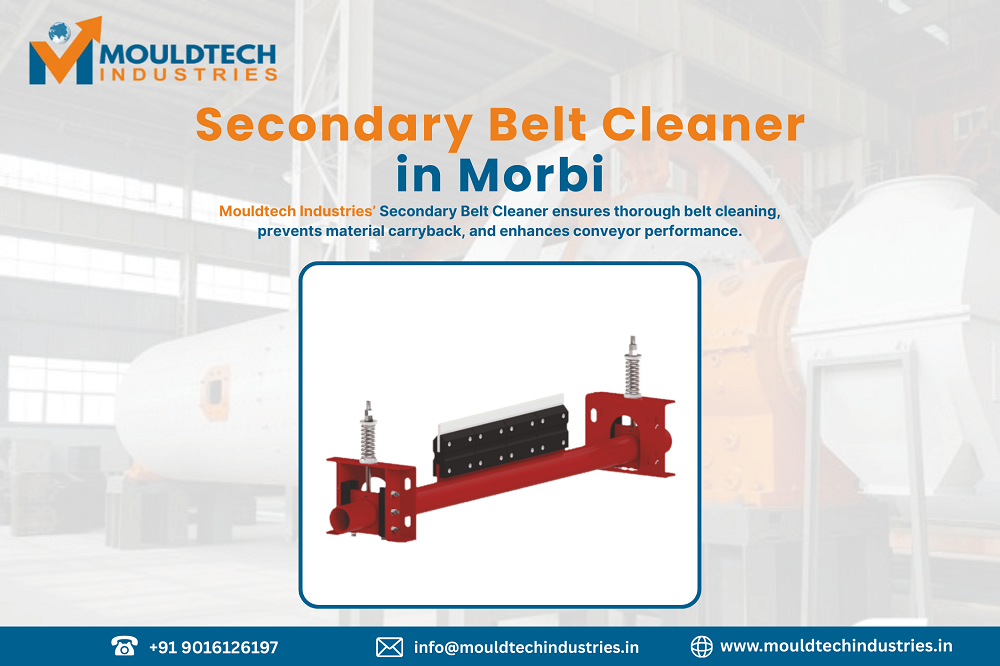
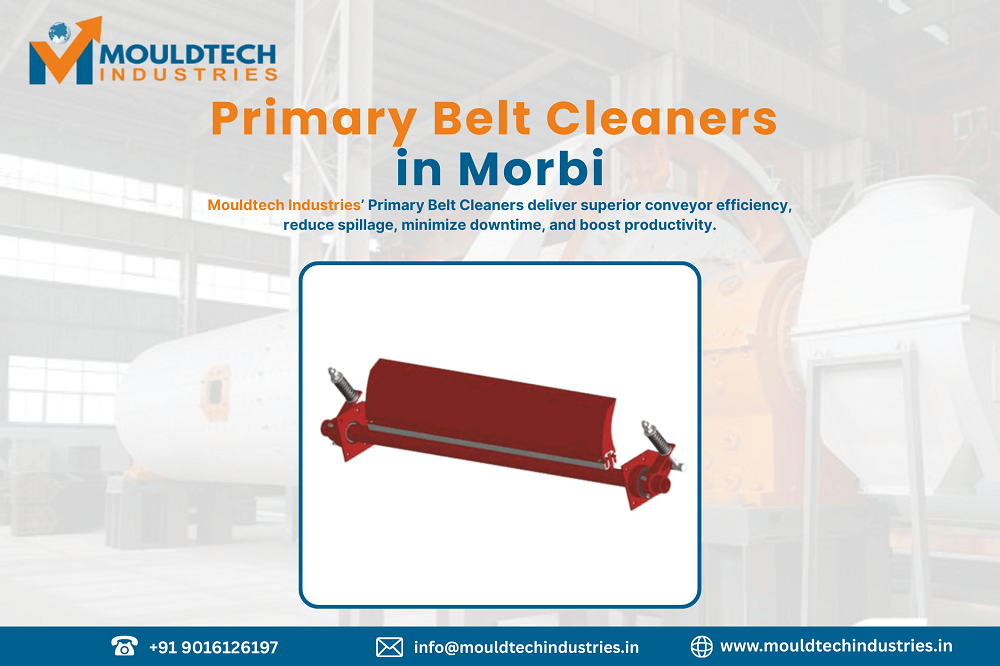
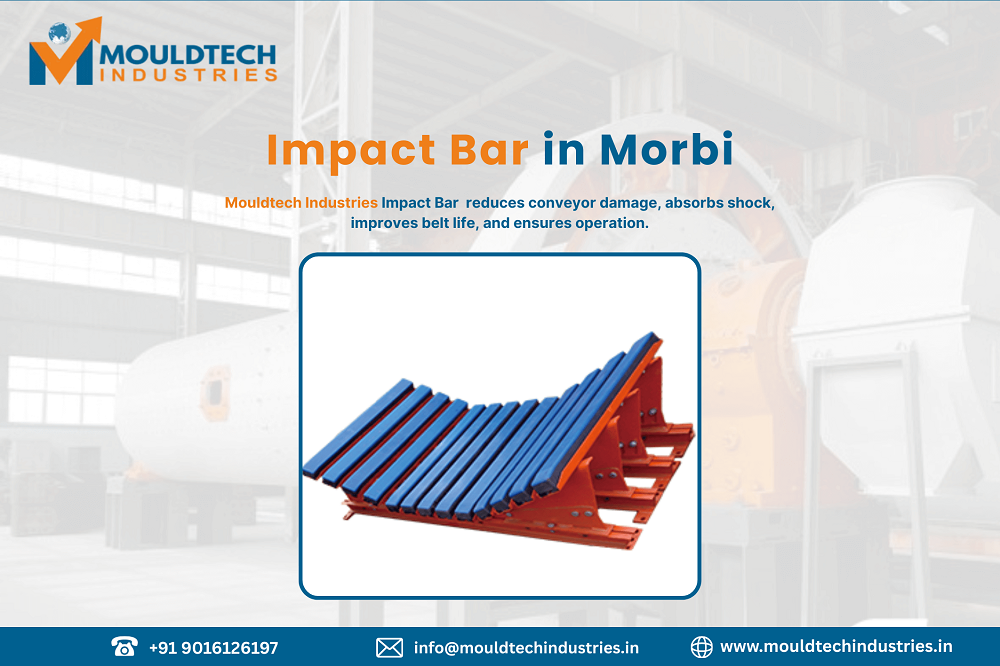
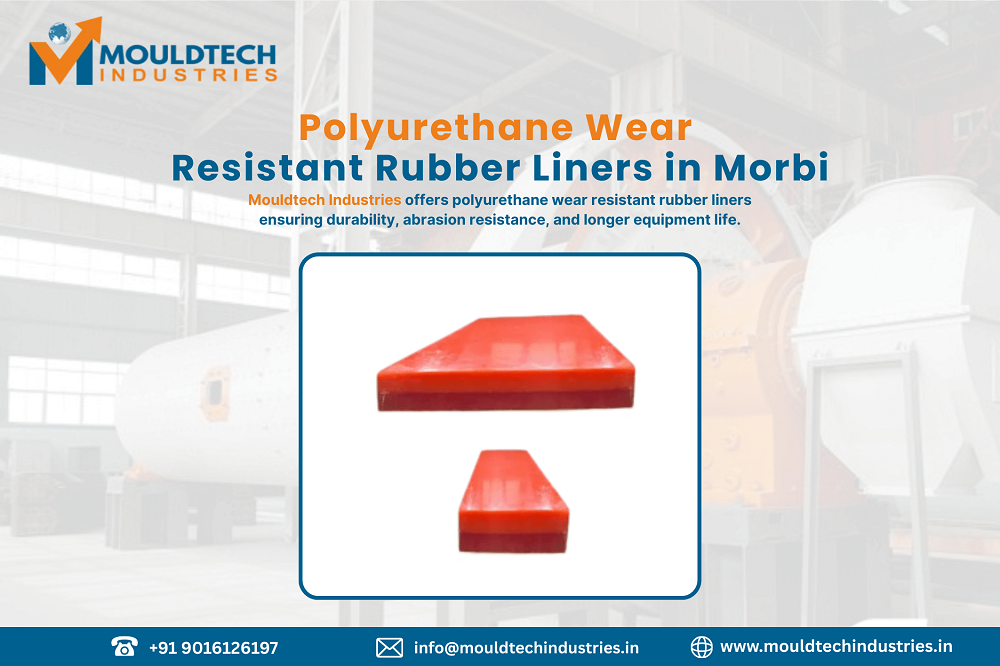
Primary Belt Cleaner Manufacturer, Supplier, And Exporter in India: Mouldtech Industries
Mouldtech Industries is a Manufacturer of Primary Belt Cleaner in Morbi.
Our Manufacturing Unit is in Vadodara, Gujarat, India.
Mouldtech Industries is a Manufacturer of Bridge Rubber Pad, Ball Mill Rubber Lining, Bridge Rubber Pad, Resistant Rubber Liner, Embedded Rubber Liners, Conveyors Solutions, Ceramic Lagging Sheet, Belt Cleaners, Bridge Rubber Pad, Ceramic Rubber Lagging Services, and Ceramic Rubber Lagging Sheet.
Primary Belt Cleaner: Boosting Belt Dependability in Tough Industrial Settings
Introduction
Sectors like extraction, metal refinement, cement creation, ceramic production, and bulk goods dealing operate amidst some of the most demanding circumstances found in modern industry. Constant material transfer, rough particles, striking forces, wetness, and chemical exposure subject conveyor setups to ongoing strain. Among these systems, conveyor belts remain fundamental to plant functions, directly impacting output, safety, and continuous operation.
A common hurdle across these fields is material residue sticking—leftover substance clinging to the belt surface after unloading. This residue causes dropped material, faster belt deterioration, tracking issues, airborne dust, and unexpected stoppages. Over time, this directly raises upkeep expenditures and undermines plant dependability.
As worldwide industrial needs climb—especially in key mining zones, cement clusters, steel manufacturing areas, and ceramic production sites—the necessity for dependable, low-effort conveyor solutions has become crucial. In this regard, the Primary Belt Cleaner assumes an essential function in preserving conveyor efficiency, safeguarding subsequent machinery, and ensuring safe plant functions.
Industrial Hurdles Driving Need for Core Scrapers
In demanding industrial settings, conveyor systems confront numerous operational difficulties:
- Surface Erosion: Bulk materials like iron ore, limestone, clinker, coal, bauxite, and silica cause persistent abrasive contact with belts and parts.
- Impact Forces: Material loading points endure repeated striking, which harms the belt surface and intensifies residue adhesion.
- Rust & Dampness: Wet processing conditions, especially in mining and power generation, cause material to cling and facilitate corrosion-related breakdowns.
- Stoppage Pressure: Unmanaged dropped material and soiled belts lead to frequent halts for cleaning and servicing.
- Rising Maintenance Outlays: Manual tidying increases staffing costs, safety hazards, and belt harm.
Seasoned plant engineers frequently observe that inadequate belt cleaning isn’t just a tidiness concern—it’s a fundamental reason for conveyor inefficiency. Across global extraction regions and Indian industrial zones alike, Primary Belt Cleaners have become vital for stable conveyor performance.
What Constitutes a Primary Belt Cleaner?
A Primary Belt Cleaner is a mechanical cleaning unit positioned at the head drum of a conveyor setup. Its principal task is to dislodge the bulk of adhering material from the belt right after material transfer.
Unlike subsequent scrapers, which target fine remnants, the primary scraper manages large volumes of residue at the discharge spot, where sticking is most powerful.
From a design standpoint, a Primary Belt Cleaner must:
- Maintain steady blade contact force
- Resist wear and impact
- Function non-stop without harming the belt
- Adjust to belt wear and misalignment
It serves not as a direct output booster but as a reliability supporter for conveyor systems.
Deployment Across Sectors
- Extraction Activities: In mining and mineral processing, conveyors handle sharp, abrasive materials continuously. Core Scrapers lessen material buildup that otherwise damages return idlers and structural elements.
- Cement Facilities: Cement conveyors manage fine powders and hard clinker pieces. Effective belt cleaning stops buildup that causes belt wandering and dust release.
- Metal & Steel Works: Steel mills transport sinter, coke, slag, and raw inputs where intense heat and abrasive dust necessitate strong cleaning apparatus.
- Ceramic Production: Raw ceramic resources like feldspar, quartz, and clay are highly abrasive. Clean belts aid in preserving process uniformity and avoiding cross-contamination.
- Power Stations: Coal handling arrangements depend on clean belts to prevent spillage, fire risks, and excessive servicing.
- Bulk Goods Handling Hubs: Ports, storage areas, and industrial logistics centers rely on Primary Belt Cleaners to sustain safe and efficient material flow.
Material Science & Design Factors
Performance of the Primary Belt Cleaner is directly impacted by material selection and engineering design.
- Rubber Qualities: Top-tier elastomers offer suppleness, shock dispersal, and resistance to belt harm. Rubber blades conform readily to belt surface variations.
- Ceramic Toughness: Blades reinforced with ceramics provide superior resistance to abrasion, notably in high-wear extraction settings.
- Wear Resistance Norms: Effective cleaning hinges on regulated contact pressure—too little leaves residue, too much damages the belt.
- Shock Absorption: Blade mounting frameworks must absorb jolts without sacrificing cleaning capability.
Manufacturers with substantial sector tenure recognize that material science choices directly affect scraper lifespan and belt safeguarding.
Style & Tailoring Needs
No two conveyor systems are clones. Primary Belt Cleaners must be engineered based on:
- Belt size and velocity
- Material attributes
- Drum diameter
- Conveyor slope
- Operating surroundings
Custom dimensions and application-specific blade choices ensure compatibility with existing conveyor setups. Poorly matched scrapers frequently cause early wear and inconsistent outcomes.
Production Excellence & Process Oversight
Precise manufacturing holds a vital position in belt scraper dependability.
Key elements include:
- Accurate blade shaping
- Uniform rubber or ceramic linkage
- Controlled hardening operations
- Precise dimensions of mounting kits
Consistency between production batches ensures that replacement parts behave as expected across multiple deployments.
Fitting & Servicing Aspects
From a plant maintenance viewpoint, Primary Belt Cleaners need to:
- Permit simple mounting
- Facilitate swift blade swapping
- Minimize conveyor downtime
Smartly conceived systems lessen manual cleaning tasks and extend service intervals, which is especially valuable in continuous-process industries.
Safety & Functional Dependability
Uncontrolled residue creates slip hazards, dust exposure, and equipment degradation. Appropriate belt cleaning enhances:
- Workplace security
- Conveyor cleanliness
- Equipment longevity
- Overall plant resilience
Safety-focused organizations increasingly see belt scrapers as hazard reduction instruments, not optional attachments.
Value Over Equipment Lifecycle
While initial selection of gear is important, experienced operations teams concentrate on life-cycle cost effectiveness:
- Decreased belt deterioration
- Fewer roller replacements
- Reduced manual labor contribution
- Fewer unexpected halts
Primary Belt Cleaners assist in predictable maintenance scheduling and operational steadiness without adding system intricacy.
Export Readiness & Worldwide Acceptance
International industrial purchasers anticipate:
- Uniform quality
- Paperwork assistance
- Engineering openness
- Adherence comprehension
Manufacturers prepared for export grasp worldwide necessities regarding longevity, tracking, and sustained provision dependability.
The Value of Seasoned Manufacturers
While Main Belt Cleaners might seem uncomplicated, their effectiveness hinges on extensive operational familiarity. Producers boasting practical sector exposure offer:
- Actionable design perspectives
- Suggestions tailored to the specific use case
- Dependable technical aid
- Uninterrupted long-term supply
Regarding Mouldtech Industries
Mouldtech Industries is a seasoned industrial producer concentrating on defense against wear and bulk movement systems, encompassing rubber linings for ball mills, ceramic systems for wear defense, rubber coating options, rubber items for ball mills, conveyor elements, and belt sanitation setups.
Serving industrial sectors across India—including Maharashtra, Gujarat, Rajasthan, Odisha, Chhattisgarh, Jharkhand, Karnataka, Tamil Nadu, Andhra Pradesh, Telangana, West Bengal, Madhya Pradesh, Uttar Pradesh, Punjab, Haryana, Himachal Pradesh, Uttarakhand, Bihar, Assam, Meghalaya, Goa, Kerala, and all primary industrial centers like Mumbai, Pune, Ahmedabad, Surat, Vadodara, Jaipur, Udaipur, Bhilai, Raipur, Rourkela, Jamshedpur, Dhanbad, Chennai, Coimbatore, Salem, Hyderabad, Visakhapatnam, Bengaluru, Ballari, Kolkata, Durgapur, Indore, Nagpur, and many others—Mouldtech Industries backs up extraction hubs, cement conglomerates, metallurgical facilities, ceramic regions, and bulk material transport functions.
Discover more at https://www.mouldtechindustries.in/
Summary
Main Belt Cleaners have a fundamental function in sustaining conveyor effectiveness throughout the mining, cement, metal, ceramic, and bulk material handling sectors. By tackling material return at its origin, they enhance site safety, lessen upkeep workload, and promote enduring operational dependability.
For operations prioritizing lasting performance over temporary remedies, choosing the correct belt cleaning setup—and the appropriate manufacturing ally—remains a vital engineering choice.
Main Points
- Main Belt Cleaners lessen material carryback at the output location
- They safeguard conveyor belts and subsequent gear
- Appropriate for the mining, cement, steel, ceramic, and energy sectors
- Boost site safety and upkeep effectiveness
- Aid enduring operational stability within worldwide industrial settings
Trending FAQs
Q1. What is the typical lifespan of a Primary Belt Cleaner?
Lifespan depends on material abrasiveness, operating hours, and blade material selection.
Q2. Are Primary Belt Cleaners suitable for wet material handling?
Yes, when designed with appropriate blade pressure and corrosion-resistant components.
Q3. How often does a Primary Belt Cleaner require maintenance?
Inspection intervals vary, but properly designed systems require minimal routine attention.
Q4. Rubber vs ceramic belt cleaner blades—which is better?
Rubber offers flexibility and impact absorption; ceramic provides higher abrasion resistance.
Q5. Are Primary Belt Cleaners used globally?
Yes, they are standard conveyor components in mining and bulk handling operations worldwide.
Q6. Can Primary Belt Cleaners be retrofitted to existing conveyors?
Most systems can be adapted with proper engineering evaluation.
Contact Mouldtech Industries for reliable Primary Belt Cleaner solutions engineered for heavy-duty industrial conveyors, improving safety, reducing carryback, and ensuring long-term operational reliability across industries.
#PrimaryBeltCleaner #BeltCleaner #ConveyorBeltCleaner #ConveyorCleaningSystem #BulkMaterialHandling #ConveyorSolutions #MiningConveyors #CementPlantConveyors #SteelPlantHandling #CeramicIndustry #WearProtection #MouldtechIndustries