

Pulley Lagging Manufacturer, Supplier, And Exporter in India: Mouldtech Industries
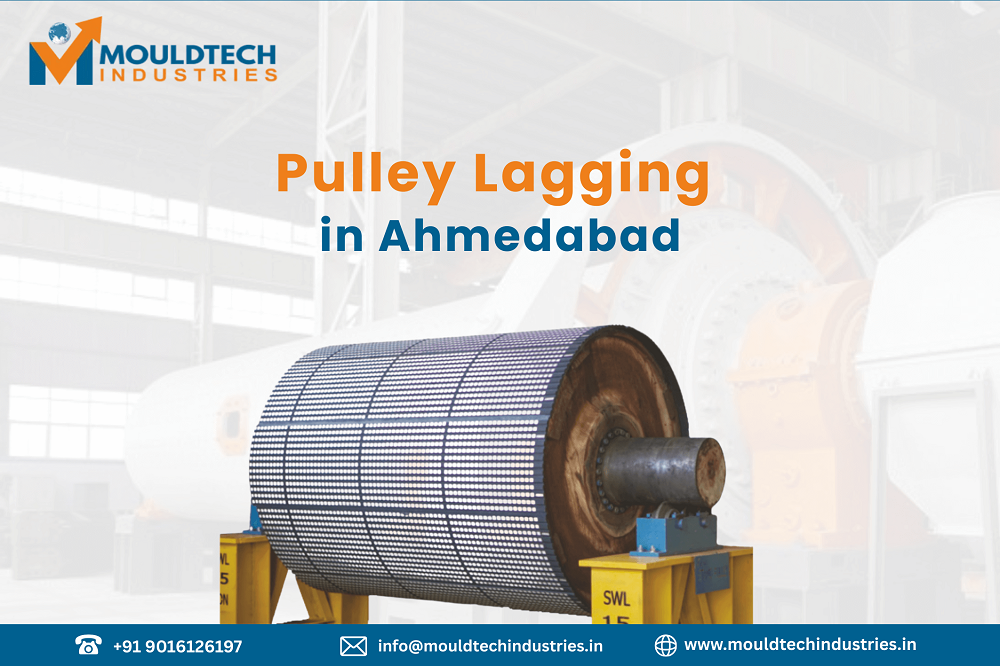
Mouldtech Industries is a Manufacturer of Pulley Lagging in Ahmedabad.
Our Manufacturing Unit is in Vadodara, Gujarat, India.
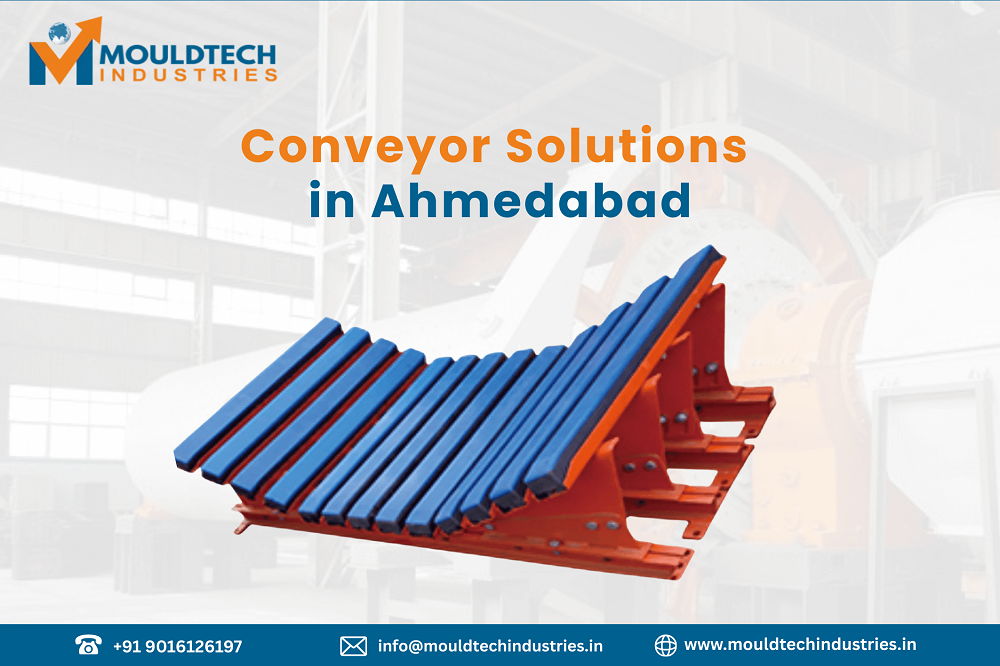
Mouldtech Industries is a Manufacturer of Bridge Rubber Pad, Ball Mill Rubber Lining, Bridge Rubber Pad, Resistant Rubber Liner, Embedded Rubber Liners, Conveyors Solutions, Ceramic Lagging Sheet, Belt Cleaners, Bridge Rubber Pad, Ceramic Rubber Lagging Services, and Ceramic Rubber Lagging Sheet.
Pulley Lagging: Boosting Equipment Dependability in Rugged Industries
In demanding industrial settings like mineral extraction, cement production, metal fabrication, and high-volume material transport, operational stability is paramount. Constant rubbing, sudden force, and material sliding pose daily hurdles that can impair machinery performance, increase stoppages, and increase upkeep costs. Seasoned plant supervisors often notice that even slight inefficiencies in belt systems or rotating machinery can lead to substantial output reductions.
Among the remedies to these industrial obstacles, Pulley Lagging has emerged as a vital component. Intended to boost grip, reduce wear, and prolong machinery service life, Pulley Lagging provides a sturdy safeguard for industrial pulleys in harsh environments. With mounting worldwide demand for efficient, long-lasting industrial setups, producers are increasingly incorporating Pulley Lagging into their maintenance and plant improvement plans.
Industrial Obstacles Fueling the Need for Pulley Lagging
Heavy industries grapple with several operational hurdles that directly affect the demand for Pulley Lagging:
- Abrasion: Continuous movement of loose materials such as ores, cement, and coal erodes pulley exteriors, shortening their useful life.
- Impact Forces: Abrupt jolts from material drops or unsteady belt operation exert mechanical strain on pulleys.
- Corrosion: Exposure to moisture, chemicals, and high heat hastens surface breakdown.
- Outages: Equipment failures stemming from pulley slippage or wear cause unplanned halts, directly affecting production timelines.
- Maintenance Expenses: Frequent replacements or repairs increase operational costs, especially in large industrial complexes.
These issues are not confined to any single region. In major mining zones such as India (Jharkhand, Odisha, Chhattisgarh), steel-making hubs (Jharkhand, Chhattisgarh, Maharashtra), and ceramic clusters (Gujarat, Rajasthan), industries face comparable operational pressures. Across the globe, facilities in Australia, South Africa, and Brazil’s mineral processing sectors face similar wear and functional concerns, underscoring the universal significance of Pulley Lagging solutions.
What Constitutes Pulley Lagging?
Pulley Lagging is a specially designed cladding fitted onto the surface of industrial pulleys. Its principal role is to reduce friction between conveyor belts and pulleys, minimize sliding, and protect pulley surfaces from wear.
Going beyond mere surface treatments, Pulley Lagging is formulated with heavy-duty materials, including natural or synthetic rubber, ceramic compounds, or layered systems. The thickness, surface pattern, and rigidity of the covering are precisely adjusted based on the plant’s operational demands. In robust industrial environments, appropriately specified Pulley Lagging can significantly decrease belt damage, improve load transfer effectiveness, and extend the operational lifespan of both pulleys and belts.
Uses Across Various Sectors
Mining
In mining activities, conveyors move ores and aggregates under conditions of intense impact and grinding wear. Pulley Lagging ensures:
- An effective grip between the belt and the pulley to prevent slippage
- Reduced pulley abrasion under heavy loads
- Consistent material movement in demanding conveyors
Cement
Cement facilities handle high-temperature materials and often operate in dusty environments. Pulley Lagging:
- Safeguards pulleys from surface decay due to abrasive clinker
- Enhances belt engagement for steady feed rates
- Lengthens the time between maintenance stops
Metal & Steel
Steel mills process heavy metal ores and plates that place considerable mechanical stress on conveyance machinery. Covering solutions:
- Boost belt-pulley friction for dependable material transport
- Cushion impact forces from dense materials
- Decrease long-term wear on key machinery
Ceramic Production
In manufacturing ceramic tiles and plumbing fixtures, materials like clay, feldspar, and glaze dust are highly abrasive. Pulley Lagging:
- Stops surface scratching and premature pulley deterioration
- Maintains belt alignment for continuous output
- Supports precise material handling tasks
Power Generation
Conveyors used to move coal or biomass in power stations need excellent grip and durable surfaces. Pulley Lagging:
- Minimizes slippage of heavy fuel masses
- Shields protect from physical and thermal strain
- Lowers stoppage time linked to conveyor belt servicing
Bulk Material Transport
Ports, storage centers, and industrial logistics sites handling loose solids benefit from Pulley Lagging by:
- Improving belt hold under shifting load levels
- Decreasing system strain and belt replacement frequency
- Boosting overall facility output
Material Science & Engineering Aspects
Choosing the appropriate Pulley Lagging necessitates understanding material characteristics and wear dynamics:
- Rubber Qualities: Industrial-grade rubber offers pliability, shock damping, and wear resistance. Its firmness and tensile strength are vital for matching the plant’s operational load profile.
- Ceramic Resilience: Ceramic elements in composite coverings offer superior abrasion resistance in extreme wear conditions.
- Wear Resistance Principles: Effective covering balances the flexibility needed for grip with the hardness required for surface protection, ensuring extended pulley service.
- Impact Cushioning: Covering systems disperse energy from material impact, lessening shock transmission to the pulley axle and its bearings.
Engineers developing Pulley Lagging must account for these principles to ensure reliable operation under dynamic industrial conditions.
Design & Tailoring Needs
Pulley Lagging is not a universal solution. Design factors include:
- Equipment Suitability: The covering must fit the pulley diameter, convex shape, and belt width to maintain even contact.
- Custom Dimensions: Thickness, rubber type, and ceramic layers can be personalized based on load, belt velocity, and the operating setting.
- Context-Specific Design: Conveyors in mining differ from those in cement facilities in terms of material properties, requiring tailored covering solutions for optimal performance.
Experienced fabricators work closely with plant personnel to establish specifications that minimize interruptions and maximize output.
Manufacturing Excellence & Process Control
Top-tier Pulley Lagging demands precise construction:
- Accurate Manufacturing: Advanced shaping and hardening methods ensure uniform depth and surface texture.
- Quality Verification: Non-damaging assessment and firmness checks maintain uniformity across production lots.
- Lot Uniformity: Reliable production procedures ensure consistent performance, crucial for large-scale industrial operations.
Producers with substantial industry background recognize that even minor deviations can affect operational efficiency in rugged industrial arenas.
Fitting & Support Considerations
Correct fitting of Pulley Lagging is as crucial as material choice:
- Simple Installation: Pre-cut sections or modular designs reduce fitting time, reducing conveyor standstill time.
- Minimized Downtime: A precise fit allows for fast swap-outs without dismantling the conveyor.
- Servicing Intervals: Planned inspections and preemptive upkeep ensure the covering continues to function effectively under heavy wear.
In mineral extraction and metal working operations, reducing downtime directly influences production efficiency and operational expenditures.
Safety & Operational Dependability
Pulley lagging aids workplace security and equipment trustworthiness:
- Worker Security: Reducing belt slippage reduces the risk of material fallout and potential mishaps.
- Equipment Safeguarding: Shock-resistant exteriors shield pulleys, bearings, and shaft assemblies.
- Facility Dependability: Steady conveyor motion ensures consistent material movement, bolstering overall facility performance.
Seasoned facility specialists frequently note that appropriate lagging placement can avert sequential mechanical breakdowns in high-volume installations.
Cost Effectiveness Across Equipment Lifespan
Although the initial outlay for pulley lagging can fluctuate, lifecycle expense advantages are substantial:
- Enduring Savings: Extended intervals between pulley and belt replacements decrease capital outlay.
- Fewer Outages: Reduced unscheduled maintenance reduces overall facility downtime.
- Maintenance Improvement: Specially designed lagging minimizes deterioration, prolonging the applicable period of related parts.
In demanding industrial settings, lifecycle cost effectiveness is frequently a more vital measure than the initial price.
Export Preparedness & Worldwide Acceptance
Industrial-grade pulley lagging satisfies international benchmarks:
- Industrial Export Benchmarks: Conformance to ISO, ASTM, and regional quality criteria ensures recognition in mining and processing centers worldwide.
- Paperwork & Norms: Material validation reports, hardness findings, and production run traceability meet the procurement requirements of multinational purchasers.
- Global Purchaser Needs: Facilities in Australia, Brazil, and Southeast Asia often require documented quality and durability for operational permits.
The Value of Experienced Suppliers
Opting for a supplier with demonstrated industrial proficiency is vital:
- Design Know-how: Thorough comprehension of material characteristics, wear patterns, and mechanical coordination.
- Sector Background: Experience across numerous fields permits tailoring to distinct facility necessities.
- Trustworthy Provision: Guarantees consistent product quality and timely shipments, crucial for continuous facility operations.
Suppliers with extensive industry tenure understand that reliable supply chains and technical support are integral to operational success.
Regarding Mouldtech Industries
Mouldtech Industries is a reliable fabricator specializing in industrial wear countermeasures, including pulley lagging, ball mill rubber linings, ceramic wear liners, and conveyor systems. Serving sectors across Pan India—from mining areas in Jharkhand, Odisha, and Chhattisgarh, steel mills in Maharashtra and Karnataka, cement operations in Rajasthan and Gujarat, and ceramic centers in Gujarat and Rajasthan—the firm merges design skills with practical, on-site understanding. Internationally, Mouldtech Industries supports industrial clients seeking resilient, precisely engineered wear protection solutions. Further details are accessible at https://www.mouldtechindustries.in/.
Summary
In industrial applications where friction, impact, and downtime are persistent hurdles, pulley lagging offers a vital solution. By boosting belt grip, safeguarding pulley exteriors, and ensuring reliable conveyor operation, it plays a key role in improving facility efficiency and reducing operational expenses. Expert facility engineers recognize that well-conceived and properly positioned lagging contributes significantly to durable equipment reliability.
For industrial groups seeking to enhance wear protection and operational reliability, collaborating with an experienced fabricator such as Mouldtech Industries ensures practical, durable, and technically sound solutions.
Main Points
- Pulley lagging improves wear defense and belt traction.
- Contributes to operational dependability across heavy sectors.
- Suitable for mining, cement, metal & steel, ceramic, power, and bulk transport uses.
- Delivers lasting performance and impact damping.
- Meets international industrial benchmarks, ensuring export readiness.
Popular Inquiries
What is the usual service duration of pulley lagging?
Depending on the material, thickness, and operating environment, pulley lagging can last multiple years with appropriate upkeep.
Which sectors gain the most from pulley lagging?
The mining, cement, steel, ceramic, power, and bulk material transport sectors realize the most significant functional advantages.
How frequently should pulley lagging be checked or swapped out?
Seasoned facility engineers suggest periodic checks every 3–6 months, with replacement dictated by wear measurements and surface condition.
When should I choose rubber lagging over ceramic lagging?
Rubber is suitable for standard abrasion and shock absorption, whereas ceramic coatings are preferred for severe wear and highly abrasive conditions.
For inquiries about Pulley Lagging, contact Mouldtech Industries. Our expert team provides technical support, product guidance, and industrial solutions across India and global markets.
#BallMillRubberLiner #CeramicWearProtection #RubberLining #MiningSolutions #BulkMaterialHandling #ConveyorSolutions #MouldtechIndustries #WearProtection #IndustrialManufacturing