



Head End Liner Manufacturer in India: Mouldtech Industries
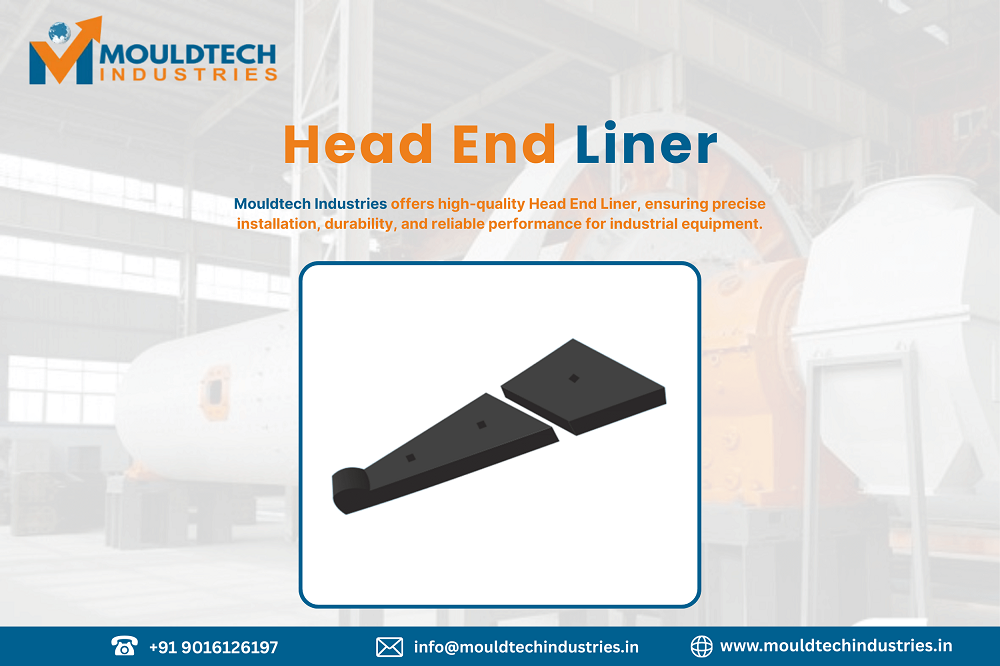
Mouldtech Industries is a Manufacturer, Supplier and Exporter of Head End Liner.
Our Manufacturing Unit is in Vadodara, Gujarat, India.
Mouldtech Industries is a Manufacturer of Ball Mill Solutions, Ball Mill Rubber Lining, Wear Protection Line, Resistant Rubber Liner, Embedded Rubber Liners, Conveyors Solutions, Impact Bed Assembly and Impact Pads, Belt Cleaners, Pulley Lagging, Ceramic Rubber Lagging Services and Ceramic Rubber Lagging Sheet.
Head End Liner: Engineering Wear Protection for Heavy-Duty Industrial Operations
Introduction
In heavy-duty industrial environments, equipment is constantly exposed to abrasive materials, impact loading, moisture, chemicals, and continuous operating cycles. Mining, metal processing, cement manufacturing, ceramics, power generation, and bulk material handling industries all face the same core challenge: keeping critical equipment running reliably despite severe wear conditions.
Conveyors, ball mills, chutes, hoppers, and transfer points operate at the heart of material movement. When wear protection fails, plants face unplanned shutdowns, safety risks, and rising maintenance costs. As production volumes increase globally and plants push for higher efficiency, the demand for durable wear protection systems continues to grow across mining hubs, metal clusters, ceramic zones, and energy corridors worldwide.
The Head End Liner plays a critical role in protecting conveyor head pulleys, discharge zones, and high-impact material transfer areas. It is designed to handle continuous material flow, impact forces, and abrasive wear—making it a core component of modern industrial wear protection strategies.
Industrial Challenges That Drive Demand for Head End Liner
Industrial operations face several common challenges that directly affect equipment life and plant reliability:
- Abrasion: Materials like iron ore, bauxite, limestone, clinker, coal, quartz, and ceramic raw materials cause severe surface wear. Conveyor discharge points and head ends experience constant sliding abrasion that gradually eats into metal structures.
- Impact Loads: Large lumps of material falling from height create impact forces that damage steel chutes and conveyor components. Repeated impact causes deformation, cracking, and premature failure.
- Corrosion: Moisture, chemicals, slurry, and acidic materials accelerate corrosion, weakening structural components and fasteners.
- Downtime: Unplanned shutdowns disrupt production schedules, delay shipments, and increase operating costs. Even short stoppages can impact large-scale plants.
- Maintenance Cost: Frequent liner replacement, welding repairs, and part changes increase labour cost and spare inventory requirements.
In mining regions, cement belts, metal clusters, and ceramic manufacturing zones across Asia, Africa, the Middle East, and Europe, these challenges are common. Plants look for wear protection solutions that can handle long operating hours without frequent intervention—driving the demand for engineered Head End Liners.
What Is Head End Liner?
A Head End Liner is a wear protection lining system installed at the discharge end of conveyors, particularly around the head pulley, chute walls, and material transfer zones. Its main function is to protect structural steel and conveyor components from abrasion, impact, and corrosion caused by moving bulk materials.
Head End Liners are commonly manufactured using:
- Rubber compounds
- Ceramic-embedded rubber panels
- Ceramic tiles bonded to backing layers
- Composite wear materials
The liner absorbs impact energy, reduces direct metal-to-material contact, and slows down wear progression. It is not a machine—it is a protective system designed to extend equipment life in high-wear zones.
Applications Across Industries
- Mining: In mining and metal processing operations, conveyors handle ores, overburden, coal, and concentrates. Head End Liners protect discharge chutes where heavy material drops at high speed. They are used in iron ore mines, coal mines, limestone quarries, and bauxite operations.
- Cement: Cement plants move limestone, clinker, gypsum, and additives. Discharge points at crusher feeds and clinker conveyors face heavy abrasion. Head End Liners reduce chute damage and spillage at transfer points.
- Metal & Steel: Steel plants handle sinter, coke, pellets, slag, and scrap. High-temperature materials and sharp particles create aggressive wear conditions. Lining systems help maintain the structural integrity of chutes and conveyors.
- Ceramic: Ceramic manufacturers move quartz, feldspar, clay, and frit. Fine but abrasive materials wear steel surfaces rapidly. Lined head ends improve the service life of material handling equipment.
- Power Plants: Thermal power plants transport coal, ash, and limestone for FGD systems. Ash is highly abrasive. Head End Liners protect ash handling and coal discharge zones.
- Bulk Material Handling: Ports, stockyards, and logistics hubs handle fertilizers, grains, minerals, and aggregates. Continuous loading and unloading require durable discharge liners to reduce maintenance interruptions.
Material Science & Engineering Considerations
Experienced plant engineers often observe that wear protection is not about “harder is always better.” It is about selecting materials that balance hardness, elasticity, and bonding strength.
Rubber Properties: Rubber liners absorb impact energy and reduce noise and vibration. They are flexible, resist tearing, and perform well where impact is high, but abrasion is moderate. Natural rubber and synthetic blends are selected based on temperature, chemical exposure, and load conditions.
Ceramic Hardness: Alumina ceramic tiles offer extremely high hardness and abrasion resistance. They perform best where sliding abrasion is dominant, and impact is controlled.
Wear Resistance Principles:
- Sliding abrasion needs hard, smooth surfaces
- Impact requires energy absorption
- Corrosive environments need chemical resistance
- High temperature needs stable compounds
Impact Absorption: Rubber backing layers under ceramic tiles help absorb shock, preventing tile cracking. This composite approach combines toughness with hardness.
Design & Customization Requirements
No two plants operate under identical conditions. Head End Liners must be engineered to suit specific equipment and material flow patterns.
Key design considerations include:
- Conveyor width and chute geometry
- Material size, weight, and drop height
- Moisture and temperature conditions
- Maintenance access points
Custom sizing ensures proper fit without gaps. Engineers select panel thickness based on expected wear life and structural limits. Teams choose bolt-on or adhesive-bonded systems based on maintenance philosophy.
Manufacturing Quality & Process Control
Manufacturers with long-term industry exposure understand that liner performance depends on consistency.
Quality manufacturing involves:
- Controlled rubber mixing and curing
- Precision ceramic tile placement
- Accurate mould design
- Batch traceability
Each batch must meet hardness, tensile strength, and bonding strength requirements. Dimensional checks ensure easy installation without field modification.
Installation & Maintenance Considerations
Installation should be simple enough for plant maintenance teams without special tools.
Good liner design allows:
- Pre-drilled mounting holes
- Easy panel handling
- Reduced installation time
Maintenance cycles depend on material type and operating hours. Inspections focus on:
- Wear thickness
- Tile condition
- Bolt integrity
Planned replacement avoids emergency shutdowns.
Safety & Operational Reliability
Safety is directly linked to equipment condition. Worn chutes can cause:
- Material spillage
- Dust generation
- Sudden structural failure
Head End Liners improve safety by:
- Reducing metal exposure
- Preventing sharp edges from wear
- Controlling material flow
Stable liners mean fewer emergency repairs and safer working conditions for maintenance crews.
Cost Efficiency Over Equipment Life Cycle
Cost efficiency is not about initial purchase—it is about lifetime performance.
Well-designed liners reduce:
- Frequency of shutdowns
- Welding and structural repairs
- Spare part consumption
Over years of operation, fewer interruptions translate into higher plant availability and stable production output.
Export Readiness & Global Acceptance
Global industrial buyers expect:
- Consistent quality
- Technical documentation
- Traceability
- Packaging suitable for long transport
Export-ready manufacturers understand standards, inspection protocols, and logistics requirements for shipping to mining regions, cement belts, and industrial hubs worldwide.
Why Experienced Manufacturers Matter
Experienced manufacturers bring:
- Knowledge of real plant problems
- Ability to suggest suitable materials
- Stable production capacity
- Reliable supply schedules
They understand that liners must work in real operating conditions—not just in test labs.
About Mouldtech Industries
Mouldtech Industries is an experienced manufacturer specializing in Ball Mill Rubber Liners, Ceramic Wear Protection Solutions, Rubber Lining Systems, Ball Mill Rubber Products, and Conveyor Solutions. Serving Pan-India markets across industrial states and cities—from mining belts and cement zones to metal clusters and ceramic hubs—the company supports industries that operate under severe wear conditions.
With long-term exposure to heavy-duty applications, Mouldtech Industries focuses on engineering-driven solutions rather than generic products. Their manufacturing practices emphasize material selection, quality control, and application-specific design.
More information is available at https://www.mouldtechindustries.in/.
Conclusion
Head End Liners play a critical role in protecting conveyors and discharge zones from abrasion, impact, and corrosion. In industries where downtime is costly and safety is essential, proper wear protection directly affects plant reliability.
By combining material science, engineering design, and manufacturing disciplines, Head End Liners support stable operations in mining, cement, metal, ceramic, power, and bulk material handling sectors. Their value is measured in years of reliable service inside demanding industrial plants, not in empty claims.
A professional approach to wear protection starts with understanding real operating conditions—and choosing solutions built for them.
Key Takeaways
- Head End Liners protect high-wear conveyor discharge zones
- They handle abrasion, impact, and corrosive conditions
- Proper design improves operational reliability
- Long-term performance reduces maintenance disruption
- Suitable for mining, cement, metal, ceramic, and bulk handling industries
- Globally accepted in heavy industrial environments
Trending FAQs
1. What is the typical lifespan of a Head End Liner?
Lifespan depends on material type, operating hours, and material abrasiveness. In moderate conditions, liners can last many months to several years with proper maintenance.
2. Where are Head End Liners mainly used?
Industries use them at conveyor discharge points, head pulleys, and chute transfer zones in mining, cement, steel, ceramic, power, and bulk handling plants.
3. How often should Head End Liners be inspected?
Most plants inspect liners during planned maintenance shutdowns, typically every few months, depending on operating intensity.
4. Rubber or ceramic—what is better for wear protection?
Rubber handles impact well. Ceramic handles abrasion better. Composite systems combine both for balanced performance.
5. Are Head End Liners used globally?
Yes. They are used in mining regions, cement belts, metal clusters, and ceramic zones across multiple continents.
6. Can Head End Liners be customized?
Yes. They are commonly designed based on chute size, conveyor width, material type, and impact level.
7. Is installation complex?
Most modern liners are designed for bolt-on or bonded installation to reduce downtime and simplify maintenance.
For Head End Liner solutions engineered for real industrial operating conditions, connect with our technical team to discuss your material type, wear challenges, and application needs.