



Rubber Plug Manufacturer in India: Mouldtech Industries
Mouldtech Industries is a Manufacturer, Supplier and Exporter of Rubber Plug.
Our Manufacturing Unit is in Vadodara, Gujarat, India.
Mouldtech Industries is a Manufacturer of Ball Mill Solutions, Ball Mill Rubber Lining, Wear Protection Line, Resistant Rubber Liner, Embedded Rubber Liners, Conveyors Solutions, Impact Bed Assembly and Impact Pads, Belt Cleaners, Pulley Lagging, Ceramic Rubber Lagging Services and Ceramic Rubber Lagging Sheet.
Rubber Plug: A Critical Wear Protection Component in Heavy-Duty Industrial Operations
Introduction
Across mining, metal processing, cement production, ceramic manufacturing, and bulk material handling plants, equipment reliability remains one of the most persistent operational challenges. These industries operate in environments defined by continuous abrasion, heavy impact loads, moisture, chemicals, and elevated temperatures. Every shutdown—planned or unplanned—directly affects production schedules, safety, and operating costs.
In heavy-duty industrial environments, wear protection is not an optional upgrade; it is a core engineering requirement. As global industrial demand continues to grow across mining belts, cement clusters, steel hubs, and power generation zones, plants are under pressure to improve uptime while extending the service life of critical equipment.
Within this context, the Rubber Plug plays a quiet but essential role. Often overlooked, this component contributes directly to wear containment, sealing, vibration absorption, and equipment protection across multiple plant systems.
Industrial Challenges That Drive Demand for Rubber Plug
Industrial plants operate under conditions that steadily degrade equipment surfaces and joints. The demand for reliable rubber plugs arises from several recurring challenges:
- Abrasion: Continuous movement of ore, clinker, raw materials, or ceramic slurry causes surface erosion. Openings, bolt holes, and joints are especially vulnerable if left unprotected.
- Impact Loads: In mining and metal processing operations, equipment is exposed to repetitive impact from falling material, grinding media, or conveyor transfers. These forces can damage unprotected metal interfaces.
- Corrosion and Chemical Exposure: Moisture, slurry chemicals, and aggressive process fluids accelerate corrosion in exposed cavities, leading to premature failure.
- Downtime and Maintenance Burden: Small points of failure often cause large operational disruptions. Experienced plant engineers often observe that neglected sealing components lead to cascading equipment damage.
- Rising Maintenance Costs: Frequent replacements, emergency shutdowns, and unplanned interventions increase lifecycle costs, especially in continuous-process industries.
These challenges are not limited to one geography. Similar operating conditions exist across industrial regions in India, Asia, the Middle East, Africa, and other resource-driven economies.
What Is Rubber Plug?
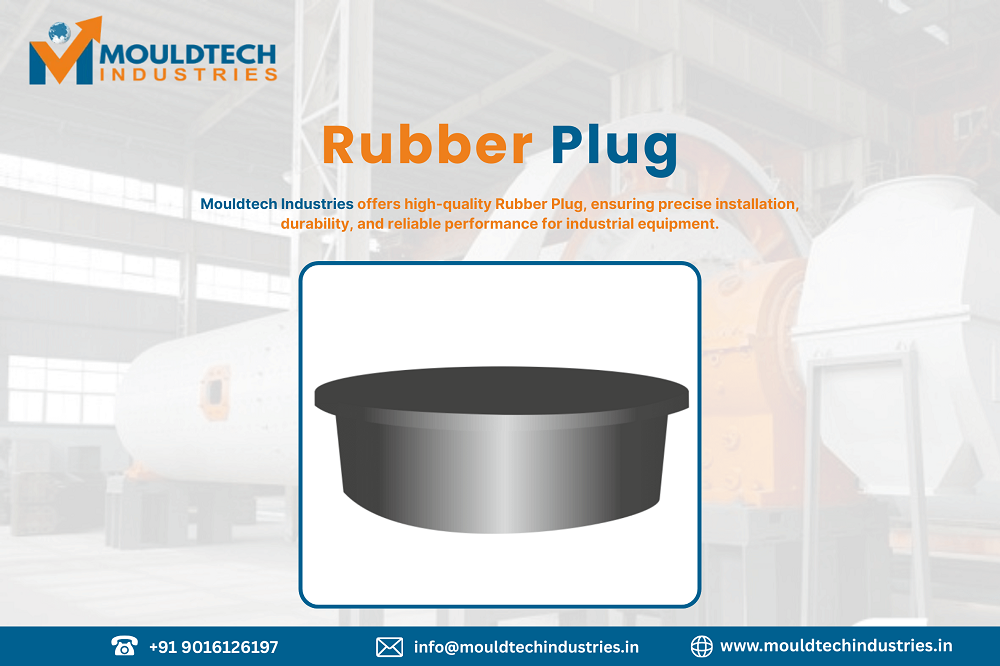
A Rubber Plug is a precision-engineered elastomeric component designed to seal, protect, or isolate openings in industrial equipment. It is commonly used in rubber-lined systems, wear-protected assemblies, ball mills, conveyors, chutes, and processing equipment.
From an engineering standpoint, the rubber plug serves multiple functional roles:
- Sealing unused or temporary openings
- Absorbing vibration and impact
- Preventing material ingress
- Protecting metal edges from wear and corrosion
Unlike rigid sealing components, rubber plugs adapt to minor misalignments and thermal expansion, making them suitable for dynamic industrial conditions.
Applications Across Industries
- Mining Industry: Rubber plugs are widely used in ball mills, slurry pipelines, chutes, and wear-lined equipment to protect exposed holes and interfaces from abrasive ore and moisture ingress.
- Cement Plants: In cement grinding units and material transfer systems, rubber plugs help maintain lining integrity and prevent dust leakage around access points.
- Metal & Steel Plants: Steel plants use rubber plugs in rolling mills, beneficiation equipment, and material handling systems where vibration and heat fluctuations are common.
- Ceramic Manufacturing: Ceramic slip processing and tile production environments demand sealing solutions that resist fine abrasive particles and moisture, making rubber plugs essential.
- Power Plants: In ash handling systems and coal conveyors, rubber plugs help prevent material escape and protect structural openings from erosion.
- Bulk Material Handling: Conveyors, hoppers, and transfer points rely on rubber plugs to protect wear liners and reduce spillage-related maintenance.
Material Science & Engineering Considerations
Rubber plug performance depends heavily on material selection and compound formulation.
Rubber Properties
Industrial rubber compounds are selected for:
- Abrasion resistance
- Elastic recovery
- Chemical compatibility
- Temperature tolerance
- Impact Absorption
Rubber’s viscoelastic nature allows it to absorb shock energy, reducing stress transfer to metal structures.
Wear Resistance Principles
While rubber is softer than metal or ceramic, its resilience allows it to outperform rigid materials in certain high-impact, low-cut environments.
Ceramic Integration
In systems combining ceramic wear protection solutions, rubber plugs often act as flexible interfaces, protecting ceramic edges from chipping.
Manufacturers with long-term industry exposure understand that material science decisions directly influence maintenance cycles and operational stability.
Design & Customization Requirements
No two industrial plants are identical. Designers must consider application-specific parameters when designing rubber plugs.
- Equipment geometry and lining thickness
- Operating temperature range
- Exposure to slurry, chemicals, or dust
- Installation access constraints
Custom sizing ensures proper interference fit, while design features such as ribs, flanges, or tapered profiles enhance sealing performance.
Manufacturing Quality & Process Control
Precision manufacturing is essential for consistent rubber plug performance.
Key process elements include:
- Controlled compounding and mixing
- Accurate molding dimensions
- Uniform curing cycles
- Batch traceability
Quality checks typically involve dimensional inspection, hardness testing, and visual defect assessment. Batch consistency ensures predictable behavior across large installations.
Installation & Maintenance Considerations
From a maintenance perspective, rubber plugs are valued for their ease of installation.
- No complex tools required
- Minimal downtime during replacement
- Compatible with routine shutdown schedules
Once installed correctly, rubber plugs generally require minimal attention, contributing to predictable maintenance planning.
Safety & Operational Reliability
Worker safety is directly linked to equipment condition.
Rubber plugs help:
- Prevent material blowouts from exposed openings
- Reduce sharp metal edges
- Maintain enclosure integrity
By stabilizing wear protection systems, they support safer working conditions and reduce emergency maintenance risks.
Cost Efficiency Over Equipment Life Cycle
While rubber plugs are small components, their lifecycle impact is significant.
They contribute to:
- Reduced secondary wear
- Lower frequency of lining repairs
- Extended service intervals
By preventing localized damage, they help plants avoid costly shutdowns and reactive maintenance events without introducing complex systems.
Export Readiness & Global Acceptance
Global industrial buyers expect wear protection components to meet consistent performance standards.
Export-ready rubber plugs are supported by:
- Documented material specifications
- Dimensional consistency
- Awareness of international industrial practices
Such expectations apply across industrial markets in India, Southeast Asia, the Middle East, Africa, and other resource-driven regions.
Why Experienced Manufacturers Matter
Rubber plug performance reflects the manufacturer’s understanding of real plant conditions, not just the material.
Experienced manufacturers bring:
- Application-driven engineering insight
- Proven design practices
- Reliable supply capabilities
This experience becomes critical when teams integrate components into complex systems like ball mills, conveyors, and ceramic-lined equipment.
About Mouldtech Industries
Mouldtech Industries is an established manufacturer of industrial wear protection and rubber lining solutions, serving Pan India and global industrial markets. With experience across mining, cement, steel, ceramic, and bulk material handling sectors, the company understands the practical demands of heavy-duty operations.
More details about their engineering approach and product range can be found at https://www.mouldtechindustries.in/
Conclusion
The Rubber Plug may appear simple, but its role in industrial reliability is substantial. By protecting critical interfaces, absorbing impact, and maintaining sealing integrity, it supports plant efficiency across demanding operating environments.
For engineers and maintenance teams focused on long-term reliability rather than short-term fixes, rubber plugs remain a practical and proven solution within comprehensive wear protection strategies.
Key Takeaways
- Supports effective wear protection at vulnerable equipment points
- Enhances operational reliability in abrasive environments
- Suitable for mining, cement, steel, ceramic, and bulk handling industries
- Contributes to predictable maintenance cycles
- Accepted across global industrial markets
Trending FAQs
1. What is the typical lifespan of a rubber plug in industrial use?
Lifespan depends on abrasion levels, impact frequency, and environmental exposure, but proper selection significantly extends service life.
2. Where are rubber plugs most commonly used?
They are used in ball mills, rubber-lined equipment, conveyors, chutes, and bulk handling systems.
3. How often do rubber plugs require maintenance?
Inspection is usually aligned with scheduled shutdowns; replacement is typically infrequent when correctly installed.
4. How do rubber plugs compare to ceramic wear solutions?
Rubber plugs provide flexibility and impact absorption, while ceramics offer extreme abrasion resistance; both serve different functions.
5. Are rubber plugs suitable for global industrial applications?
Yes, they are widely used across mining, cement, and metal industries worldwide.
6. Do rubber plugs require specialized installation tools?
No, most designs allow simple manual installation, reducing downtime.
Contact us today to discuss your plant’s wear protection needs, technical support, and customized solutions for reliable, long-lasting performance across mining, cement, steel, and bulk handling industries.