

Combo liner Manufacturer, Supplier, and Exporter in India: Mouldtech Industries
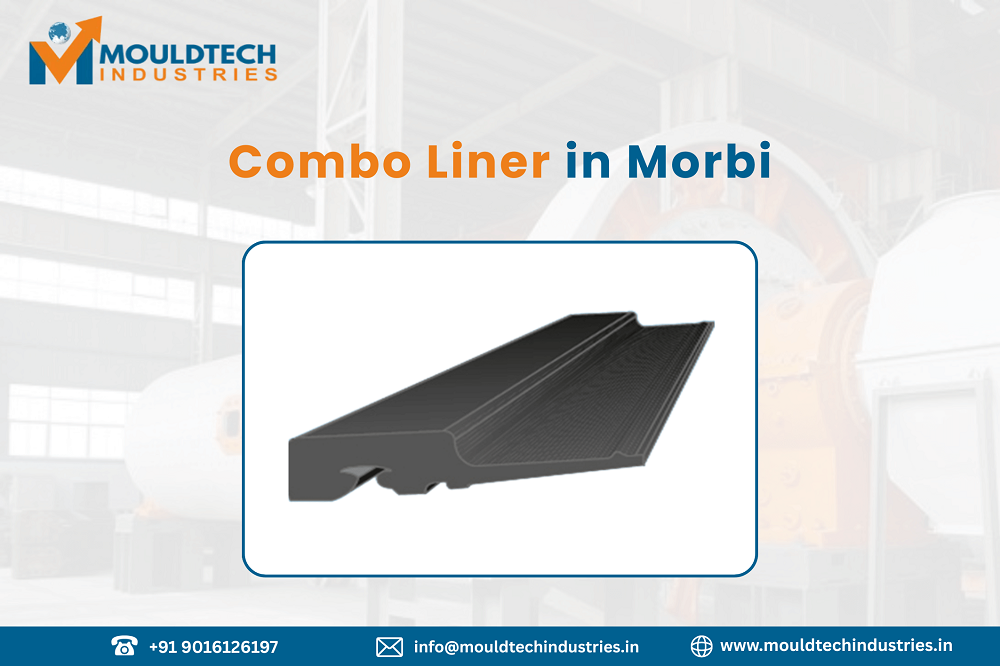
Mouldtech Industries is a Manufacturer of Combo liners in Morbi.
Our Manufacturing Unit is in Vadodara, Gujarat, India.
Mouldtech Industries is a Manufacturer of Bridge Rubber Pad, Ball Mill Rubber Lining, Bridge Rubber Pad, Resistant Rubber Liner, Embedded Rubber Liners, Conveyors Solutions, Ceramic Lagging Sheet, Belt Cleaners, Bridge Rubber Pad, Ceramic Rubber Lagging Services, and Ceramic Rubber Lagging Sheet.
Combo Liner Approaches for Durability in Harsh Industrial Settings
Introduction
Sectors such as ore extraction, metal fabrication, cement production, ceramic production, and bulk material handling experience some of the most demanding mechanical stresses in industry. Equipment is consistently subjected to erosive substances, repeated heavy impacts, moisture, corrosive agents, and constant operational cycles. Over time, these factors directly impact machinery lifespan, plant uptime, and operational safety.
In severe industrial settings, defense against wear is not an optional feature—it is an essential prerequisite for sustaining equipment dependability and consistent output schedules. Unexpected pauses stemming from liner breakdown or severe wear often result in cumulative losses, including production delays, increased service costs, and safety hazards to site personnel.
Globally, industries are shifting toward expertly designed wear defense setups that combine multiple material benefits rather than relying on a single remedy. This demand has spurred the creation of sophisticated liner assemblies intended to manage both high-impact and surface erosion effectively.
The Combo liner has emerged as a pragmatic industrial solution, especially when conventional rubber or ceramic liners alone are inadequate. By integrating distinct material traits into a single lining configuration, combo liners address the operational challenges faced by modern facilities.
Operational Demands Driving the Need for Combo Liners
Across mining centers, cement complexes, metal facilities, and ceramic processing areas, specific challenges consistently drive the need for superior wear protection methods.
- Erosion: Ores, processed residues, metallic waste, fine ceramic particles, and aggregate materials cause ongoing surface degradation on chutes, grinders, storage bins, and conveyance systems. Gradual material loss reduces liner thickness, thereby affecting equipment form and productivity.
- Impact Forces: In mining and metalwork operations, large chunks of material strike liner surfaces repeatedly. Areas of high impact experience faster deterioration when liners lack sufficient energy absorption capacity.
- Corrosion: Wetness, chemical exposure, and slurry conditions contribute to wear through chemical reactions, particularly in wet-milling and material-transfer setups.
- Outages: Frequent liner replacements lead to more frequent scheduled stops. Each stoppage disrupts production scheduling and heightens maintenance exposure.
- Servicing Expenses: A short working life for liners results in greater material usage, increased labor involvement, and larger reserve inventory needs.
Seasoned facility engineers frequently observe that a liner made of just one material rarely functions best across all these conditions. This observation is what prompts the widespread interest in hybrid or combo liner systems across global industrial operations.
Defining a Combo Liner
A Combo liner is a specifically engineered wear-defense mechanism that combines elastomeric materials (usually rubber) with rigid, durable wear elements, such as ceramics. The aim is to leverage the strengths of each substance while mitigating its weaknesses.
From an industrial viewpoint:
- Rubber offers pliability, shock absorption, reduced noise, and resistance to specific chemical agents.
- Ceramic components provide exceptional hardness and superior resistance to surface wear in areas subject to sliding forces.
Rather than being forced to choose between resisting impact or resisting erosion, combo liners enable both functions to operate concurrently within a single lining assembly. The outcome is a well-rounded wear solution suited for the variable service conditions typical in industrial sites.
Adoption Across Diverse Industries
- Mining: Combo liners are frequently deployed in rotating mills, chutes, hoppers, and transfer points where forceful ore loading meets abrasive sliding motion. They help stabilize liner longevity across various ore compositions.
- Cement Production: In cement grinding and material-handling workflows, combo liners perform well in sections exposed to impact from residue, raw material friction, and dusty atmospheres.
- Metal & Steel Works: Steel facilities manage slag disposal, processed material conveyance, and material reprocessing systems. Combo liners help manage wear in areas where fluctuating temperatures and heavy impacts are typical.
- Ceramic Sector: Ceramic producers handle exceptionally abrasive fine materials and particulates. Combo liners safeguard equipment surfaces without fouling products or disrupting process consistency.
- Power Plants: Systems for handling fly ash, coal conveyance, and slurry conduits benefit from combo liners that address abrasion and chemical degradation simultaneously.
- Bulk Material Transport: Transfer conduits, storage vessels, and conveyor loading zones undergo constant deterioration. Combo liners help reduce the frequency of liner replacements while maintaining structural protection.
Material Science and Engineering Principles
The efficacy of a combo liner strongly relies on material science and the integration of engineering.
- Rubber Attributes: Industrial-grade rubber utilized in liners is chosen for its flexibility, resistance to tearing, and chemical stability. Its capacity to absorb energy lessens localized stress buildup during impact incidents.
- Ceramic Density: Ceramic pieces employed in wear protection setups feature very high hardness ratings, making them impervious to sliding friction damage. This density significantly slows material attrition in high-wear areas.
- Wear Defense Logic: Deterioration happens via a mix of cutting, displacement, and fatigue processes. Combo liners strategically place ceramic units where erosion is the primary concern while allowing rubber to manage the impact energy.
- Shock Mitigation: By embedding ceramic components within rubber structures, incoming forces are more evenly dispersed, minimizing crack formation and premature liner fracture.
Producers with extensive industry tenure understand that pairing materials must be a deliberate engineering effort, not guesswork.
Design and Customization Demands
Industrial machinery differs widely in size, configuration, and operating parameters. Effective combo liner systems necessitate:
- Precise equipment measurements
- Suitability with existing liner mounting frameworks
- Tailored tile configuration based on wear intensity zones
- Consideration of material flow dynamics
Design specific to the application ensures ceramic elements are placed where they provide maximum benefit without compromising liner suppleness or ease of installation.
Manufacturing Excellence and Process Oversight
Exact manufacturing is vital for reliable liner performance. Quality-driven procedures involve:
- Regulated rubber formulation
- Exact positioning of ceramic units
- Uniformity of dimensions across production runs
- Verification of bonding strength between materials
Consistency between production batches ensures predictable liner behavior, which is crucial for maintenance planning and facility uptime.
Mounting and Servicing Notes
Combo liners are engineered for a sensible facility setup. Key elements to note include:
- Segmented liner sections for manageable handling
- Compatibility with standard security mechanisms
- Reduced mounting duration compared to intricate metal liners
Servicing intervals are typically extended due to balanced wear characteristics, permitting scheduled downtime rather than reactive replacements.
Protection and Operational Stability
From a safety perspective, damaged or failed liners increase the risk of material spills, structural damage, and service risks.
Combo liners contribute toward:
- Fewer instances of liner rupture
- Lower ambient sound levels
- Enhanced equipment shielding
Dependable wear defense supports safer working environments and consistent facility operations.
Value Over the Equipment Service Life
While the initial choice of liner is essential, seasoned operations personnel focus on overall life-cycle outcomes.
Combo liners aid in achieving:
- Extended periods of service
- Fewer unplanned outages
- Reduced exposure to maintenance labor
Throughout the equipment’s useful life, these aspects yield quantifiable operational savings without sacrificing functionality.
Preparedness for Export and Worldwide Acceptance
Global industrial purchasers anticipate wear protection systems to meet established quality, documentation, and uniformity benchmarks.
Manufacturers ready for export understand:
- International material standards
- Requirements for material tracing
- Protocols for packaging and shipment
Combo liners intended for global acceptance must demonstrate consistent results across varied operational settings.
The Importance of Seasoned Producers
Wear defense is not a generalized product. Engineering proficiency, field use feedback, and long-standing industrial familiarity shape liner effectiveness.
Manufacturers with hands-on backgrounds grasp failure patterns, setup challenges, and application-specific risks—knowledge that directly influences product reliability.
About Mouldtech Industries
Mouldtech Industries is a seasoned industrial fabricator specializing in mill rubber linings, ceramic wear-defense options, rubber coating systems, mill rubber components, conveyance systems, marine buffers, and engineered wear-protection assemblies.
Serving industrial sectors across India, encompassing ore extraction zones, cement hubs, ceramic centers, metal processing areas, and bulk material transport operations in all principal cities and states of India, the company also caters to international industrial needs via expertly designed, application-specific solutions.
Further details can be found at https://www.mouldtechindustries.in/
Conclusion
Combo liner arrangements play a vital role in enhancing equipment reliability across the ore, cement, metal, ceramic, and bulk transport sectors. By merging impact resistance with erosion defense, they address genuine operational hurdles faced by contemporary plants.
When devised, produced, and installed appropriately, combo liners contribute to stable operations, predictable servicing timelines, and elevated facility efficiency.
Key Takeaways
- Even defense against impacts and surface wear
- Enhanced dependability for demanding operations
- Applicable across mining, cement, metal, ceramic, and energy industries
- Less interruption thanks to longer liner performance
- Confirmed utility in worldwide industrial settings
Trending FAQs
1. What is the typical lifespan of a combo liner?
Lifespan depends on material characteristics, operating conditions, and installation quality. In many applications, combo liners outlast single-material liners.
2. Where are combo liners most commonly used?
They are commonly used in mills, chutes, hoppers, and conveyor transfer points across the mining, cement, and bulk-handling industries.
3. How often do combo liners require maintenance?
Maintenance frequency is generally lower due to balanced wear behavior, allowing longer inspection intervals.
4. How do combo liners compare to rubber-only liners?
Rubber liners absorb impact well, while combo liners add abrasion resistance through ceramic elements.
5. Are combo liners suitable for wet applications?
Yes, when properly engineered, they perform effectively in damp and slurry environments.
6. Is installation more complex than standard liners?
Installation is typically straightforward when liners are designed for existing equipment configurations.
For Combo Liner solutions engineered for demanding industrial environments, contact Mouldtech Industries to discuss application requirements, technical specifications, and reliable wear protection support.
#ComboLiner #BallMillRubberLiner #CeramicWearProtection #RubberLiningSystems #WearProtectionSolutions #MiningEquipment #BulkMaterialHandling #IndustrialWearProtection #MouldtechIndustries