


Wear Resistance Rubber Liners Manufacturer, Supplier, And Exporter in India: Mouldtech Industries
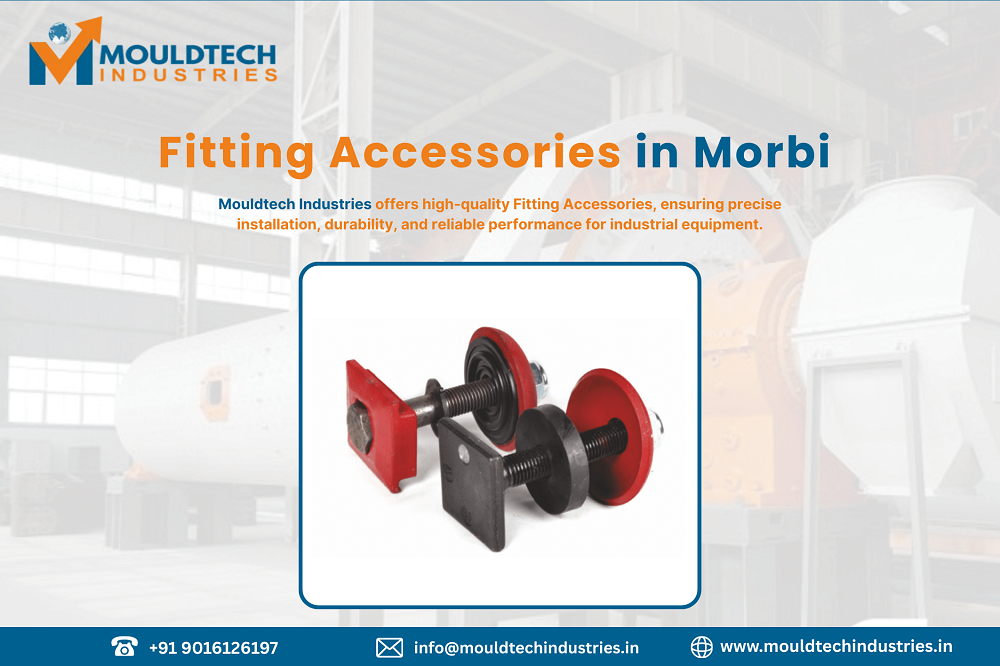
Mouldtech Industries is a Manufacturer of Fitting Accessories in Morbi.
Our Manufacturing Unit is in Vadodara, Gujarat, India.
Mouldtech Industries is a Manufacturer of Bridge Rubber Pad, Ball Mill Rubber Lining, Bridge Rubber Pad, Resistant Rubber Liner, Embedded Rubber Liners, Conveyors Solutions, Ceramic Lagging Sheet, Belt Cleaners, Bridge Rubber Pad, Ceramic Rubber Lagging Services, and Ceramic Rubber Lagging Sheet.
Wear Resistance Rubber Liners: Engineering Reliability for Heavy-Duty Industrial Operations
Introduction
Across mining, metal processing, cement manufacturing, ceramic production, and bulk material handling industries, equipment operates under constant mechanical stress. Abrasive materials, repetitive impact loads, corrosive slurries, and continuous operation cycles place extreme demands on plant machinery. In such environments, unplanned downtime is not just an inconvenience—it directly affects production targets, safety, and operating costs.
Over the last decade, global industrial demand has shifted toward solutions that improve equipment reliability rather than simply increasing capacity. Plant engineers and maintenance teams now focus on extending service life, reducing shutdown frequency, and stabilizing performance under harsh operating conditions. Wear protection systems have therefore become a foundational requirement rather than an optional add-on.
Wear-Resistance Rubber Liners play a critical role in this context. Used in ball mills, chutes, hoppers, conveyors, and processing equipment, these liners protect structural components from premature wear while absorbing impact and reducing noise and vibration. In heavy-duty industrial environments, they form the first line of defence against operational degradation.
Industrial Challenges That Drive Demand for Wear-Resistant Rubber Liners
In mining and metal processing operations, raw materials rarely behave gently. Ore, clinker, coal, slag, and ceramic media exert continuous abrasive forces on equipment surfaces. Over time, this leads to thinning of steel shells, cracks, leakage, and eventual failure.
Key challenges include:
- Abrasion: Fine and coarse particles erode exposed surfaces at a microscopic level, accelerating material loss.
- Impact Loads: Large lumps and grinding media create repeated shock forces, especially in mills and transfer points.
- Corrosion: Moisture, chemicals, and process slurries attack metal components, particularly in wet grinding and beneficiation circuits.
- Downtime: Frequent liner replacements and repairs interrupt production schedules.
- Maintenance Costs: Labour, spare parts, and lost output contribute significantly to lifecycle costs.
These challenges are not limited to one geography. Similar operating conditions are observed across mining belts, cement clusters, ceramic hubs, and steel plants throughout India—across all major cities and states—as well as in other industrial regions worldwide.
What Are Wear-Resistant Rubber Liners?
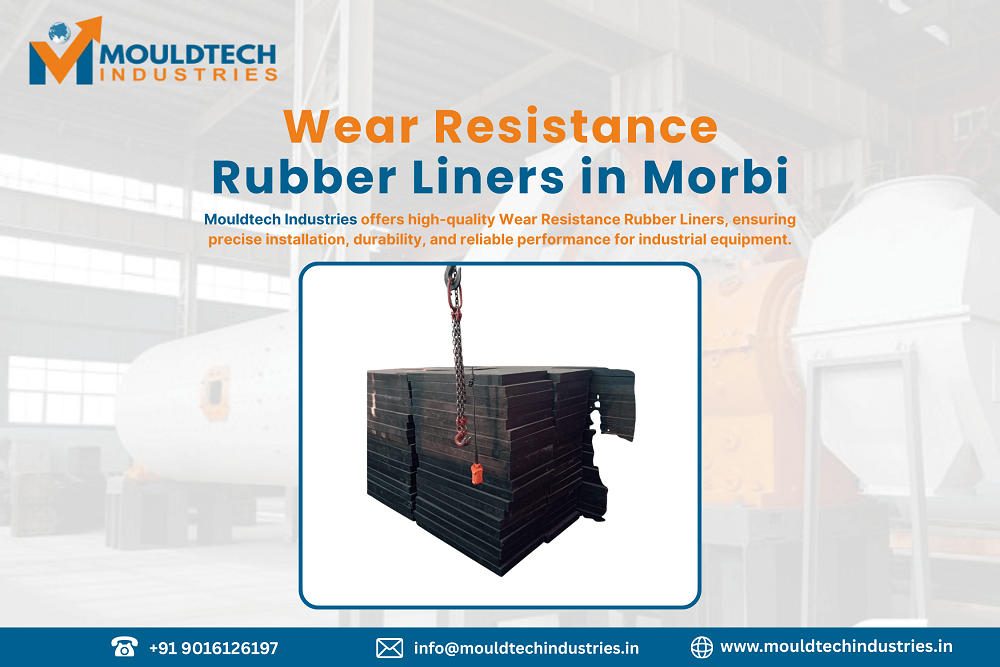
Wear Resistance Rubber Liners are engineered elastomer-based protective linings designed to shield industrial equipment from abrasion, impact, and corrosion. Unlike bare metal surfaces, rubber liners deform slightly under load, absorbing energy rather than transmitting it directly to the equipment structure.
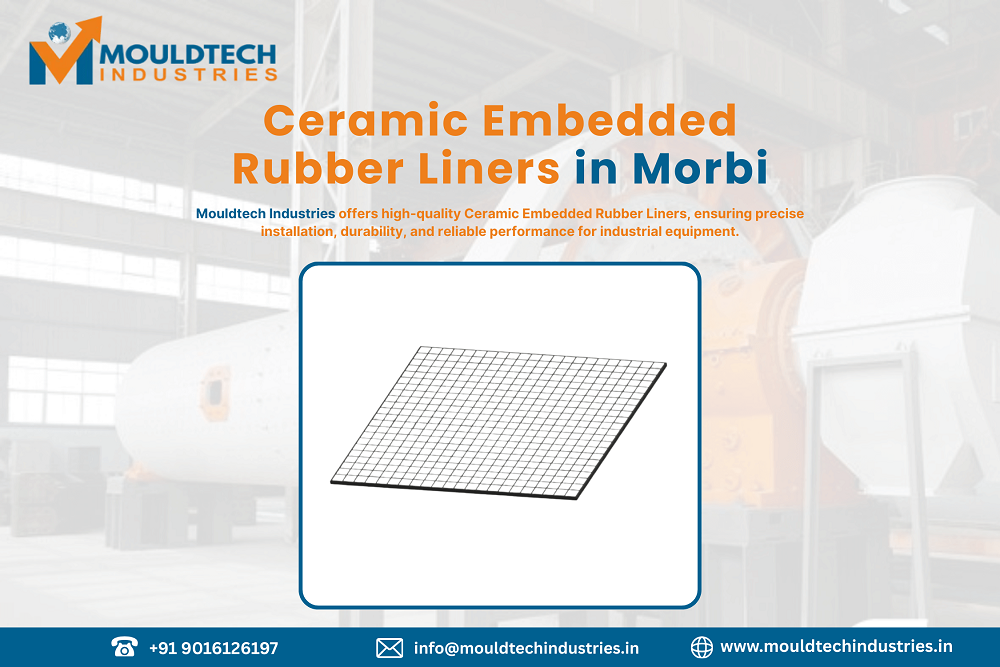
Depending on the application, these liners may be supplied as pure rubber components or as composite systems incorporating ceramic tiles bonded within rubber matrices. The objective is not to eliminate wear—an unrealistic expectation—but to control and manage wear predictably.
From an engineering perspective, rubber liners function by:
- Reducing direct metal-to-material contact
- Dampening impact energy
- Slowing down abrasion rates
- Improving operational stability
Applications Across Industries
- Mining: In mining operations, rubber liners are widely used in ball mills, SAG mills, chutes, and slurry pipelines. Experienced plant engineers often observe that properly designed liners help maintain mill geometry and grinding efficiency over longer operating cycles.
- Cement: Cement plants use rubber liners in raw mills, coal mills, clinker handling systems, and transfer points. The rubber’s ability to absorb impact is particularly valuable in clinker handling, where sharp-edged material can cause rapid wear.
- Metal & Steel: Steel plants use wear-resistant liners in sinter plants, ore-handling systems, and material-transfer chutes. Rubber lining systems help reduce structural damage caused by the movement of high-density materials.
- Ceramic: In ceramic manufacturing, where contamination control is critical, rubber and ceramic-lined systems protect equipment while maintaining product purity during material handling and grinding.
- Power Plants: Coal-handling systems in thermal power plants rely on rubber-lined chutes and conveyors to mitigate abrasion and reduce dust generation.
- Bulk Material Handling: Conveyors, hoppers, belt cleaners, and transfer stations across industries benefit from rubber liners that reduce spillage, noise, and component wear.
Material Science & Engineering Considerations
The performance of wear-resistant rubber liners depends heavily on material formulation and engineering design.
Rubber Properties:
- Elasticity allows energy absorption
- Tear resistance prevents crack propagation
- Chemical resistance supports wet and corrosive environments
Ceramic Hardness:
- Ceramic tiles provide high resistance to sliding abrasion
- When embedded in rubber, they gain impact tolerance
Wear Resistance Principles:
Wear is influenced by particle size, velocity, hardness, and angle of impact. Rubber excels in high-impact, moderate-abrasion environments, while ceramic-rubber composites are suited for severe abrasion with controlled impact.
Design & Customization Requirements
No two plants operate under identical conditions. Manufacturers with long-term industry exposure understand that liner design must match equipment geometry and operating parameters.
Design considerations include:
- Mill diameter and rotational speed
- Material characteristics
- Installation constraints
- Maintenance access
Custom sizing and modular designs allow liners to be installed efficiently while ensuring uniform wear patterns.
Manufacturing Quality & Process Control
Consistent performance begins with controlled manufacturing processes. Precision moulding, accurate ceramic placement, and uniform curing cycles are essential to achieve batch consistency.
Quality checks typically include:
- Dimensional verification
- Bond strength testing
- Visual and surface inspection
- Material property validation
Such controls ensure liners behave predictably once installed in the field.
Installation & Maintenance Considerations
Ease of installation directly affects downtime. Well-designed rubber liners are lighter than steel alternatives, reducing handling risks and installation time.
Maintenance teams benefit from:
- Reduced bolt loosening issues
- Predictable wear monitoring
- Longer inspection intervals
In many plants, liner change-outs can be planned during scheduled shutdowns rather than emergency stoppages.
Safety & Operational Reliability
Worker safety is closely linked to equipment condition. Worn liners can expose sharp metal edges, increase vibration, and create noise hazards.
Proper wear protection contributes to:
- Safer maintenance environments
- Reduced risk of sudden equipment failure
- Stable plant operation under continuous loads
Cost Efficiency Over Equipment Life Cycle
While initial material selection is essential, lifecycle performance matters more. Wear-resistant rubber liners help reduce:
- Frequency of replacements
- Structural repairs
- Unplanned shutdowns
Over the equipment life cycle, these factors translate into measurable operational savings without relying on aggressive performance claims.
Export Readiness & Global Acceptance
Industrial buyers across global markets expect consistency, traceability, and documentation. Export-ready manufacturers align with international standards, maintain process records, and understand logistics and packaging requirements.
Such readiness supports acceptance across mining hubs, cement clusters, and metal industries worldwide.
Why Experienced Manufacturers Matter
Wear protection is not a commodity. It requires application knowledge, feedback from operating plants, and iterative design improvement.
Manufacturers with practical field experience can anticipate challenges, recommend suitable liner configurations, and ensure continuous supply.
About Mouldtech Industries
Mouldtech Industries is an experienced industrial manufacturer specializing in wear-resistant rubber liners, ceramic wear protection solutions, rubber lining systems, ball mill rubber products, and conveyor solutions. Serving industrial clients across Pan India—covering all major cities and states—and international markets, the company focuses on engineering-driven manufacturing and consistent quality.
More information is available at https://www.mouldtechindustries.in/
Conclusion
Wear-Resistant Rubber Liners are an essential component in modern industrial operations. By managing abrasion, impact, and corrosion, they support equipment reliability, plant safety, and long-term operational efficiency.
For industries operating under demanding conditions, well-engineered wear protection systems are not optional—they are fundamental to sustainable production.
Key Takeaways
- Wear-resistant rubber liners protect critical equipment surfaces
- They improve operational reliability in harsh environments
- Suitable across mining, cement, metal, ceramic, and bulk handling industries
- Designed for long-term, predictable performance
- Widely accepted in global industrial markets
Trending FAQs
Q1. What is the typical lifespan of wear-resistant rubber liners?
Lifespan depends on material type, operating conditions, and maintenance practices. Most plants monitor wear rates to plan replacements.
Q2. Are rubber liners suitable for high-impact applications?
Yes, rubber’s elasticity makes it effective for absorbing repeated impact loads.
Q3. How often do rubber liners require maintenance?
Inspection intervals are usually longer than those for metal liners, depending on the severity of the application.
Q4. When should ceramic wear solutions be used instead of rubber?
Ceramic solutions are preferred in severe abrasion environments with controlled impact.
Q5. Are these liners used globally?
Yes, they are widely used in mining, cement, and metal industries across industrial regions worldwide.
Contact Mouldtech Industries to discuss Wear Resistance Rubber Liners engineered for mining, cement, steel, ceramic, and bulk material handling applications across India and industrial markets.
#WearResistanceRubberLiners #BallMillRubberLiner #CeramicWearProtection #RubberLiningSystems #MiningWearSolutions #IndustrialWearProtection #BulkMaterialHandling #ConveyorSolutions #CeramicProtectionSystems #HeavyDutyIndustries #PlantEngineering #MaintenanceEngineering #MouldtechIndustries