

Secondary Belt Cleaner Manufacturer, Supplier, And Exporter in India: Mouldtech Industries
Mouldtech Industries is a Manufacturer of Secondary Belt Cleaner in Morbi.
Our Manufacturing Unit is in Vadodara, Gujarat, India.
Mouldtech Industries is a Manufacturer of Bridge Rubber Pad, Ball Mill Rubber Lining, Bridge Rubber Pad, Resistant Rubber Liner, Embedded Rubber Liners, Conveyors Solutions, Ceramic Lagging Sheet, Belt Cleaners, Bridge Rubber Pad, Ceramic Rubber Lagging Services, and Ceramic Rubber Lagging Sheet.
Secondary Belt Cleaner: Boosting Conveyor Dependability in Rugged Industrial Settings
Introduction
Throughout mining, metal refinement, cement creation, ceramics, and bulk material transport sectors, material conveyance systems face persistent strain. Conveyors manage rough ores, clinker, coal, slag, minerals, and fine powders continuously. In such arenas, even minor inefficiencies can accumulate into substantial operational losses.
One widespread yet often overlooked hurdle is material residue adhering to conveyor belts. Leftover matter clinging to the underside of the belt causes scattering, increased deterioration, tracking issues, tidiness deficits, and safety concerns. Over time, this impacts equipment lifespan, labor allocation, and overall facility dependability.
In demanding industrial settings, seasoned plant supervisors frequently observe that enhancing conveyor upkeep directly leads to better operational time and more predictable upkeep schedules. This highlights the Secondary Belt Cleaner as a vital element in modern conveyance setups.
As worldwide industrial needs keep expanding—particularly in mining hubs, cement corridors, steel zones, and ceramic manufacturing areas—the focus has shifted towards safeguarding against wear, managing upkeep precisely, and optimizing equipment lifespan rather than implementing short-term fixes.
Industrial Obstacles Driving the Need for Secondary Belt Cleaner
Conveyor mechanisms operate amidst some of the toughest global industrial circumstances. Several recurrent issues fuel the demand for effective secondary cleaning mechanisms:
- Wear and Tear: Bulk supplies like iron ore, bauxite, limestone, clinker, and coal are highly abrasive. Carryback hastens damage to return idlers, pulleys, and the conveyor structure itself.
- Load Stress: Material discharge points experience irregular loading. Residue on belts increases dynamic forces, straining bearings and support frames.
- Rusting: In wet processing areas or facilities near the coast, dampness combined with fine particles causes metal elements supporting the conveyor to corrode.
- Outages: Uncontrolled material scatter leads to frequent stops for clearing, belt alignment correction, and idler replacement.
- Upkeep Expenditures: Cleansing by hand increases reliance on manual labor and exposes service teams to hazardous environments.
In mining and metal processing endeavors across India, Australia, Africa, and the Middle East, these difficulties are well documented, making secondary belt clearing an operational requisite rather than an optional add-on.
What Constitutes a Secondary Belt Cleaner?
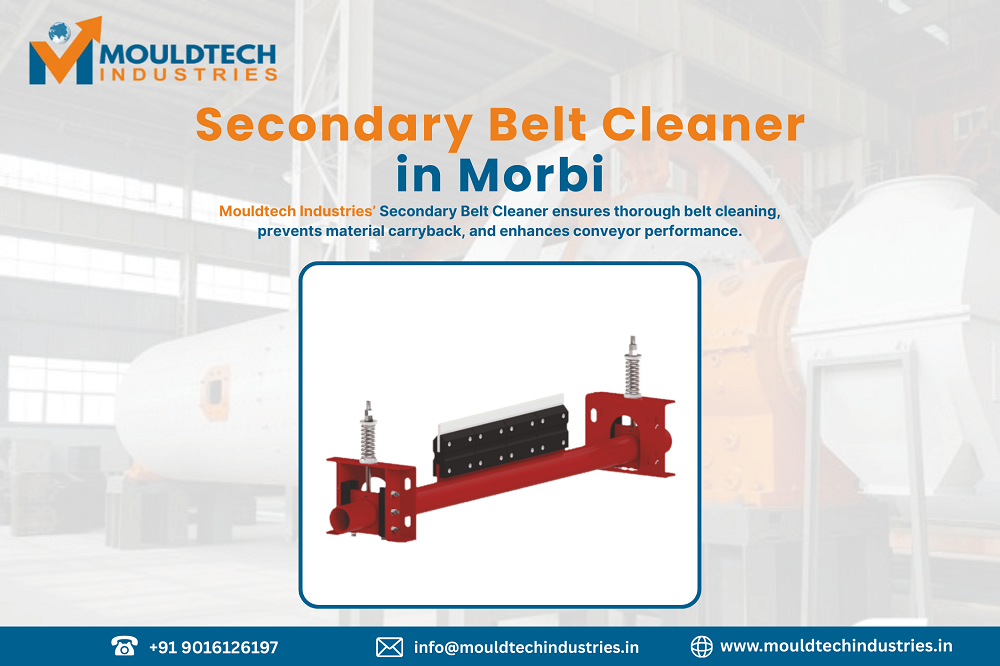
A Secondary Belt Cleaner is a mechanical apparatus mounted on the return side of a conveyor belt, typically situated following the head pulley and the primary cleaner.
Its function involves:
- Eliminating leftover fines and sticky substances missed by the initial cleaner
- Improving belt freshness before the belt loops back to the loading zone
- Minimizing material buildup on return rollers and structural elements
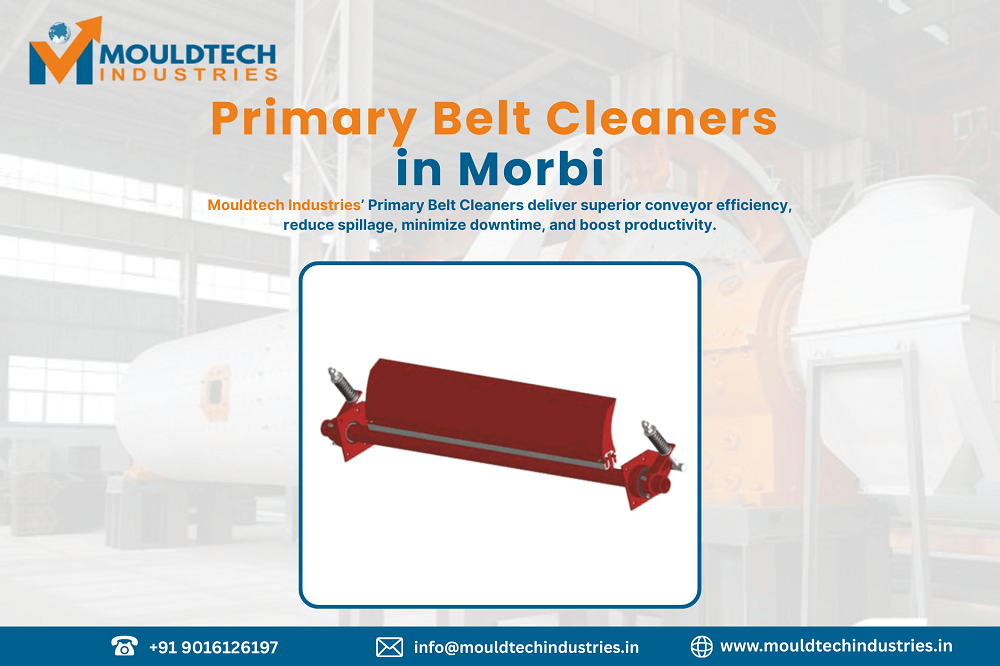
Distinct from primary scrapers, secondary units concentrate on highly precise cleaning, targeting fine carryback with carefully regulated blade contact force. They are engineered for nonstop service in abrasive and high-stress settings without harming the belt surface.
Usage Across Various Sectors
Secondary Belt Cleaner find deployment across a broad spectrum of industrial areas where conveyor efficiency directly influences production stability.
Mining Sector
- Handling of iron ore, coal, copper, bauxite, and limestone
- Reduced residue enhances belt longevity and minimizes scatter beneath extensive overland conveyors
Cement Facilities
- Conveyance of clinker, raw meal, gypsum, and fly ash
- Better workplace tidiness around kiln and grinding apparatus
Metal & Steel Plants
- Conveyors for sinter, coke, slag, and pellets
- Less contamination of walkways and machinery
Ceramic Production
- Handling of clay, feldspar, quartz, and spray-dried powders
- Cleaner material transfer lessens dust-related problems
Power Generation Plants
- Coal handling systems
- Conveyors for fly ash and bottom ash
Bulk Transport & Ports
- Fertilizers, minerals, aggregates, and grains
- Improved regulatory compliance and operational safety
Material Science & Design Considerations
The efficacy of a Secondary Belt Cleaner heavily relies on the selection of materials and the engineering blueprint.
- Rubber Attributes: Elastomeric elements are chosen based on resistance to abrasion, flexibility, and heat tolerance. Suitable rubber density ensures effective wiping without excessive belt wear.
- Ceramic Toughness: In zones with severe abrasion, blades tipped with ceramic offer extended service life. Modern alumina ceramics provide superb resistance to sliding wear while maintaining structural soundness.
- Wear Resistance Principles: Regulated contact pressure, correct blade profiling, and durable materials collectively guarantee steady cleaning performance across prolonged operating cycles.
Absorption of shock is particularly vital where belt movement or material chunks are present. Manufacturers with deep industry experience grasp how to balance stiffness with pliability in blade design.
Blueprint and Adaptation Needs
No two conveyor setups are identical. Secondary Belt Cleaner must be conceived keeping application-specific demands in view:
- Belt width and velocity
- Material characteristics and dampness level
- Conveyor slope angle
- Available mounting area
- Compatibility with existing primary cleaning gear
Bespoke sizing and adaptable tensioning mechanisms permit plant engineers to refine performance without constant adjustment.
Production Quality and Process Oversight
Consistent output originates at the manufacturing stage. Accurate machining, managed adhesion methods, and repeatable assembly procedures are crucial.
Quality evaluations commonly involve:
- Checking overall dimensions
- Testing material firmness
- Inspecting blade alignment
- Monitoring consistency across production batches
In industrial supply chains, dependability stems not just from design but also from disciplined manufacturing techniques.
Fitting and Servicing Notes
Secondary Belt Cleaner are intended for straightforward mounting and upkeep:
- Segmented structure simplifies fitting
- Adjustable frameworks allow rapid tension setting
- Few implements required for blade exchange
Shortened service intervals assist plants in avoiding unnecessary stops. Experienced maintenance staff often point out that well-conceived scrapers substantially cut down on unforeseen conveyor interruptions.
Safety and Operational Dependability
Cleaner conveyor systems directly enhance workplace safety:
- Reduced material scatter lowers hazards from slipping or tripping
- Less manual clearing decreases worker exposure to moving apparatus
- Cleaner return belts shield rollers and bearings from premature failure
Operational dependability improves when conveyors maintain alignment, cleanliness, and are free from excessive accumulation.
Fiscal Performance Over Equipment Lifespan
Although Secondary Belt Cleaner constitute a minor element within a conveyor assembly, their effect on lifetime expenditures is considerable:
- Diminished wear on belts and idlers
- Lower expenditures on cleaning labor
- Fewer unplanned shutdowns
- Enhanced equipment availability
From a complete ownership cost standpoint, reliable cleaning translates into manageable maintenance scheduling and improved facility efficiency.
Export Preparedness & Worldwide Approval
International industrial purchasers anticipate:
- Uniform standard of quality
- Records tailored to specific uses
- Knowledge of global operating settings
- Adherence to safety and substance benchmarks
Secondary belt scrapers furnished for overseas destinations must satisfy varied requirements throughout the mining, cement, and bulk transport sectors around the globe.
The Value of Seasoned Producers
Manufacturers with extended time in the field grasp:
- Actual site difficulties
- How material acts under constant strain
- Physical fitting limitations
- Dependability of supply and post-purchase assistance
Design proficiency results in items that function dependably under actual circumstances, not just theoretically.
Presenting Mouldtech Industries
Mouldtech Industries is a seasoned Indian company focusing on safeguards against wear and material handling remedies, such as:
- Linings of Rubber for Ball Mills
- Ceramic Solutions for Abrasion Defense
- Rubber Sheeting Assemblies
- Rubber Goods for Ball Mills
- Conveyor Systems and Belt Clearing Equipment
Supporting markets across India and internationally, Mouldtech Industries assists activities in all Indian provinces and territories, encompassing Maharashtra, Gujarat, Rajasthan, Odisha, Chhattisgarh, Jharkhand, Karnataka, Tamil Nadu, Telangana, Andhra Pradesh, Madhya Pradesh, West Bengal, Punjab, Haryana, Uttar Pradesh, Bihar, Assam, Meghalaya, and further—covering main industrial hubs like Mumbai, Pune, Ahmedabad, Surat, Jaipur, Bhilai, Rourkela, Durgapur, Jamshedpur, Chennai, Coimbatore, Hyderabad, Visakhapatnam, Bengaluru, Bellary, Raipur, Angul, Talcher, and Kutch.
Further details can be found at https://www.mouldtechindustries.in/
Summary
Secondary belt cleaners have a vital function in sustaining the efficiency of conveyance systems throughout the mining, cement, metal, ceramic, and bulk material handling sectors. By lessening residue, boosting security, and enabling consistent upkeep, they add directly to site dependability.
When designed and built with a practical industrial comprehension, these belt cleaners transform into a lasting advantage instead of a constant source of trouble.
Main Points to Remember
- Boosts defense against wear within conveyor setups
- Ups operational dependability and safety
- Appropriate for mining, cement, metal, ceramic, and energy production sites
- Decreases the necessary effort for upkeep over time
- Demonstrated applicability in worldwide industrial settings
Trending FAQs
Q1. What is the typical lifespan of a secondary belt cleaner?
Lifespan depends on material abrasiveness, belt speed, and operating hours. Properly selected cleaners offer predictable service intervals.
Q2. Is a secondary belt cleaner required if a primary cleaner is installed?
Yes. Primary cleaners remove bulk material, while secondary cleaners handle residual fines for improved cleanliness.
Q3. How often does a secondary belt cleaner require maintenance?
Inspection schedules usually align with conveyor maintenance cycles, with blade replacement based on wear.
Q4. Rubber vs ceramic wear solutions—what’s the difference?
Rubber offers flexibility and impact absorption, while ceramic provides superior abrasion resistance in high-wear zones.
Q5. Are secondary belt cleaners used globally?
Yes. They are standard components in mining, cement, and bulk handling operations worldwide.
For reliable Secondary Belt Cleaner solutions, connect with Mouldtech Industries to discuss plant-specific requirements, technical guidance, and dependable industrial conveyor cleaning support across India and global markets.
#SecondaryBeltCleaner #BeltCleaner #ConveyorBeltCleaner #ConveyorCleaningSystem #IndustrialBeltCleaner #BulkMaterialHandling #MiningConveyors #CementPlantConveyors #SteelPlantHandling #MaterialCarrybackControl #IndustrialConveyorSolutions #MouldtechIndustries