

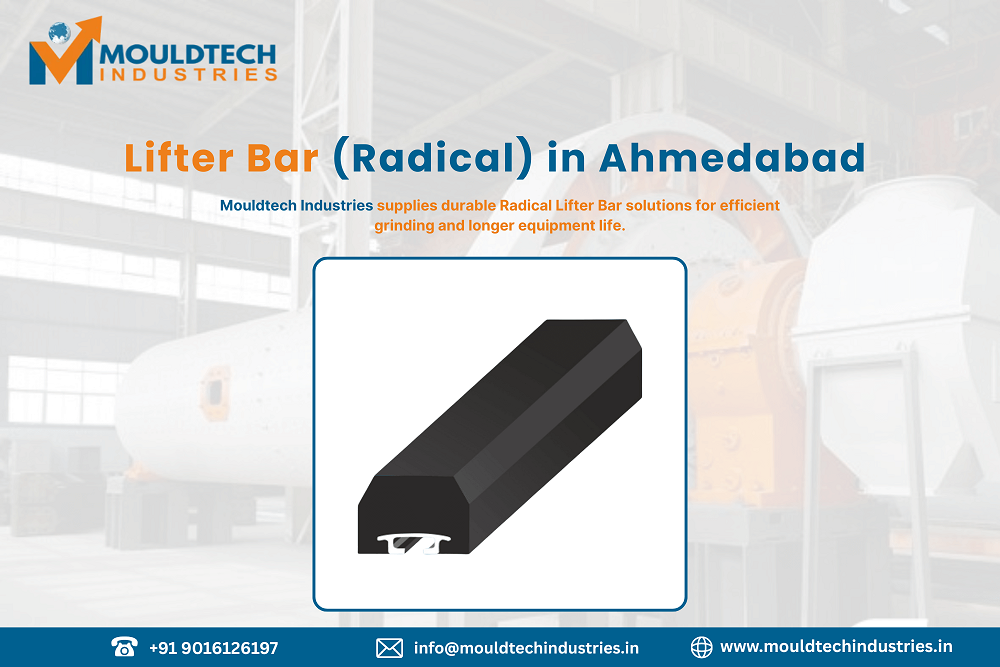
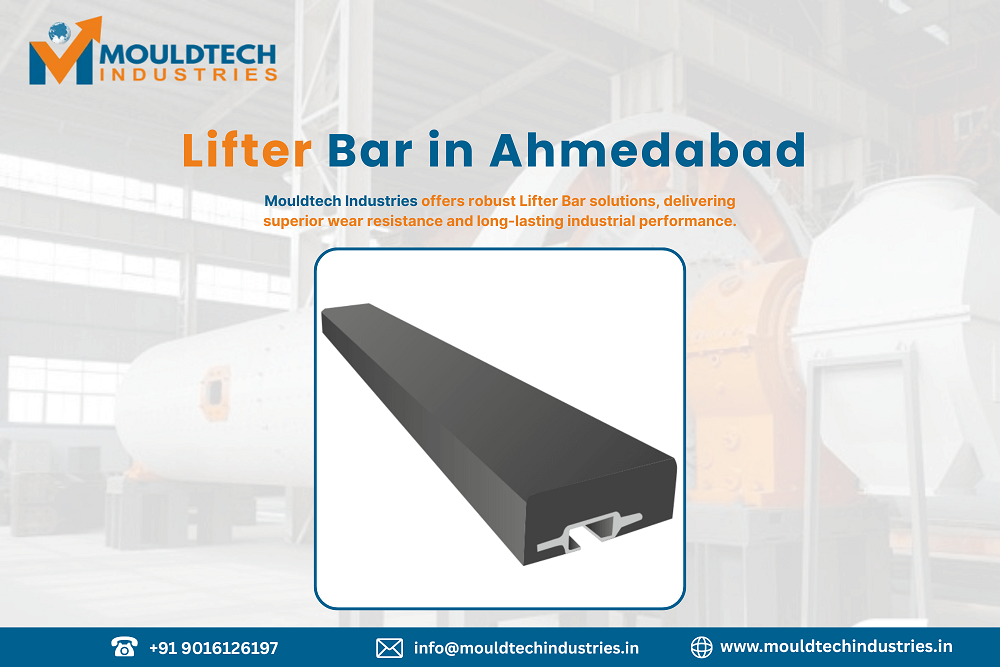
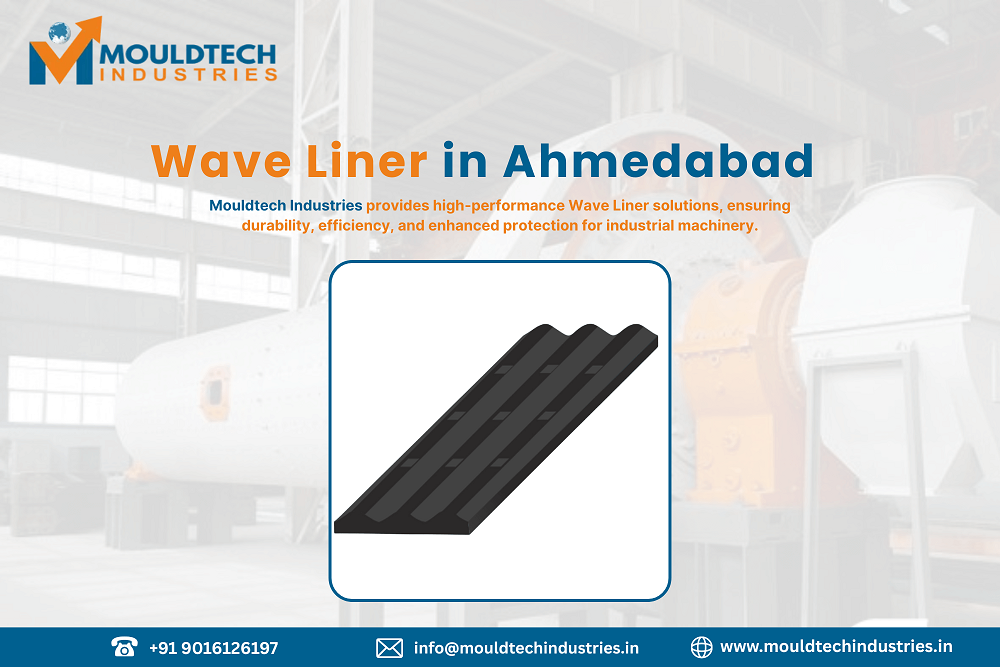
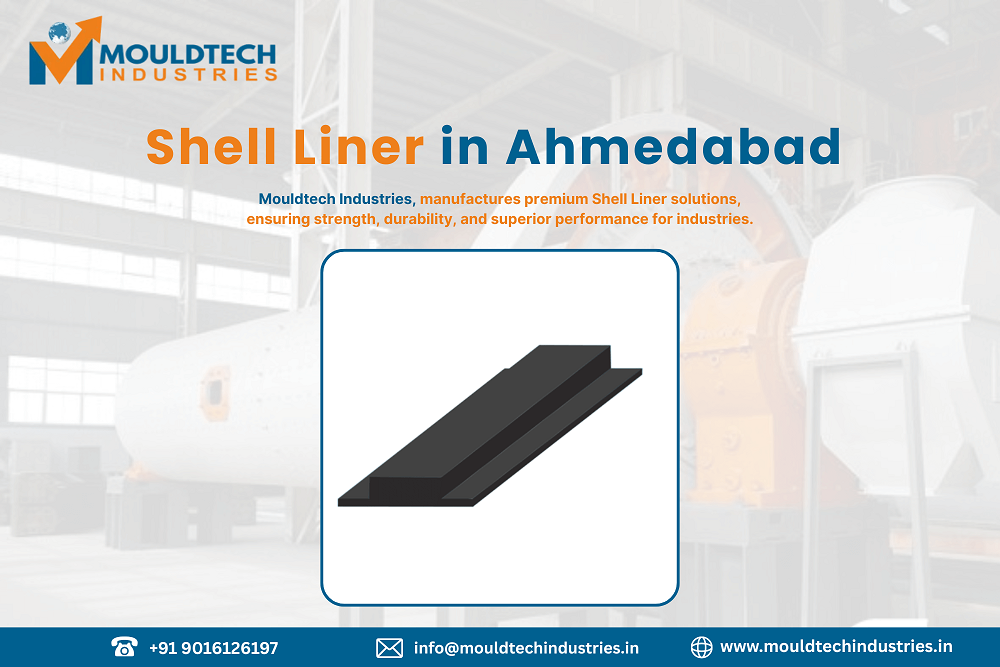
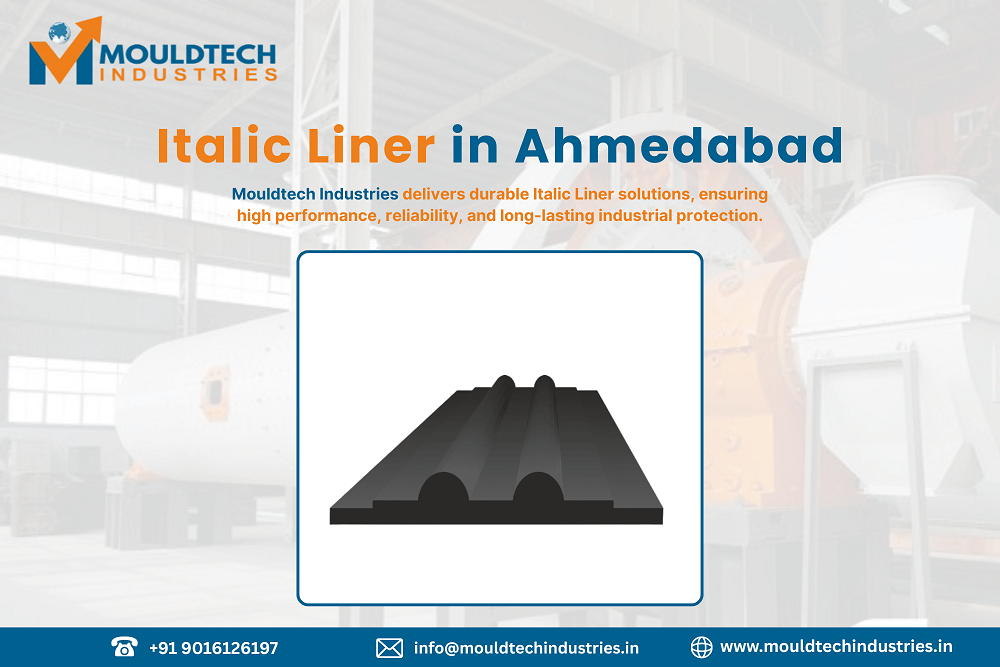
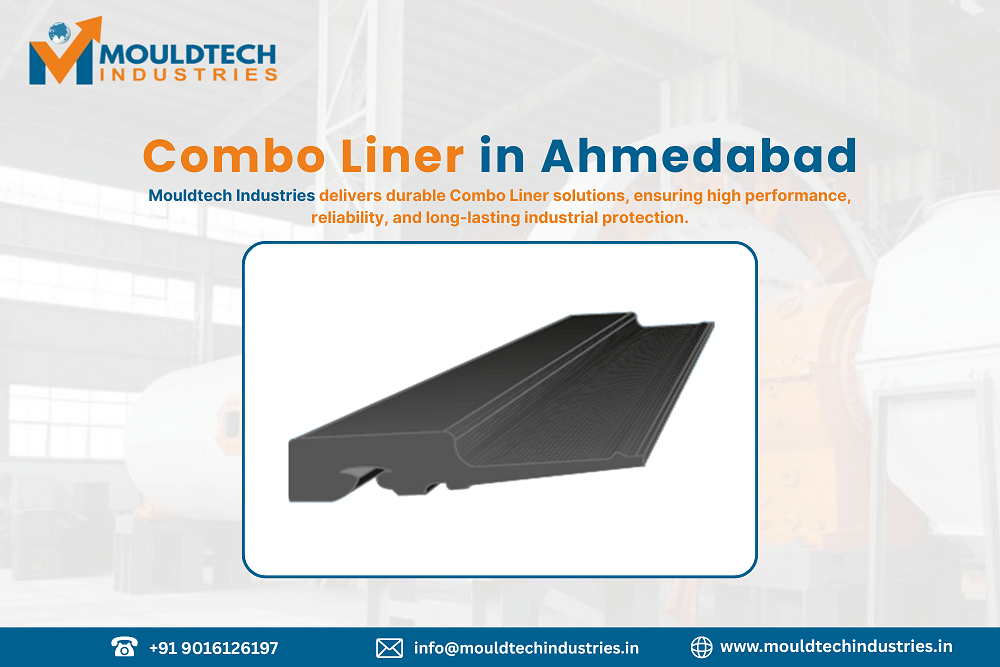
Shell Liner Manufacturer, Supplier, And Exporter in India: Mouldtech Industries
Mouldtech Industries is a Manufacturer of Shell liners in Ahmedabad.
Our Manufacturing Unit is in Vadodara, Gujarat, India.
Mouldtech Industries is a Manufacturer of Ball Mill Solutions, Ball Mill Rubber Lining, Wear Protection Line, Resistant Rubber Liner, Embedded Rubber Liners, Conveyors Solutions, Diamond Pulley Lagging, Belt Cleaners, Pulley Lagging, Ceramic Rubber Lagging Services, and Ceramic Rubber Lagging Sheet
Shell Liner in Heavy-Duty Industrial Operations: Engineering Perspectives from the Plant Floor
Introduction
In sectors such as extraction, metal fabrication, cement production, ceramics, and bulk material movement, equipment durability is continually tested by abrasive feedstock, forceful impacts, corrosive liquids, and continuous operation. In demanding industrial settings, even minor failures resulting in material loss can trigger unforeseen stoppages, safety hazards, and output reductions.
Global market demands point towards greater output capacities, shorter maintenance periods, and stricter safety benchmarks. These factors establish wear defence systems as fundamental to plant design rather than an afterthought. Considering this, the Shell Liner utilised in grinding mills and comparable rotating machinery plays a vital role in protecting the mill casing, directing how wear develops, and maintaining consistent operational parameters over extended run times.
Industrial Hurdles Driving the Need for Shell Liner
Facilities managing minerals, clinker, slag, or ceramic inputs confront a recognisable set of issues:
- Friction/Abrasion: Hard particulates rub against the lining, causing gradual material depletion. In mining and metal processing, ore with high silica content and sharp edges hastens wear.
- Impact Forces: Large feed sizes and erratic movement of the mill charge impose cyclical stress impacts on the linings and their fastenings.
- Chemical Degradation: Damp slurries, added chemicals, and fluctuating acidity levels contribute to material deterioration over time.
- Time Constraint Pressure: Production quotas often allow only brief intervals for lining replacement.
- Expense Management: Frequent line swaps raise labour exposure and lengthen outage durations.
These obstacles are not limited to any single region. Mining centres in Australia, South America, Africa, and industrial zones across Asia face comparable operational realities. Operations across India—from mineral regions to cement production areas and ceramic hubs—face identical wear mechanisms in all its states and territories. Each locale presents its own operational environments and service limitations.
Defining the Shell Liner
An Shell Liner is the protective barrier mounted on the interior surface of a grinding mill’s shell. Its primary purposes are to:
- Shield the mill casing from direct contact with abrasive forces and impacts.
- Influence grinding effectiveness by controlling the flow of the material charge.
- Absorb and distribute impact energy to lessen structural strain.
Shell Liner are generally made from rubber, rubber-composite blends featuring ceramics, or specialised synthetic materials, depending on the operating severity. They are designed as modular parts, enabling the central machinery to sustain a long service existence while the consumable sections are periodically renewed. The lining’s effectiveness depends not just on material toughness but also on its consistent interaction with the grinding media and the input material.
Sector-Specific Uses
Shell Liner are employed anywhere tumbling mills operate under continuous wear conditions:
- Mining: Initial and secondary size reduction of raw materials, where lining geometry impacts both lifespan and energy use.
- Cement: Grinding of raw meal and clinker in mills, where elevated temperatures and abrasive dust affect material selection.
- Metal & Steel: Processing of slag and secondary materials, where heavy impacts and varied particle sizes are common.
- Ceramics: Milling of ingredients and coatings, often requiring control over contamination and consistent lining shape.
- Power Generation: Pulverising coal or additives for fuel preparation.
- Bulk Material Handling: Supporting grinding and conditioning processes linked to conveyance systems.
Seasoned plant supervisors frequently note that lining choice influences not only durability but also mill noise output, vibrational tendencies, and the safety of the lining replacement process.
Material Science & Engineering Aspects
From an engineering view, lining performance relies on aligning material characteristics with operational demands:
- Rubber Qualities: High elasticity enables rubber linings to absorb impact energy, reducing the initiation of cracks in the casing. Rubber’s flexibility also lessens sound and vibration.
- Ceramic Hardness: Ceramic pieces or tiles offer superior abrasion resistance in areas where sliding wear is prevalent, especially with fine particles.
- Engineers determine abrasion by comparing particle hardness to the lining material, contact pressure, and sliding speed.
- Impact Dampening: Composite linings combine rubber’s energy absorption with ceramic’s resistance to wear, making them useful in zones with mixed operational demands.
Engineers usually determine the correct material by ore composition, mill rotation speed, particle size distribution, and the facility’s maintenance strategy, rather than relying on generic “high wear resistance” claims.Engineers determine abrasion by comparing particle hardness to the lining material, contact pressure, and sliding speed.
Design & Tailoring Needs
Shell Liner must conform precisely to the mill’s spatial configuration and operational pattern:
- Machine Fit: Lining profiles are engineered to match mill diameter, shell depth, and the means of securing them.
- Precise Sizing: Slight variations matter. An imprecise fit causes uneven load distribution and premature bolt fatigue.
- Engineers adjust the height and spacing of lifting bars and lining thickness to control grinding media trajectory and minimize localized material loss.
Manufacturers with extensive industry tenure recognise that minor design adjustments can considerably alter how the charge moves and how wear occurs over an operational cycle.
Manufacturing Excellence & Procedure Control
Uniformity in lining performance is linked to manufacturing rigour:
- Accurate Production: Controlled moulding or pouring techniques guarantee consistent thickness and material traits.
- Assurance Checks: Dimensional verification, material testing, and integrity checks of the bonding layer are essential.
- Lot Uniformity: Differences in rubber mixing or ceramic sourcing can result in uneven wear across a set of linings, complicating maintenance scheduling.
Process control during manufacturing directly affects the predictability of the lining’s lifespan once installed in the plant.
Implementation & Service Notes
From the plant floor viewpoint, handling and installing the lining are vital steps:
- Installation Simplicity: Lighter lining sections reduce the risk of manual handling and speed up replacement events.
- Reduced Outage Time: Segmented lining designs can shorten shutdown durations when scheduled effectively.
- Service Intervals: Aligning lining replacement with other necessary service tasks minimises production interruptions.
Installation protocols must account for bolt tension, proper seating of the lining, and alignment to prevent early loosening or the formation of concentrated wear spots.
Safety & Operational Dependability
Safety is naturally achieved through sound liner design:
- Personnel well-being: Lighter liners and easier handling features lessen the chance of workplace injuries during mounting.
- Asset safeguarding: Effective liners shield the mill casing from blows and rubbing, minimising the need for structural mends.
- Facility uptime: Predictable wear patterns enable scheduled maintenance rather than unexpected stoppages.
In demanding industrial settings, liner failure can expose workers to significant hazards, making dependability as crucial for safety as it is for maintenance.
Value Across the Equipment Lifespan
Although liners are replacement items, their impact on lifetime cost is substantial:
- Long-term savings: Selecting the right liners extends casing life and reduces the need for unforeseen repairs.
- Fewer interruptions: Less emergency downtime means more consistent output.
- Maintenance streamlining: Knowing wear patterns allows for better parts ordering and workforce scheduling.
The aim isn’t the absolute lowest liner wear regardless of performance, but a balanced outcome that boosts overall plant efficiency.
Export Readiness & Worldwide Acceptance
Industrial purchasers expect suppliers to meet global benchmarks:
- Paperwork & standards knowledge: Material specifications, tracking data, and quality reports are increasingly standard requirements from global EPCs and OEMs.
- International buyer demands: Export markets often require consistency across production runs and adherence to set specifications.
- Suppliers pack items, organize logistics, and provide technical details to deliver wear solutions for overseas projects.
The Importance of Seasoned Manufacturers
Mill liners aren’t just standard rubber components. The level of engineering is key:
- Engineering skill: A deep understanding of wear processes and mill dynamics informs liner design.
- Sector background: Familiarity with various ores and how they operate improves problem-solving ability.
- Dependable supply: Steady manufacturing and delivery schedules aid in planning maintenance activities.
Manufacturers with extensive sector history know that support during the initial run-in and early service period is just as vital as the product itself.
About Mouldtech Industries (Gentle & Natural)
Mouldtech Industries serves the mining, cement, metal, ceramic, and bulk material-handling sectors throughout India and in export markets. With expertise in rubber linings, ceramic wear protection, rubber coating systems, rubber components for ball mills, and conveyor systems, the company assists plant engineers and maintenance teams through application-focused production methods. More information regarding their industrial product range and capabilities can be found at 👉 https://www.mouldtechindustries.in/
Summary
Shell liners remain a fundamental element for shielding grinding and processing machinery from wear. Their function goes beyond just protecting the surface to influencing grinding effectiveness, safety protocols, and how maintenance occurs. When designed and produced with a proper understanding of actual plant conditions, shell liners foster steady operations and prolong equipment life. A practical methodology—rooted in operational data and maintenance feedback—helps facilities maintain dependable performance over extended running periods.
Main Points to Remember
- Wear defence is fundamental to equipment reliability in abrasive sectors
- Shell liners guard mill casings and affect grinding characteristics
- Material choice must match the specific impact and abrasion forces
- Custom design leads to a better fit and more predictable wear patterns
- Uniform manufacturing quality supports planned upkeep activities
Frequently Asked Questions on Current Topics
1. What is the typical service life for a shell liner in industrial mills?
Life varies depending on ore toughness, mill rotation speed, feed particle size, and the liner material itself. In mining and cement work, operators and maintenance practices determine the actual service life more than material selection.
2. Are shell liners suitable for both wet and dry grinding processes?
Yes. Manufacturers tailor material composition and bonding methods to match moisture levels and corrosion potential. Wet grinding usually requires closer attention to rust and abrasive-slime wear.
3. How frequently should shell liners be checked or serviced?
Regular visual checks during scheduled downtimes help spot any uneven wear or fastening problems. The frequency of required maintenance generally aligns with the mill relining schedule and total operating hours.
4. How do rubber linings compare to ceramic wear solutions?
Rubber linings excel at absorbing impact and dampening sound, whereas ceramic sections offer superior resistance to rubbing wear in areas of sliding contact. Composite designs integrate the advantages of both for mixed operational demands.
5. Are shell liners commonly used in industrial setups globally?
Yes. Ball mills and other tumbling mills in the worldwide mining, cement, and power industries depend on shell liners as standard components for wear defence.
Contact Mouldtech Industries for expert guidance, technical support, and supply of durable Shell Liner solutions across India and global industrial markets for reliable wear protection.
#BallMillRubberLiner #CeramicWearProtection #RubberLining #MiningSolutions #BulkMaterialHandling #ConveyorSolutions #MouldtechIndustries #WearProtection #IndustrialManufacturing