

Head End Liner Manufacturer, Supplier, And Exporter in India: Mouldtech Industries
Mouldtech Industries is a Manufacturer of Head End Liner in Ahmedabad.
Our Manufacturing Unit is in Vadodara, Gujarat, India.
Mouldtech Industries is a Manufacturer of Ball Mill Solutions, Ball Mill Rubber Lining, Wear Protection Line, Resistant Rubber Liner, Embedded Rubber Liners, Conveyors Solutions, Diamond Pulley Lagging, Belt Cleaners, Pulley Lagging, Ceramic Rubber Lagging Services, and Ceramic Rubber Lagging Sheet
Head End Liner: Defence Against Deterioration in Tough Industrial Settings
Introduction
In severe industrial settings, equipment longevity is seldom threatened by a single factor. Operations such as mining, metal refining, cement production, ceramic fabrication, and the conveyance of bulk goods constantly encounter a mix of abrasive wear, heavy impacts, moisture, chemical exposure, and continuous operation. These circumstances accelerate the degradation of critical equipment components, particularly when material is moved or released.
Seasoned plant personnel frequently note that failures typically occur not at design thresholds but where high-wear interfaces meet material flow dynamics, impact forces, and operational inconsistencies. Safeguarding these areas is vital for sustaining output, ensuring safety, and maintaining reliable maintenance schedules.
Globally, industrial sites are shifting from fixing things only when they break to managing assets based on their expected lifespan. This transition has underscored the need for purpose-built wear protection components that balance toughness, ease of servicing, and integration with existing machinery.
In this context, the Head End Liner has an essential function. Situated at the outlet or high-stress region of handling or grinding machinery, it acts as a primary protective layer, shielding structural metal and process gear from rapid wear while supporting steady, effective operation.
Industrial Hurdles Driving Demand for Head End Liners
Across industrial sites worldwide, several repeating issues shape liner selection and performance expectations:
Abrasion
In operations involving minerals and metal processing, abrasive ores, hot clinker, slag, and feedstocks constantly wear down exposed surfaces. Without proper defence, metal components quickly lose material, resulting in altered dimensions and eventual failure.
Impact Stress
At head ends and discharge points, material frequently falls with considerable kinetic energy. Repeated shock forces can fracture rigid liners or deform unprotected structural elements.
Deterioration and Dampness
Wet processing conditions, added chemicals, and varying acidity levels accelerate corrosion, especially in transfer sections and discharge enclosures.
Unscheduled Halts
Frequent need to swap out liners or urgent shutdowns disrupt production schedules, negatively impacting overall plant effectiveness and subsequent processes.
Increasing Service Expenditures
Labour-intensive liner exchanges, extended downtimes, and frequent check-ups elevate the total cost of ownership throughout the equipment’s service life.
These issues are prevalent in mining centers, cement complexes, ceramic production areas, steel mills, and bulk-handling depots worldwide, fueling demand for robust head-end protection methods.
Defining the Head End Liner
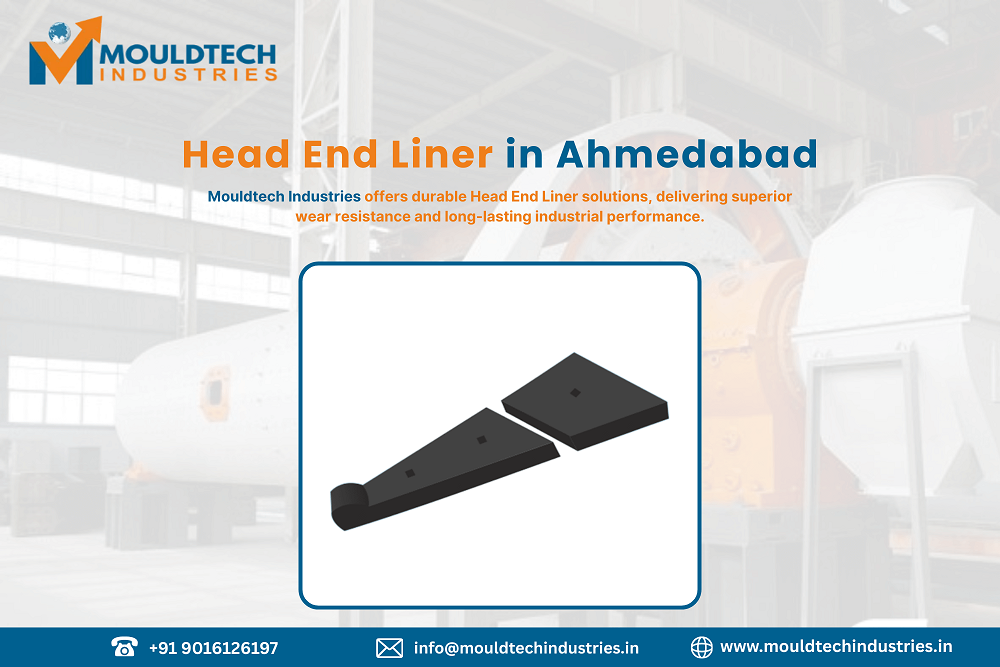
A Head End Liner is a component designed to resist wear, fitted at the discharge or impact zone of apparatus like ball mills, conveyors, chutes, and material transfer enclosures. Its primary purpose is to absorb impact energy, combat abrasion, and shield the underlying structure from direct substance contact.
In contrast to standard wear plates, head-end liners are designed for the specific operational context. They might be constructed from rubber, composite materials involving ceramic and rubber, or specialized flexible compounds, chosen based on material properties, impact severity, and maintenance strategy.
The objective is not to eliminate wear, but to manage it in a controlled, foreseeable manner.
Applications Across Sectors
- Mining: Deployed in ore handling circuits, mill discharge areas, and conveyor junctions to manage abrasive materials subjected to heavy impact.
- Cement Facilities: Installed in clinker exit areas, raw mill outputs, and main conveyor head ends where high heat and sharp particles are common.
- Metal & Steel Works: Utilized in sinter production units, coke conveyance systems, and slag transport lines to endure powerful impacts and sharp material edges.
- Ceramic Manufacturing: Protects transfer points handling highly erosive raw ingredients such as feldspar, quartz, and alumina.
- Power Generation Sites: Used in coal conveyance lines, ash release zones, and bulk material conveyors.
- Bulk Handling Operations: Crucial in ports, terminals, and processing centers where continuous material movement causes focused wear at the end points.
Material Composition & Design Factors
The choice of material is central to the liner’s performance:
- Rubber Characteristics: Rubber linings offer superb shock absorption and noise dampening. Their pliability helps diffuse energy, lessening strain on support frameworks.
- Ceramic Resilience: Ceramic elements provide superior resistance to scraping wear. When integrated into a rubber base, they combine hardness with impact resistance.
- Wear Resistance Principles: The rate of wear depends on material toughness, particle form, speed, and impact angle. Engineers must balance these variables to prevent brittle breakdown or premature erosion.
- Impact Dampening: In areas with high impact forces, dissipating energy is often more crucial than surface hardness alone.
Manufacturers with deep sector experience appreciate that material science choices must align with actual field conditions, not just lab findings.
Design & Customization Needs
No two facilities operate under the same conditions. Effective head-end liners necessitate:
- Suitability with existing equipment contours
- Bespoke dimensions for specific enclosures or discharge spots
- Material composition and thickness tailored to the application
- Mounting setups that enable safe and efficient fitting
Customization guarantees consistent performance without introducing new servicing complications.
Manufacturing Excellence & Process Oversight
Precise manufacturing directly influences liner dependability. Key elements include:
- Controlled material formulation procedures
- Accurate moulding and curing techniques
- Uniform dimensions across production runs
- Documented quality checks at every manufacturing phase
Process oversight ensures that liners function as expected across numerous installations and replacement cycles.
Installation & Servicing Aspects
From a maintenance viewpoint, head-end liners ought to:
- Permit simple fitting without specialized instruments
- Minimize lost production time during replacement
- Support scheduled upkeep rather than emergency fixes
Ease of handling and modular designs are frequently favoured in sites with limited downtime availability.
Safety and Operational Dependability
Safety is closely interwoven with wear prevention. Liners that are degraded or broken raise the likelihood of:
- Product escaping
- Structural breakdown
- Hazardous work settings during urgent upkeep
Liners designed correctly help ensure steady material movement, less shaking, and safer servicing tasks.
Value Preservation Across the Equipment Span
While the first material choice is essential, real cost-effectiveness is realized throughout the entire equipment lifetime:
- Less frequent need to swap out liners
- Lower possibility of structural harm
- Fewer unexpected stoppages
- Optimized upkeep scheduling
This full-life perspective aligns with contemporary strategies centred on upkeep for reliability.
Preparedness for Shipping and Worldwide Acceptance
Industrial purchasers across the globe anticipate:
- Uniform quality records
- Comprehension of global working environments
- Awareness of adherence to worldwide industry benchmarks
- Dependable supply chain and technical exchange
Producers prepare international trade-engineered items that function consistently across diverse industrial locales and climates.
The Importance of Seasoned Producers
Liners at the head end serve crucial functions within industrial setups. Producers possessing in-depth engineering skills and extended time in the sector are better equipped to:
- Suggest suitable material pairings
- Grasp site-specific limitations
- Provide a steady, trustworthy supply
Experience directly converts into reduced operational hazards for the end consumers.
Regarding Mouldtech Industries
Mouldtech Industries is a seasoned industrial producer specializing in rubber linings for ball mills, ceramic solutions for wear protection, rubber lining systems, rubber components for ball mills, and conveyor systems. Serving industrial sectors across India—including Maharashtra (Mumbai, Pune, Nagpur), Gujarat (Ahmedabad, Surat, Vadodara, Morbi), Rajasthan (Jaipur, Udaipur), Tamil Nadu (Chennai, Coimbatore), Karnataka (Bengaluru), Telangana (Hyderabad), Andhra Pradesh (Visakhapatnam), Odisha (Rourkela), Chhattisgarh (Raipur), Jharkhand (Jamshedpur), West Bengal (Durgapur), Uttar Pradesh, Madhya Pradesh, Punjab, Haryana, Himachal Pradesh, Uttarakhand, Bihar, Assam, and other regions—Mouldtech supports the mining, cement, ceramic, metal, power, and bulk material handling sectors.
Further details are available at 👉 https://www.mouldtechindustries.in/
Summary
The Head End Liner is a minor yet vital component of industrial systems. By managing abrasion, impact, and operational strain in areas subject to heavy wear, it directly contributes to system dependability, safety, and predictable maintenance planning.
In demanding industrial settings, thoughtful liner engineering and material selection are crucial to maintaining plant performance over time.
Crucial Facts
- Head-end liners safeguard crucial, high-wear zones.
- Selecting the right materials enhances operational dependability
- Applicable across mining, cement, metal, ceramic, and power sectors
- Supports upkeep plans based on the component’s lifespan
- Relevant for both domestic and worldwide industrial functions
Frequently Asked Questions on Current Topics
Q1. What is the usual service duration for a head-end liner?
The duration depends on the material processed, the impact force, and the operating hours. In controlled settings, engineers design liners to last through multiple maintenance phases.
Q2. Are head-end liners appropriate for heavy-duty applications?
Yes, engineers can achieve this by using suitable rubber or rubber-ceramic combinations to cushion impact energy.
Q3. How frequently should head-end liners be checked?
It is advised to conduct routine checks during planned downtime to monitor wear.
Q4. Rubber versus ceramic wear solutions: which is preferable?
Rubber excels at absorbing impact, while ceramic offers superior resistance to wear from rubbing. The choice depends on the working environment.
Q5. Are these liners used in other parts of the world?
Indeed, industries worldwide use comparable lining systems in mining, cement, and bulk-handling sectors.
Contact Mouldtech Industries for Head End Liner solutions, engineered for demanding industrial environments, technical support, customization guidance, and dependable supply across India and global markets.
#HeadEndLiner #BallMillRubberLiner #CeramicWearProtection #RubberLiningSystem #MiningWearSolutions #BulkMaterialHandling #ConveyorSolutions #IndustrialWearProtection #MouldtechIndustries