

Pulp Lifter Manufacturer, Supplier, And Exporter in India: Mouldtech Industries
Mouldtech Industries is a Manufacturer of Pulp lifters in Ahmedabad.
Our Manufacturing Unit is in Vadodara, Gujarat, India.
Mouldtech Industries is a Manufacturer of Ball Mill Solutions, Ball Mill Rubber Lining, Wear Protection Line, Resistant Rubber Liner, Embedded Rubber Liners, Conveyors Solutions, Diamond Pulley Lagging, Belt Cleaners, Pulley Lagging, Ceramic Rubber Lagging Services, and Ceramic Rubber Lagging Sheet
Pulp Lifter Systems in Rigorous Industrial Settings: Building Durability into Ball Mill Functioning
Introduction
Within demanding industrial settings, equipment dependability is key to plant output, security, and expense levels. Mining activities involve hard-wearing ores under ongoing shock. Cement facilities handle clinker at high pressure and high temperatures. Industries dealing with metals, steel, ceramics, and bulk materials subject machinery to steady mechanical strain, often with tight service windows.
Across these fields, failures due to wear rank among the most persistent operational hurdles. Early liner deterioration, hampered material progress, unexpected stoppages, and rising maintenance costs affect not only output but also the long-term condition of the machinery.
Global industry trends increasingly favour life-cycle effectiveness over short-term cost-cutting. Facility supervisors and engineers are now prioritizing wear defence systems that boost output, lessen downtime, and enhance operational safety.
In ball mill assemblies, the Pulp Lifter holds a vital yet sometimes overlooked function. While shell liners safeguard the mill structure, pulp lifters control the slurry exit characteristics, directly impacting grinding efficiency, power draw, and liner longevity. When thoughtfully engineered and fitted, pulp lifters significantly contribute to steady, dependable mill operation across various sectors.
Industrial Hurdles Driving Need for Pulp Lifter Systems
In mining and metal refining operations, pulp lifters endure some of the most severe internal mill environments. Several linked difficulties fuel the demand for specifically engineered pulp lifter solutions:
- Abrasion: Continuous subjection to ore particles, ceramic feedstocks, clinker, or slag causes surface wearing. Inappropriate material choices accelerate profile loss, thereby impacting evacuation effectiveness.
- Impact Forces: Grinding media and large feed pieces generate repeating shock loads. Components lacking shock dampening develop fissures, distort, or fail prematurely.
- Corrosion: Wet grinding conditions introduce chemical attack from process water, additives, or slurry composition, especially in mineral concentration circuits.
- Downtime Pressures: Unexpected halts for liner or pulp lifter replacements disrupt production plans, heighten worker exposure, and inflate operating expenses.
- Maintenance Expenses: Repeated liner changes require additional personnel, larger spare parts stocks, and periods of equipment inactivity.
These issues are not confined to specific locales. Mining centers, cement complexes, ceramic production areas, and metal processing sites globally face comparable operating realities, making robust pulp lifter design a requirement rather than a choice.
Defining a Pulp Lifter
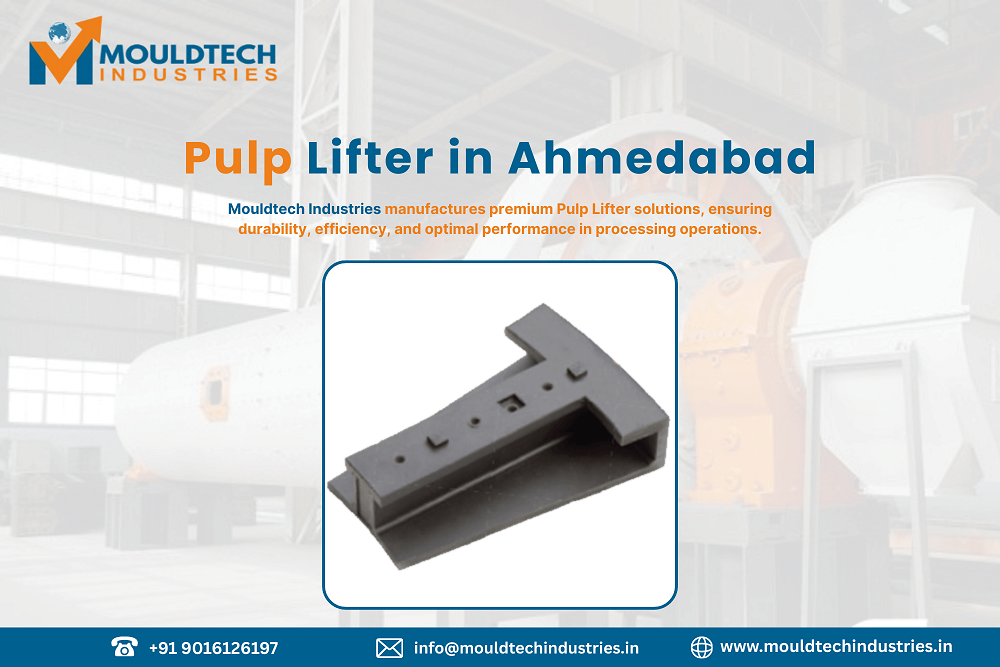
A pulp lifter is an internal element of a ball mill discharge setup intended to gather ground slurry from within the mill and guide it effectively toward the discharge outlet.
In contrast to shell liners, whose primary purpose is to protect the mill structure, pulp lifters affect how material exits the mill. Their shape, spacing, and wear pattern determine:
- Slurry transport speed
- How long does the material stay inside the mill
- The possibility of ponding or reverse flow
- The overall grinding performance
Poorly conceived pulp lifters can lead to slurry buildup, shrinking usable grinding space, and increasing energy consumption. Properly engineered pulp lifters promote consistent discharge, steady output, and predictable wear patterns.
Uses Across Different Sectors
Mining Processes
In mineral grinding circuits, pulp lifters manage slurry removal from primary and secondary ball mills. Experienced facility engineers often note that inefficient discharge causes excessive grinding and higher energy use.
Cement Facilities
Cement mills processing clinker benefit from pulp lifters capable of handling dense slurry while resisting wear and heat stress.
Metal & Steel Mills
Slag crushing and mineral recovery units require pulp lifters that withstand impact and chemical exposure.
Ceramic Manufacturing
Ceramic raw materials exhibit high abrasiveness. Pulp lifters in ceramic mills must maintain accurate dimensions to ensure consistent particle sizing.
Power Generation
Coal and mineral grinding systems rely on stable discharge behaviour to uphold combustion efficiency and the reliability of downstream equipment.
Bulk Material Handling Systems
Industries processing minerals, ash, or industrial residues count on pulp lifters to avoid material buildup and flow blockages.
Material Science & Design Considerations
Producers with extensive industry background recognize that pulp lifter effectiveness starts with material selection.
- Rubber Characteristics: Specially formulated rubber possesses flexibility, shock resilience, and abrasion resistance. Rubber lessens noise, absorbs vibration, and safeguards the mill structure.
- Ceramic Toughness: In areas of intense abrasion, ceramic wear protection offers superior hardness and resistance to sliding wear. Ceramic sections are often backed with rubber to balance strength and service duration.
- Wear Resistance Principles: Wear is affected by particle size, slurry speed, impact angle, and operating velocity. Material selection must be based on these variables rather than relying solely on general hardness figures.
- Impact Dampening: Exclusively rigid substances can fracture under repeated shocks. Composite solutions frequently show better results in dynamic grinding environments.
Design & Customization Necessities
No two mills operate under the same conditions. Successful pulp lifter systems demand:
- Suitability for mill size, discharge layout, and rotation rate
- Tailored dimensions to align with the current liner and grate setups
- Geometry specific to the application to manage slurry flow and prevent stagnation
Custom building ensures that pulp lifters integrate smoothly into the overall mill lining assembly rather than functioning as separate parts.
Manufacturing Excellence & Process Oversight
Accurate production plays a crucial part in pulp lifter dependability. Uniformity in compound mixing, moulding precision, and size accuracy ensures reliable field performance.
Quality assurance procedures usually involve:
- Checking incoming materials
- Regulated heating/cooling cycles
- Measurement verification
- Tracking uniformity across production batches
Such oversight minimizes variations, which is vital for essential rotating machinery.
Fitting & Servicing Notes
From a facility standpoint, ease of mounting is as vital as service life. Properly conceived pulp lifters allow for:
- Quicker liner exchanges
- Reduced the time workers spend inside mills
- Coordination with planned maintenance downtimes
Service intervals become more predictable, reducing unexpected fixes and improving safety outcomes.
Safety and Dependable Operation
Safer workplaces result when machinery functions as expected. Fewer liner failures lessen the chance of internal mill damage, necessary interventions, and physical dangers.
Stable operation also safeguards downstream machinery by ensuring steady slurry movement and consistent process states.
Value Over the Equipment’s Lifespan
Seasoned operators assess the overall cost of ownership instead of just the initial purchase price of components. Effective pulp lifters lead to:
- Extended maintenance periods
- Lowered power usage
- Fewer interruptions
- Optimized liner replacement timing
Over time, these elements deliver tangible cost-effectiveness without sacrificing process steadiness.
Export Preparedness and Worldwide Acceptance
International industrial purchasers anticipate adherence to precise dimensions, documentation norms, and uniform quality. Manufacturers prepared for export recognize the needs concerning:
- Technical schematics
- Quality endorsements
- Packaging and tracking
Such preparedness fosters acceptance in international mining, construction material, and processing ventures.
The Value of Experienced Manufacturers
Pulp lifters are not standard, off-the-shelf items. Their performance relies on engineering expertise, application understanding, and manufacturing rigour. Manufacturers with extensive industry background understand how design choices affect actual plant performance, not just lab results.
A dependable supply chain, technical assistance, and application guidance are equally vital for sustained operational success.
About Mouldtech Industries
Mouldtech Industries is a seasoned industrial producer specializing in ball mill rubber linings, pulp lifters, ceramic wear defence solutions, rubber lining installations, ball mill rubber components, and conveying systems. Serving industrial sectors across India and internationally, the company focuses on engineering-driven remedies tailored to real-world operating scenarios.
Further details are accessible at 👉 https://www.mouldtechindustries.in/
Summary
Pulp lifters play a crucial role in ball mill performance by controlling slurry exit, influencing grinding efficiency, and maintaining mill structure. When designed with appropriate material choices, tailored design, and manufacturing oversight, they directly support plant dependability and enduring operational efficiency.
For industries operating under constant wear, adopting technically sound pulp lifter setups helps ensure stable output and predictable maintenance planning.
Main Points
- Pulp lifters have a direct impact on grinding efficiency and discharge patterns
- Appropriate wear defence boosts operational dependability
- Suitable for mining, cement, metal, ceramic, and bulk transport sectors
- Engineered materials balance defence against wear and shock absorption
- Enduring performance is linked to design, not just material hardness
- Solutions accepted globally require consistent quality and paperwork
Frequently Asked Questions (Trending)
1. What is the usual service life of a pulp lifter?
Service life varies based on the material processed, slurry makeup, mill rotation speed, and operational hours. Properly conceived systems can last through several maintenance cycles.
2. Are pulp lifters appropriate for all ball mill dimensions?
Yes, provided they are specially designed to suit the mill’s diameter, discharge style, and process needs.
3. How often should pulp lifters be checked?
Inspections typically align with liner maintenance schedules to minimize production halts.
4. Rubber versus ceramic pulp lifters – which is preferable?
Rubber excels at absorbing impact, whereas ceramic offers better abrasion resistance. The choice depends on the operating environment.
5. Are pulp lifters commonly used globally in mining and cement?
Yes, they are standard fittings in mineral processing and cement grinding setups worldwide.
For reliable Pulp Lifter solutions, contact Mouldtech Industries to discuss your application requirements, engineering support needs, and long-term plant performance objectives across industrial operations.
#PulpLifter #BallMillComponents #RubberWearProtection #BallMillRubberProducts #MiningEquipment #CementPlantSolutions #BulkMaterialHandling #IndustrialWearSolutions #MouldtechIndustries