
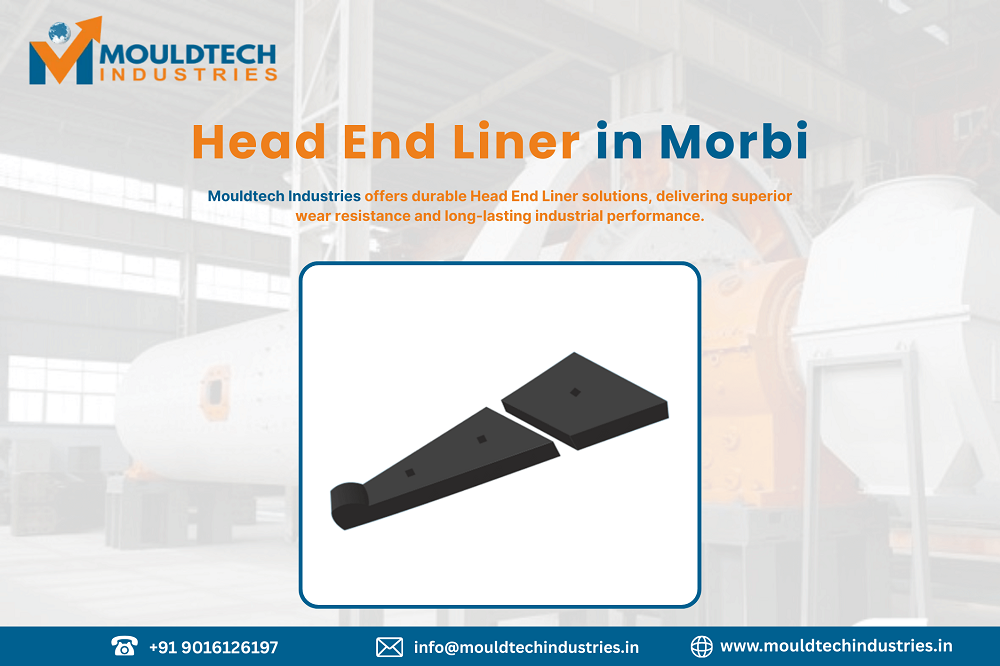
Head End Liner Manufacturer, Supplier, And Exporter in India: Mouldtech Industries
Mouldtech Industries is a Manufacturer of Head End Liner in Morbi.
Our Manufacturing Unit is in Vadodara, Gujarat, India.
Mouldtech Industries is a Manufacturer of Bridge Rubber Pad, Ball Mill Rubber Lining, Bridge Rubber Pad, Resistant Rubber Liner, Embedded Rubber Liners, Conveyors Solutions, Ceramic Lagging Sheet, Belt Cleaners, Bridge Rubber Pad, Ceramic Rubber Lagging Services, and Ceramic Rubber Lagging Sheet.
Head End Liner: Designing Protection for Rugged Conveyor Sections
Opening Remarks
Throughout sectors like mining, cement production, metal refining, ceramics, and bulk material handling, maintaining equipment dependability faces constant challenges. High output rates, coarse materials, fluctuating dampness, and non-stop operations impose severe strain on material transport setups—particularly at conveyor discharge points.
In demanding industrial settings, the beginning section of a conveyor system is highly susceptible to damage. This is where material lands, impact forces reach their peak, surface wear accelerates, and exposed metal deteriorates quickly. Uncontrolled wear here results in frequent malfunctions, material dispersion, safety concerns, and unscheduled stoppages.
As worldwide industrial demand increases—fueled by expanding mining activities, infrastructure projects, cement consumption, and metal processing—the need for effective wear defense solutions has shifted from an optional enhancement to a fundamental operational necessity.
The Head End Shield plays a vital role in safeguarding conveyor frameworks at drop-off points, prolonging asset lifespan, stabilizing processes, and cutting down on maintenance involvement. When properly designed, it quietly supports plant efficiency.
Industry Obstacles Driving Shield Demand
- Abrasion from Harsh Media: Ores, clinker, limestone, coal, bauxite, and ceramic feedstocks contain sharp, irregular particles. At the entry area, material speed rises, magnifying abrasive action against chute surfaces and conveyor framing.
- Intense Impact Forces: Material dropping during discharge generates focused impact stress. Steel surfaces alone are insufficient to absorb repeated shock stresses, leading to warping and fatigue cracks.
- Corrosion and Dampness Exposure: In mining and metal operations, moisture, wet slurry conditions, and chemical exposure hasten rust, especially once protective layers wear thin.
- Interruption and Maintenance Burden: Experienced plant managers often note that initial section failures seldom occur at convenient moments. Urgent stops disrupt output schedules, inflate labor expenditure, and stress maintenance crews.
- Rising Repair Expenses: Repeated sheet replacement, welding fixes, and structural reinforcement inflate total ownership costs when wear defense is lacking or poorly chosen.
These hurdles are common across industrial territories—from coal transport lines and cement facilities in various regions to metal refining centers and global bulk terminals—making defense against wear at the start of the line a universally relevant requirement.
Defining a Head End Liner
A Head End Liner is a wear defense system fitted to the material discharge zone of conveyor arrangements. Its chief purpose is to guard structural steel, enclosures, and casings from erosion, impact, and abrasion caused by the stream of bulk material.
Distinct from standard coverings, head end shields are engineered to:
- Absorb the energy of impacts
- Resist persistent surface wear
- Keep a stable shape under pressure
Safeguard underlying machinery without impeding material flow
Depending on application variables, these shields might be constructed from rubber, rubber infused with ceramic, or composite substances. Selection is dictated by material properties, impact severity, and operational cycles—not just marketing claims.
Uses Across Diverse Industries
- Mining Sector: Employed at conveyor drop points handling ore, coal, bauxite, limestone, and other minerals. Shields defend head pulleys, discharge funnels, and frame supports from high-speed material collision.
- Cement Facilities: In clinker transport and raw material conveyors, head end shields reduce chute erosion and minimize material buildup, improving facility tidiness and ease of access for servicing.
- Metal & Steel Mills: In sinter plants, coke handling, and slag conveyors, shields withstand abrasive and hot material conditions while defending conveyor housings.
- Ceramic Production: Ceramic sources like feldspar, quartz, and clay create severe wear patterns. Shields maintain chute form and lessen airborne dust production.
- Power Generation Units: Coal handling setups benefit from head end shields that manage impact and abrasion while supporting continuous operational rhythms.
- Bulk Handling Terminals: Ports, storage yards, and material depots rely on shields to extend conveyor service life and sustain operational consistency during peak loading and unloading.
Material Science & Design Factors
- Rubber Characteristics: Industrial-grade rubber delivers flexibility, shock absorption, and noise dampening. Its elastic nature helps disperse impact loads that would otherwise harm steel frameworks.
- Ceramic Rigidity: Ceramic components offer outstanding resistance to surface wear. When integrated into rubber bases, they merge hardness with energy absorption capabilities.
- Wear Resistance Principles: Wear patterns are diverse. Sliding friction, tearing, and impact fatigue occur concurrently. Effective shield design balances rigidity and pliability to handle these mechanisms.
- Impact Dissipation: Pure hardness lacking elasticity leads to brittle rupture. Designers prioritize controlled energy dissipation above achieving extreme hardness readings.
Manufacturers with deep sector experience recognize that material science choices must align with actual operational scenarios, not just theoretical lab results.
Customization and Configuration Needs
No two conveyor setups are exactly alike. Effective head end shields require:
- Machine Alignment: Matching shield thickness and contour to the chute shape
- Precise Sizing: Exact fit to prevent gaps, movement, or early failure
- Scenario-Specific Form: Different structures for highly impacted spots versus areas experiencing primarily sliding wear
Off-the-shelf shields often fail because they disregard site-specific details like material trajectory, drop height, and conveyor velocity.
Manufacturing Excellence & Process Control
Uniformity is crucial in industrial wear components. Dependable head end shields result from:
- Regulated rubber blending
- Accurate placement of ceramic inserts
- Precise shaping and hardening
- Verification of final dimensions
Consistency across production batches ensures predictable performance, allowing maintenance teams to schedule replacements instead of reacting to breakdowns.
Fitting and Servicing Aspects
- Simplicity of Assembly: Well-conceived shields permit installation via bolts or modular sections, minimizing the need for hot work and speeding up fitting time.
- Reduced Outage Duration: Quicker assembly directly leads to shorter shutdown periods—vital in continuous process sectors.
- Service Intervals: Robust shields allow for longer inspection durations and fewer emergency callouts, easing the burden on operation personnel.
Security and Operational Consistency
Failures at the head end present more than just maintenance concerns—they introduce safety risks. Detached shields, worn steel, and scattered material expose personnel to hazards.
Correctly designed head end shields:
- Lessen structural harm
- Minimize material bounce-back and scatter
- Promote better site upkeep
- Bolster the overall workplace safety culture
Operational consistency improves when equipment performs reliably under stress.
Cost Effectiveness Across Equipment Lifetime
While safeguarding against wear demands advance consideration, lasting advantages include:
- Fewer stoppages
- Lower structural mends
- Streamlined upkeep planning
- Lengthened conveyor service life
Efficiency in lifecycle expenditure stems from consistency, not quick savings.
Preparedness for Overseas Sales & Worldwide Approval
Industrial purchasers in key mining zones, cement complexes, and metal refining areas anticipate:
- Recorded material specifics
- Manufacturing lineage tracking
- Quality verification methods
- Familiarity with different global operational settings
Manufacturers geared for export build items that satisfy varied industry demands while preserving primary capability.
The Value of Seasoned Manufacturers
Wear defense isn’t a standard off-the-shelf item—it’s an engineering choice. Producers with substantial experience offer:
- Understanding of specific uses
- Incorporation of real-world input
- Flexibility in design
- Dependable product flow
In tough industrial settings, expertise lowers potential hazards.
Regarding Mouldtech Industries
Mouldtech Industries is a seasoned producer focused on industrial wear defense answers, such as rubber linings for ball mills, ceramic wear defense setups, rubber sheeting options, and elements for conveyors.
Supporting industrial clientele throughout India—from mineral extraction zones and cement routes to metal and ceramic hubs—Mouldtech Industries assists facilities in main urban centers and industrial areas with application-driven engineering and uniform production methods.
Discover more about their industrial offerings at https://www.mouldtechindustries.in/
Summary
The Head End Liner is vital yet frequently overlooked in conveyor setups. When conceived and built with actual industrial performance in mind, it safeguards machinery, stabilizes plant running, and bolsters enduring facility effectiveness.
In high-demand sectors where interruptions are expensive and safety is paramount, strong wear defense at conveyor exit points is a strategic imperative—not a secondary concern.
A deliberate method for liner selection and partnering with the right manufacturer helps facilities run with assurance and uniformity.
Main Points to Remember
- Head end liners shield essential conveyor exit sectors
- Successful wear defense enhances operational dependability
- Correct material choice balances resistance to wear and cushioning against impact
- Tailored design guarantees machine fit
Trending FAQs
Q1. What is the typical lifespan of a head end liner?
Lifespan depends on material abrasiveness, impact severity, and operating hours. Properly selected liners significantly outlast unprotected steel surfaces.
Q2. Are head end liners suitable for high-impact applications?
Yes, when engineered with impact-absorbing materials such as rubber or ceramic-rubber composites.
Q3. How often do head end liners require maintenance?
Routine inspections are recommended, but quality liners reduce frequent intervention.
Q4. Rubber vs ceramic liners—how do I choose?
Rubber suits impact-heavy zones, while ceramic offers superior abrasion resistance. Many applications use a combination.
Q5. Are head end liners used globally?
Yes. They are standard practice in mining, cement, and bulk material handling operations worldwide.
For inquiries about Head End Liner or other industrial wear protection solutions, contact Mouldtech Industries today. Our experts assist mining, cement, metal, and bulk handling industries.
#HeadEndLiner #BallMillRubberLiner #RubberLiningSystems #CeramicWearProtection #ConveyorWearProtection #IndustrialLiners #MiningWearSolutions #BulkMaterialHandlingEquipment #MouldtechIndustries