

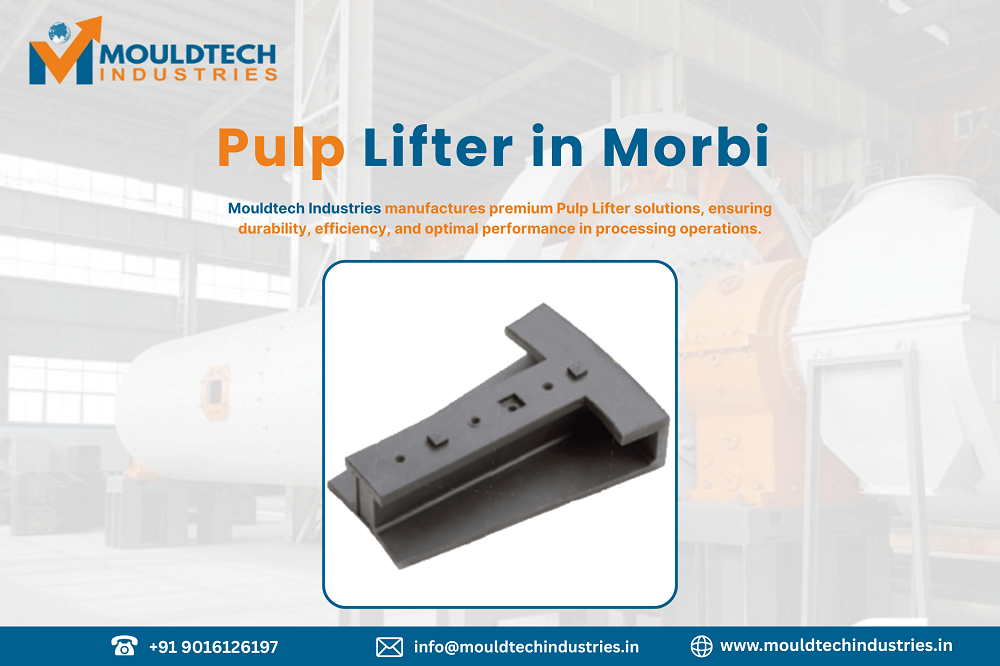
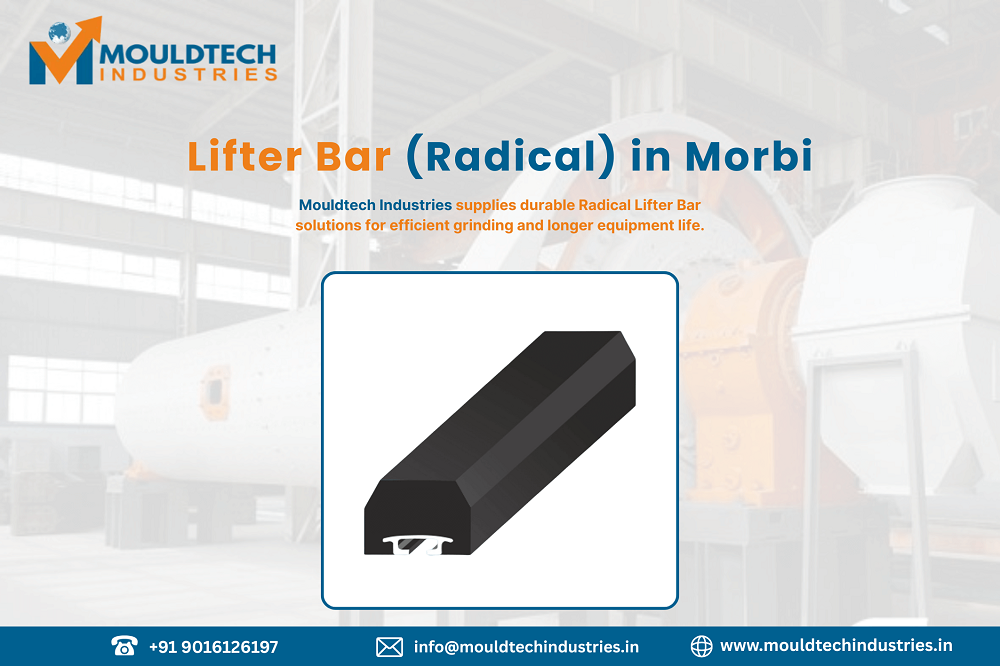
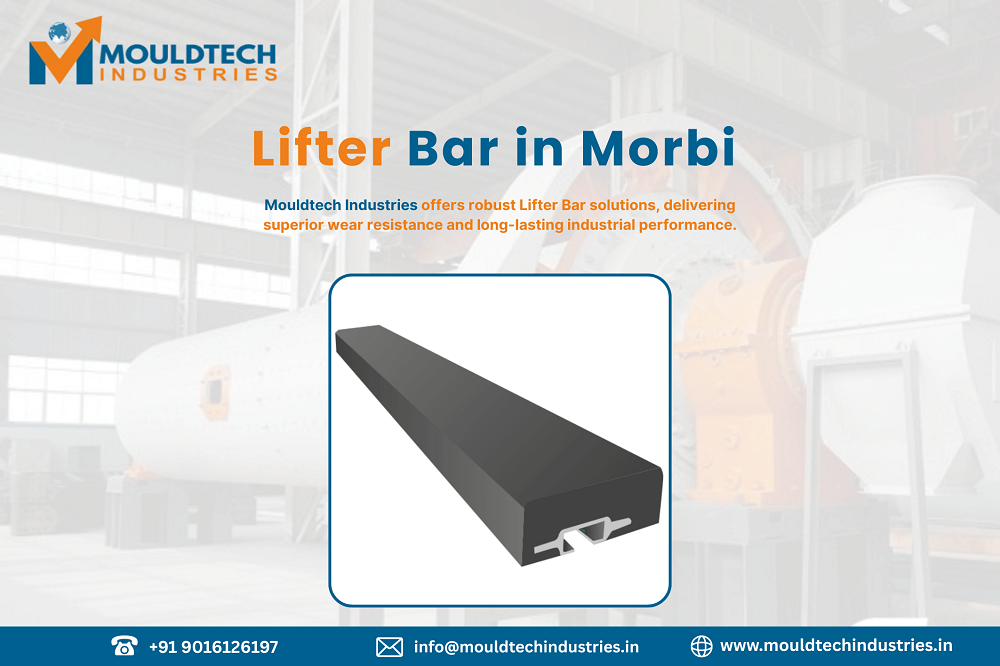
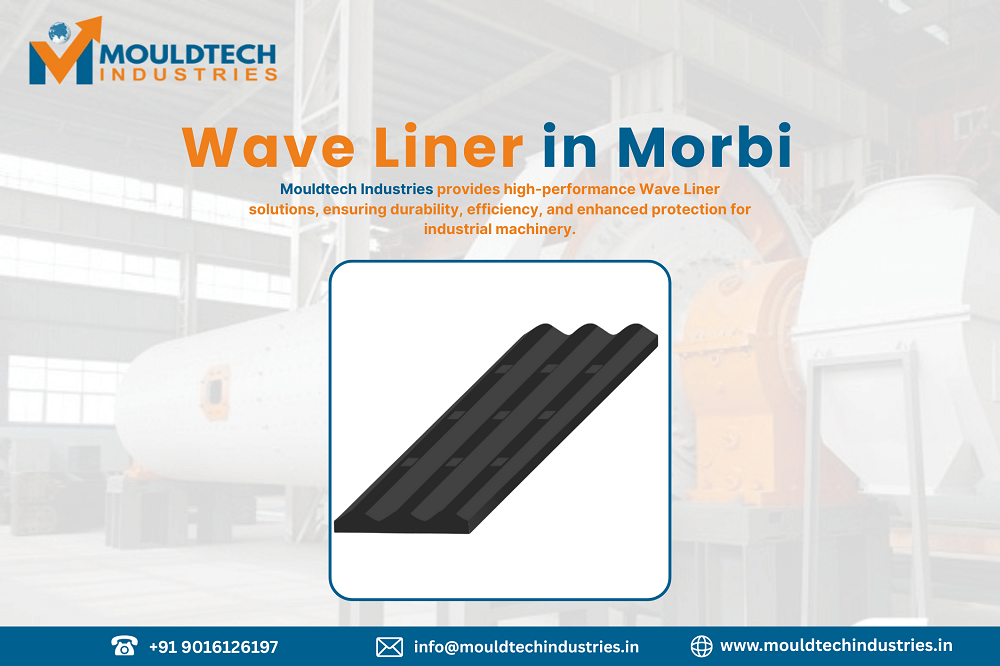
Lifter Bar Manufacturer, Supplier, And Exporter in India: Mouldtech Industries
Mouldtech Industries is a Manufacturer of Lifter Bar in Morbi.
Our Manufacturing Unit is in Vadodara, Gujarat, India.
Mouldtech Industries is a Manufacturer of Bridge Rubber Pad, Ball Mill Rubber Lining, Bridge Rubber Pad, Resistant Rubber Liner, Embedded Rubber Liners, Conveyors Solutions, Ceramic Lagging Sheet, Belt Cleaners, Bridge Rubber Pad, Ceramic Rubber Lagging Services, and Ceramic Rubber Lagging Sheet.
Lifter Bar: A Key Element for Dependable Grinding and Material Movement Systems
Introduction
Heavy manufacturing sectors like resource extraction, construction materials, metallurgy, ceramics, and bulk conveyance operate equipment constantly subjected to scraping, heavy blows, dampness, and chemical erosion. In these fields, dependability isn’t just an idea—it directly impacts production goals, workplace safety, and running expenses.
As worldwide demand for ores, cement, steel, and processed goods continues to rise, facilities are under pressure to operate for longer periods with fewer interruptions. This situation places greater wear on parts within vital machinery, such as ball mills, conveyors, chutes, and transfer points. Guarding against wear is no longer optional; it’s a basic necessity for steady activity.
Among these parts, the Lifter Bar plays an essential role in ensuring efficient material transport, controlled impact, and consistent crushing results in grinding setups. In demanding industrial settings, lift bars aren’t just interior add-ons—they are active components affecting output, power use, and the lifespan of other liners.
Industry Hurdles Fueling the Lifter Bar Need
Across industrial sites worldwide, similar operational difficulties are observed regardless of location.
- Abrasion: In resource extraction and metal refinement, ore fragments, cooled material, slag, and aggregates continuously wear down interior surfaces. Over time, unchecked wear lessens equipment effectiveness and leads to failures ahead of schedule.
- Impact Forces: Ball mills and bulk-handling systems endure repeated strikes from grinding elements and falling material. Experienced plant personnel frequently observe that impact damage, more than just scraping, is the cause of sudden liner breakdowns.
- Deterioration: Moisture, slurry conditions, and chemical exposure accelerate degradation, especially in mineral-refining and wet-grinding circuits.
- Pressure to Reduce Downtime: Unplanned stops disrupt production schedules and increase maintenance costs. In high-capacity mills, even brief halts can result in substantial output losses.
- Managing Maintenance Outlay: Facilities aim to prolong the time between maintenance cycles while sustaining safety and functionality. This trade-off underscores the need for carefully engineered wear solutions rather than generic parts.
These issues are widespread across global mining territories, cement complexes, metal centres, and ceramic production zones, making lift bars an essential industrial solution rather than an overlooked expendable.
Defining the Lifter Bar
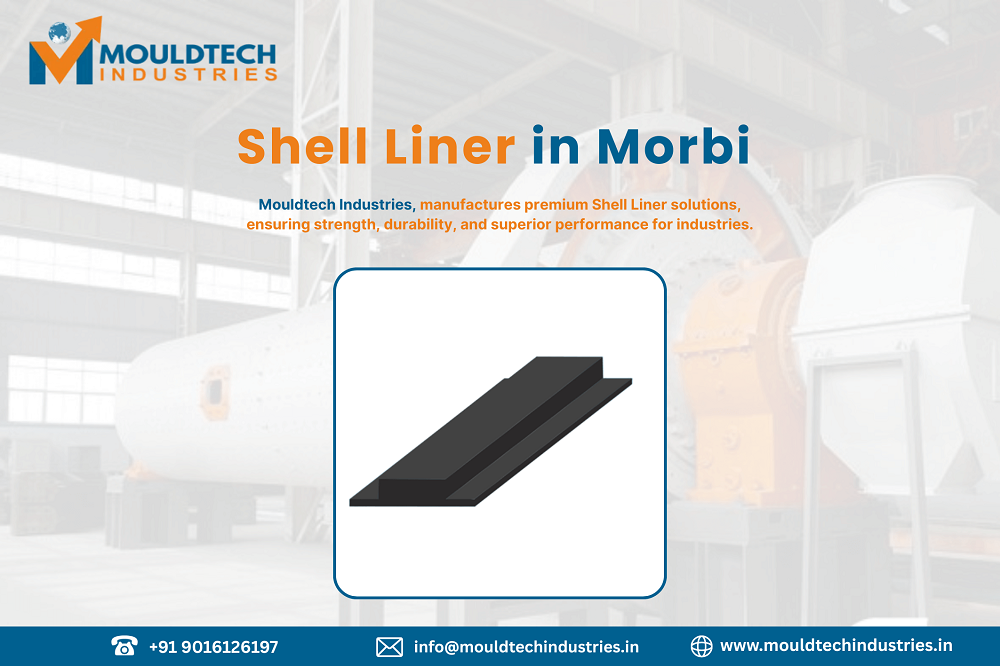
A Lifter Bar is a hard-wearing section fitted inside ball mills and comparable rotating machinery. Its main job is to elevate and tumble the grinding media and material during rotation, ensuring effective crushing action and moderated impact.
Unlike flat lining plates, lift bars influence how the contents move. Their shape dictates how material is raised, dropped, and spread inside the mill. From a technical perspective, lift bars are engineered to:
- Shield the mill shell from direct forceful contact
- Boost crushing effectiveness via controlled movement of the media
- Lessen unnecessary sliding and wasted energy
There isn’t one standard lift bar form. How well it performs relies on the material chosen, its profile shape, and suitability for the working environment.
Uses Across Different Sectors
- Resource Industry: In mining roles, lift bars are employed in primary and secondary ball mills handling complex ores. They must endure harsh scraping and repeated high-energy impacts while keeping their shape.
- Cement Facilities: Cement mills depend on lift bars to improve clinker crushing efficiency. Correct lift bar function directly impacts power draw and output consistency.
- Metal & Steel Mills: Slag-crushing and metal-recovery loops require lift bars capable of handling sharp, abrasive materials under high heat.
- Ceramic Production: Grinding ceramic feedstocks requires controlled movement and minimal introduction of impurities. Rubber or ceramic-faced lift bars are often favoured to decrease iron contamination.
- Power Generation Sites: In coal and ash-handling setups, lift bars help control wear in milling and material-conveyance equipment.
- Bulk Material Handling: Beyond mills, the lift bar concept aids wear protection in chutes, feeders, and transfer zones where managing material flow is crucial.
Material Science & Engineering Factors
Choosing the right material is central to a lift bar’s performance.
- Qualities of Rubber: Rubber lift bars are valued for their flexibility and shock absorption. Properly formulated rubber blends lessen noise, dampen vibration, and reduce stress cracking under repeated loads.
- Hardness of Ceramics: In high-abrasion areas, ceramic inserts offer superior wear resistance. When backed by an elastic layer, they balance rigidity with the ability to absorb blows.
- Wear Resistance Principles: Preventing wear isn’t only about being hard. In many setups, controlled flexing and energy absorption reduce overall material loss.
Producers with extensive industry experience recognise that selecting the wrong material can accelerate wear rather than prevent it.
Design & Customisation Needs
Every mill functions uniquely. Lift bars need to be designed accounting for:
- Precise mill diameter and turning speed
- Size and mass of the grinding media
- Material properties
- Operating heat and wetness levels
Tailored sizing and profile adjustments are frequently needed to align with facility-specific situations. Generic lift bars seldom deliver peak results across varied uses.
Manufacturing Quality & Process Oversight
Uniformity is vital in wear-prone components.
Accurate shaping, monitored hardening procedures, and dimensional checks ensure that lift bars install properly and behave as expected. Consistency between production batches is critical when replacing only certain liners, as mismatched parts can lead to uneven wear patterns.
Quality assurance typically includes testing material attributes, confirming dimensions, and visual assessment before shipment.
Setup & Servicing
Well-conceived lifter bars are built for easy fitting. Less setup duration means shorter downtimes.
Regarding upkeep, expected wear patterns let service crews plan changes during planned stops rather than sudden halts. This foresight boosts overall facility output.
Safety & Dependability in Operation
Worker well-being is a primary concern in industrial settings.
Dependable lifter bars reduce the risk of lining separation, unexpected malfunctions, and internal damage that could jeopardise personnel during checks and tune-ups. Protecting the machinery also ensures steady operation and reduces secondary damage to mill casings and supports.
Value Over the Equipment’s Lifespan
While initial part choices matter, the actual value of lifter bars shows over the entire equipment life.
Extended use periods, fewer interruptions, and optimised upkeep schedules add up to noticeable cost savings. Facilities prioritising expertly engineered wear solutions over quick fixes generally achieve better operational stability.
Preparedness for Export & Worldwide Acceptance
Industrial purchasers globally expect vendors to meet strict standards for paperwork, quality, and performance.
Producers prepared for export demonstrate understanding of international specifications, packing requirements, and tracking expectations. This preparedness is vital for supplying lifter bars to worldwide mining and industrial ventures.
The Value of Seasoned Producers
Lifter bars might appear straightforward, but their effectiveness significantly relies on engineering acumen.
Experienced producers offer practical insights gathered from actual plant scenarios. They grasp failure modes, set up hurdles, and sustain performance trends—knowledge that pure theoretical design cannot substitute.
About Mouldtech Industries
Mouldtech Industries is a seasoned producer specialising in rubber liners for ball mills, ceramic protection against wear, rubber lining systems, rubber ball mill items, and conveying aids. Serving industrial sectors across India, the company supports facilities throughout all Indian states and union territories, including Maharashtra, Gujarat, Rajasthan, Odisha, Chhattisgarh, Jharkhand, Karnataka, Tamil Nadu, Andhra Pradesh, Telangana, West Bengal, Madhya Pradesh, Uttar Pradesh, Punjab, Haryana, Himachal Pradesh, Uttarakhand, Bihar, Assam, Meghalaya, Arunachal Pradesh, Manipur, Mizoram, Nagaland, Tripura, Sikkim, Kerala, Goa, Delhi, Rajasthan, Jammu & Kashmir, Ladakh, Puducherry, Andaman & Nicobar Islands, Dadra & Nagar Haveli and Daman & Diu, and Chandigarh—covering major industrial centers, mining regions, cement manufacturing zones, and ceramic production hubs.
With an emphasis on sound engineering and consistent manufacturing quality, Mouldtech Industries backs both domestic and international industrial requirements.
Further details are found at https://www.mouldtechindustries.in/
Summary
Lifter bars fulfil an essential function in ensuring effective grinding, controlled material flow, and machinery safeguarding within heavy industries. When designed and built with sound engineering insight, they directly contribute to facility dependability, safety, and sustained operational effectiveness.
Choosing the correct lifter bar solution isn’t about short-term gains—it’s about maintaining performance in demanding industrial environments.
Key Points to Remember
- Lifter bars are vital components subject to wear in grinding processes
- Correct design enhances grinding efficiency and lessens damage from impact
- The material chosen must suit the operational environment
- Expertly designed solutions boost safety and reliability
- Long-term operation yields life-cycle expense advantages
Trending FAQs
1. What is the typical lifespan of a lifter bar?
Service life depends on material type, operating conditions, and mill speed. Properly engineered lifter bars offer predictable wear patterns.
2. Are lifter bars suitable for both dry and wet grinding?
Yes, designs and materials can be selected based on moisture levels and slurry conditions.
3. How often do lifter bars require maintenance?
Maintenance frequency aligns with liner inspection schedules and varies by application.
4. When should rubber lifter bars be preferred over ceramic solutions?
Rubber is preferred in high-impact environments where shock absorption is critical.
5. Are lifter bars used globally in mining operations?
Yes, they are standard components in mining and mineral processing plants worldwide.
Contact Mouldtech Industries today for engineered Lifter Bar solutions designed for demanding industrial applications—our team supports your plant with reliable wear protection expertise.
#LifterBar #WearProtection #BallMillSolutions #MouldtechIndustries #BallMillRubberLiner #CeramicWearProtection #RubberLining #MiningSolutions #BulkMaterialHandling #ConveyorSolutions