

Lifter Bar (Radical) Manufacturer, Supplier, And Exporter in India: Mouldtech Industries
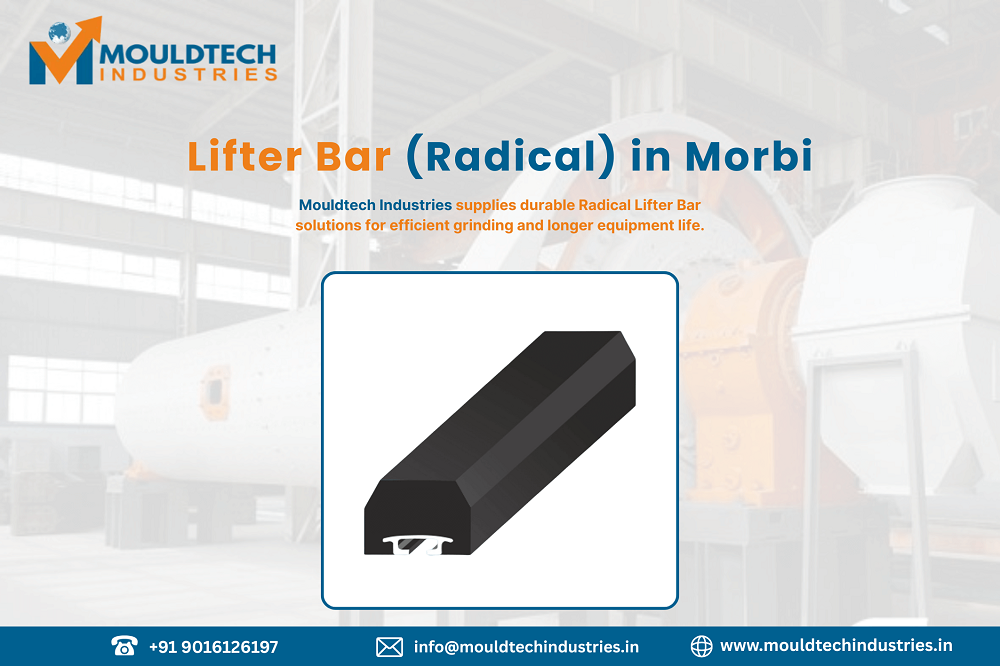
Mouldtech Industries is a Manufacturer of Lifter Bar (Radical) in Morbi.
Our Manufacturing Unit is in Vadodara, Gujarat, India.
Mouldtech Industries is a Manufacturer of Bridge Rubber Pad, Ball Mill Rubber Lining, Bridge Rubber Pad, Resistant Rubber Liner, Embedded Rubber Liners, Conveyors Solutions, Ceramic Lagging Sheet, Belt Cleaners, Bridge Rubber Pad, Ceramic Rubber Lagging Services, and Ceramic Rubber Lagging Sheet.
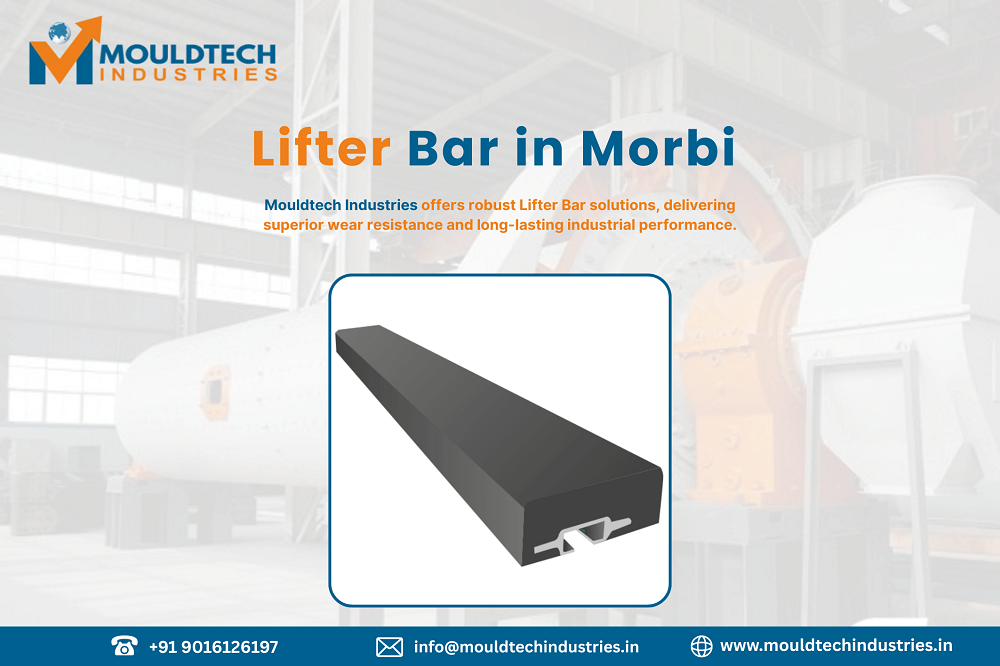
Lifter Bar (Radical): Boosting Longevity and Pulverisation Effectiveness in Severe Industrial Settings
Overview
The sectors of mining, cement production, metallurgy, ceramics, and bulk material transport routinely face some of the planet’s most demanding mechanical environments. Machinery endures constant exposure to abrasive substances, recurring impact forces, dampness, temperature fluctuations, and chemically harsh agents. Over time, these conditions hasten deterioration, lessen machinery performance, and lead to unforeseen outages.
In intense industrial settings, defence against wear is not an optional add-on—it’s a fundamental requisite for dependable operation. As the worldwide demand for ores, cement, steel, ceramics, and power generation continues to rise, facilities are under pressure to run longer, process more, and maintain tighter maintenance timelines.
A crucial yet often overlooked element in comminution and material-processing machinery is the Mill Liner Bar (Radial). Skillfully designed liner bars are instrumental in boosting pulverisation efficiency, shielding mill casings, and preserving steady operational output across various trades.
Industry Hurdles Fueling the Need for Lifter Bar (Radical)
Seasoned facility engineers frequently note that wear-related breakdowns seldom stem from a single cause. Instead, they arise from a confluence of operational pressures:
- Intense surface wear caused by minerals, clinker, slag, and ceramic feedstocks
- High shock impacts generated during crushing cycles in tumbling mills
- Deterioration and chemical exposure in wet grinding and slurry duties
- Unscheduled downtime due to premature lining or bar failure
- Escalating upkeep expenses tied to frequent part changes and prolonged stoppages
In ore extraction and metal refinement operations across places like India and other industrial zones, mills frequently operate without interruption for extended periods. Any break impacts output targets, power usage efficiency, and subsequent processes. Similar difficulties are seen in cement works, ceramic manufacturing hubs, and bulk transfer stations where material characteristics differ widely.
These circumstances have spurred demand for liner bar remedies that strike a balance between resistance to wear, shock energy dissipation, and enduring dependability.
Defining the Lifter Bar (Radical)
A Lifter Bar (Radical) is a specifically engineered component subject to wear, fitted inside ball mills and comminution apparatus. Its primary purpose is to elevate grinding media and the material to an optimal height, ensuring productive cascading action and strike during the grinding sequence.
Different from typical straight bar profiles, radical liner bar designs emphasise:
- Regulated lifting geometry
- Optimised material movement
- Diminished impact strain on mill liners
- Enhanced grinding yield over prolonged service periods
The design aims not to unnaturally increase mill aggressiveness, but to sustain reliable output while minimising wear on adjacent fixtures.
Cross-Sector Applications
- Mining Sector: In mineral extraction settings, radial liner bars are deployed in tumbling mills handling iron ore, copper concentrates, precious metal feeds, and other geological materials. The focus is on sustaining throughput while safeguarding internal mill surfaces from excessive degradation.
- Cement Facilities: Cement pulverisation involves clinker, gypsum, and additives that induce high surface erosion. Liner bars help govern the movement of the grinding media, contributing to steady mill function and predictable maintenance intervals.
- Metal & Steel Plants: Steel manufacturing units use grinding mills to process slag and prepare raw materials. Liner bars must absorb impact forces while maintaining shape integrity under shifting operational states.
- Ceramic Production: Ceramic feedstocks are highly abrasive. Suitably shaped liner bars help reduce uneven wear patterns and support uniform particle size.
- Power Generation Facilities: In coal and ash handling, liner bars aid efficient pulverisation while protecting mill casings from erosive wear.
- Bulk Item Transport: Liner bars are also used in specialised material-processing units that handle ores, construction aggregates, and industrial byproducts.
Material Study & Engineering Aspects
From an engineering viewpoint, the effectiveness of a liner bar relies heavily on material selection and design equilibrium.
- Characteristics of Elastomer: Industrial-grade rubber provides flexibility, impact cushioning, and sound dampening. It helps absorb shock loads that would otherwise travel straight to the mill casing.
- Hardness of Ceramic: In composite constructions, ceramic sections provide superior resistance to abrasion when sliding wear is dominant.
- Wear Resistance Principles: Resilience to abrasion is affected by the toughness, elasticity, and surface energy of the materials used.
- Impact Damping: Rubber-based liner bars lessen points of high stress, helping to extend the lifespan of surrounding liners.
Producers with extensive industry history recognise that a single material cannot suit every situation. The specific operational setting dictates the final engineering resolution.
Design & Tailoring Requirements
Liner bars are not off-the-shelf items. Effective performance hinges on:
- Suitability with the existing mill structure
- Custom sizing determined by mill size and operating velocity
- Profile design tailored to the specific use case
- Integration with the shell and end liners
Customisation ensures the liner bar promotes efficient grinding without causing imbalance or localised deterioration.
Manufacturing Excellence & Process Management
High-precision manufacturing is vital for liner bars because they directly influence mill dynamics.
Key high-quality benchmarks include:
- Accurate forming and dimensional precision
- Managed rubber blending
- Consistent hardening procedures
- Quality verification per production batch
Process management guarantees that every liner bar functions reliably throughout its working life, minimising variation during mounting and use.
Mounting & Servicing Notes
From a facility upkeep standpoint, ease of fitting is essential.
Well-conceived liner bars permit:
- Quicker setup during scheduled downtimes
- Reduced physical handling effort
- Secure attachment mechanisms
- Easier monitoring of wear progression
Maintenance teams benefit from components that integrate smoothly into planned servicing schedules rather than necessitating unplanned interventions.
Prioritising Safety and Operational Assurance
Safety remains paramount in all industrial settings.
Dependable lifter bar systems lead to:
- Diminished risk of liner shifting
- Reduced noise and vibration levels
- Enhanced mill steadiness
- Safer maintenance and inspection tasks
Safeguarding equipment directly correlates with worker confidence and operational confidence.
Value Across the Equipment Lifespan
While initial part selection holds weight, performance over the entire life cycle is more defining.
Over extended periods, effectively designed lifter bars help achieve:
- Fewer required outages
- Extended lifespan for liners
- Decreased time spent on maintenance labour
- Better energy efficiency
These aspects jointly foster superior cost-effectiveness without jeopardising process stability.
Preparedness for Global Sales and Market Acceptance
Purchasers in worldwide sectors generally anticipate:
- Uniform product excellence
- Thorough technical documentation
- Material source verification
- Adherence to established industry benchmarks
Producers oriented toward export recognise worldwide demands and adjust their manufacturing processes accordingly. This is increasingly vital as Indian suppliers serve processing hubs in mining, cement, and ceramics globally.
The Significance of Seasoned Producers
Manufacturers with an extensive background in the sector understand the practical operational hurdles beyond mere theoretical design.
Experience provides:
- In-the-field engineering perceptions
- Tailored recommendations for specific uses
- Dependable production scheduling
- Consistent long-term product sourcing
Such proven capability lessens risk for both facility operators and project advisors.
About Mouldtech Industries
Mouldtech Industries is an established producer of robust solutions, including ball mill rubber linings, ceramic abrasion defence options, rubber cladding assemblies, rubber components for ball mills, and conveyor systems. Serving all major regions of India, the firm equips the mining, cement, metal, ceramic, and bulk material-handling sectors with precision-engineered wear solutions.
With a deep understanding of industrial operating conditions and international buyer requirements, Mouldtech Industries delivers systems designed for long-term plant reliability.
Summary
The Radical Lifter Bar fulfils a vital role in maintaining grinding efficiency, safeguarding machinery, and supporting steady plant operations. In sectors where unexpected stops and wear-related failures directly affect output, properly designed lifter bars contribute to predictable performance and lasting dependability.
For engineering staff, upkeep personnel, and procurement specialists, selecting well-conceived wear parts represents an outlay in continuous operation rather than simple replacement schedules.
Vital Learnings
- Boosts defence against wear in demanding grinding environments
- Bolsters operational steadiness and consistent mill functionality
- Appropriate for use in the mining, cement, metal, ceramic, and power sectors
- Aids in optimising upkeep scheduling and total equipment longevity
- Satisfies expectations for worldwide industrial deployment
Trending FAQs
1. What is the typical lifespan of a lifter bar in industrial mills?
Service life depends on material characteristics, operating speed, and maintenance practices. Properly selected lifter bars offer predictable wear patterns.
2. Are radial lifter bars suitable for wet and dry grinding?
Yes, when designed correctly, they can be used in both wet and dry grinding environments.
3. How often should lifter bars be inspected?
Routine inspections are usually aligned with planned mill shutdowns and liner inspection schedules.
4. How do rubber lifter bars compare with ceramic wear solutions?
Rubber offers impact absorption, while ceramic provides high abrasion resistance. Selection depends on operating conditions.
5. Are lifter bars used globally in mining and cement plants?
Yes, lifter bar systems are widely used across the global mining, cement, and material processing industries.
Contact Mouldtech Industries today to discuss Lifter Bar (Radical) solutions engineered for reliable wear protection, efficient grinding performance, and long-term operational stability in demanding industrial environments.
#LifterBar #RadicalLifterBar #BallMillLifter #BallMillRubberProducts #RubberLifterBar #WearResistantLifter #GrindingMillComponents #MiningWearParts #IndustrialWearSolutions #MouldtechIndustries