



Ceramic Embedded Rubber Liners Manufacturer, Supplier, And Exporter in India: Mouldtech Industries
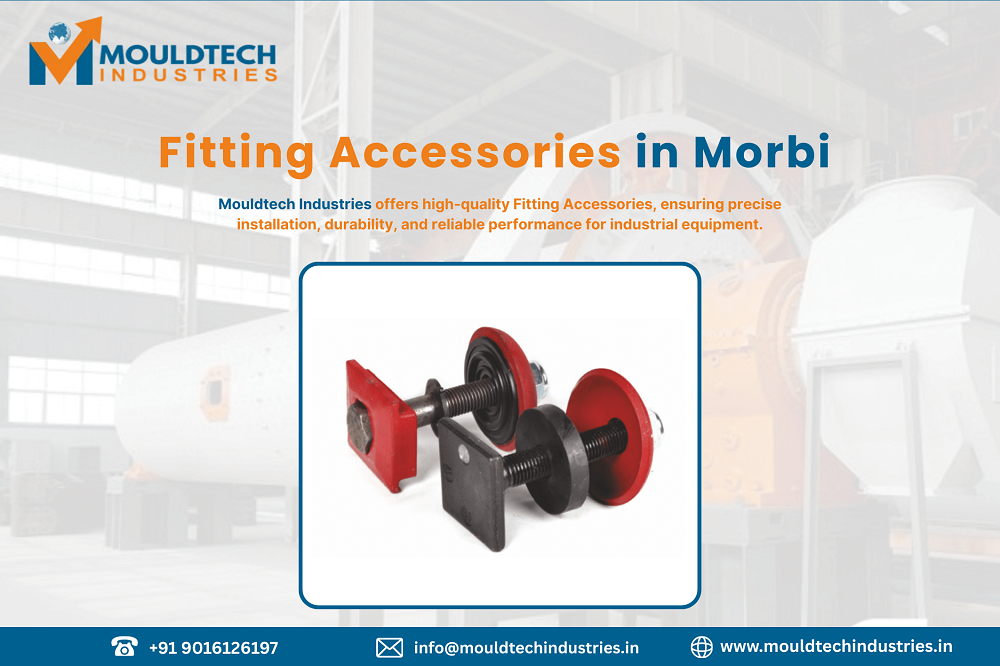
Mouldtech Industries is a Manufacturer of Fitting Accessories in Morbi.
Our Manufacturing Unit is in Vadodara, Gujarat, India.
Mouldtech Industries is a Manufacturer of Bridge Rubber Pad, Ball Mill Rubber Lining, Bridge Rubber Pad, Resistant Rubber Liner, Embedded Rubber Liners, Conveyors Solutions, Ceramic Lagging Sheet, Belt Cleaners, Bridge Rubber Pad, Ceramic Rubber Lagging Services, and Ceramic Rubber Lagging Sheet.
Ceramic Embedded Rubber Liners: Engineering Wear Protection for Demanding Industrial Environments
Introduction
Across mining, metal processing, cement production, ceramic manufacturing, and bulk material handling industries, equipment reliability is not a theoretical concern—it directly affects production targets, worker safety, and operating costs. In heavy-duty industrial environments, components are continuously exposed to abrasive ores, sharp aggregates, high-impact material flow, moisture, chemicals, and fluctuating temperatures. These operating conditions place extreme stress on equipment surfaces.
Plant engineers and maintenance teams consistently face the same fundamental challenges: rapid wear, unplanned shutdowns, frequent liner replacement, and escalating maintenance budgets. As industrial operations scale across global markets, including India’s rapidly expanding manufacturing and mining sectors, the need for durable, predictable, and engineered wear protection solutions has grown significantly.
Ceramic Embedded Rubber Liners have emerged as a practical response to these challenges. Rather than relying on a single material property, these liners combine the hardness of technical ceramics with the resilience of elastomeric rubber. This hybrid design is increasingly used in ball mills, chutes, hoppers, conveyors, and transfer points where both abrasion and impact resistance are critical.
Global industrial demand trends indicate a shift toward wear solutions that extend service life without compromising equipment integrity. This is particularly relevant in mining hubs, cement clusters, metal processing zones, and ceramic manufacturing regions across Pan India, where operational continuity is essential.
Industrial Challenges That Drive Demand for Ceramic Embedded Rubber Liners
Industrial wear is rarely caused by one factor alone. In mining and metal processing operations, wear mechanisms often overlap, accelerating component failure.
- Abrasion: Continuous contact with hard particles—such as iron ore, bauxite, limestone, clinker, or ceramic raw materials—gradually erodes metal and rubber surfaces.
- Impact Loads: Large lumps, high drop heights, and variable feed sizes generate repeated impact forces that can crack rigid liners or deform softer materials.
- Corrosion: Moisture, slurry transport, and chemical exposure contribute to corrosion, especially in wet grinding, beneficiation, and power plant environments.
- Downtime: Liner replacement often requires extended shutdowns, crane access, and confined space entry, disrupting production schedules.
- Maintenance Cost: Frequent replacement cycles increase labor, spare inventory, and indirect costs related to lost output.
Experienced plant engineers often observe that traditional wear solutions fail not because they lack hardness or elasticity—but because they lack balance. Ceramic Embedded Rubber Liners are designed to address this imbalance by managing multiple wear mechanisms simultaneously.
What Are Ceramic Embedded Rubber Liners?
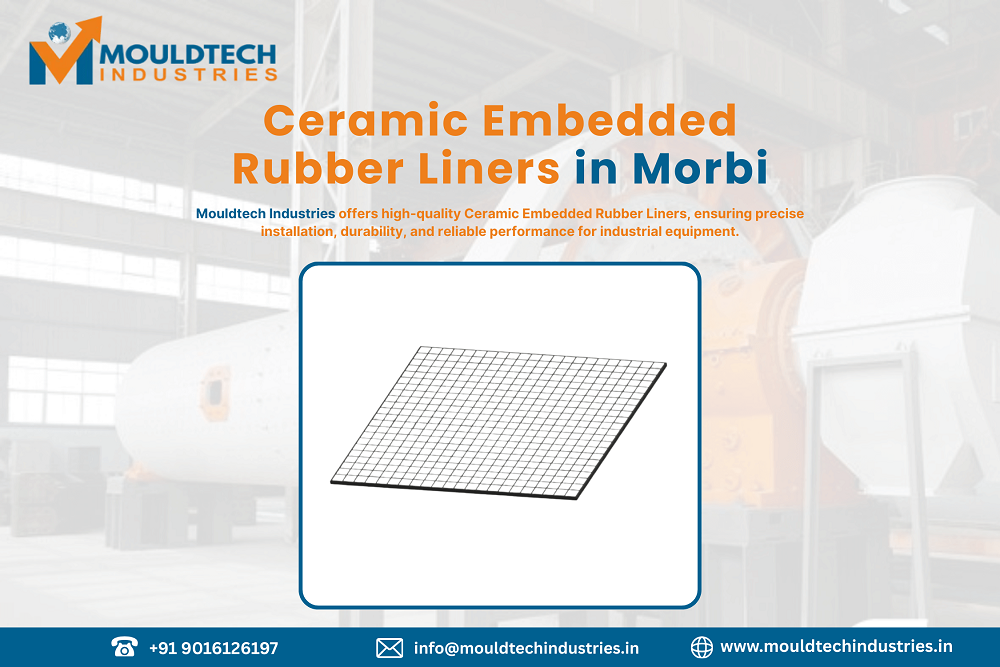
Ceramic Embedded Rubber Liners are composite wear protection systems where high-alumina or technical ceramic tiles are securely embedded within a rubber matrix. The ceramic elements provide resistance to abrasion, while the surrounding rubber absorbs impact energy and reduces stress concentration.
Unlike monolithic ceramic tiles or plain rubber liners, this configuration allows the liner to withstand repeated impact without brittle fracture. The rubber backing also improves adhesion to equipment surfaces and dampens vibration.
From an engineering standpoint, these liners are not a universal replacement for all wear materials. Instead, they are applied selectively in areas where both abrasion and impact occur together—such as mill feed ends, discharge chutes, transfer points, and conveyor loading zones.
Applications Across Industries
- Mining Industry: In mining operations across states such as Odisha, Jharkhand, Chhattisgarh, Rajasthan, Karnataka, Telangana, Andhra Pradesh, and Maharashtra, Ceramic Embedded Rubber Liners are commonly used in ball mills, slurry pipes, hoppers, and chutes. They help manage abrasive ores while tolerating variable impact from run-of-mine material.
- Cement Plants: Cement plants in regions like Gujarat, Tamil Nadu, Rajasthan, Madhya Pradesh, and Andhra Pradesh utilize these liners in raw mills, clinker handling systems, cyclones, and transfer chutes, where abrasion from clinker and raw mix is severe.
- Metal & Steel Plants: Steel and metal processing facilities across industrial hubs such as Durgapur, Rourkela, Bokaro, Jamshedpur, Bhilai, and Visakhapatnam apply ceramic-rubber liners in sinter plants, coal handling systems, and material transfer points.
- Ceramic Manufacturing: Ceramic clusters in Morbi (Gujarat), Khurja (Uttar Pradesh), and parts of Rajasthan use these liners in raw material grinding, batching systems, and pneumatic conveying lines.
- Power Plants: Thermal power plants across states like Uttar Pradesh, Maharashtra, Chhattisgarh, and West Bengal apply ceramic embedded rubber liners in coal handling systems, bunkers, and ash handling equipment.
- Bulk Material Handling: Ports, warehouses, and conveyor systems handling aggregates, minerals, fertilizers, and grains benefit from reduced liner damage and controlled material flow.
Material Science & Engineering Considerations
From a materials engineering perspective, the performance of Ceramic Embedded Rubber Liners depends on the interaction between ceramic hardness and rubber elasticity.
- Rubber Properties: Industrial-grade rubber provides elasticity, impact absorption, noise reduction, and resistance to vibration. Its formulation is selected based on temperature, chemical exposure, and dynamic loading conditions.
- Ceramic Hardness: Alumina ceramics offer high resistance to abrasive wear. Their hardness reduces surface erosion but requires protection from direct impact.
- Wear Resistance Principles: By embedding ceramics into rubber, the liner distributes impact forces while maintaining a hard wear surface. This combination reduces crack initiation and slows wear progression.
Impact absorption and wear resistance must be engineered together—an approach manufacturers with long-term industry exposure understand well.
Design & Customization Requirements
No two plants operate under identical conditions. Effective liner performance depends on correct design and fitment.
Key considerations include:
- Equipment geometry and liner profile
- Material flow direction and velocity
- Drop height and impact zones
- Temperature and moisture exposure
Custom sizing, modular designs, and application-specific ceramic patterns ensure mills, chutes, and conveyors remain fully compatible.
Manufacturing Quality & Process Control
Precision manufacturing is essential for consistent liner performance. This includes:
- Accurate ceramic placement
- Controlled rubber curing cycles
- Strong bonding between ceramic and elastomer
- Dimensional consistency across batches
Quality checks typically involve visual inspection, dimensional verification, and material traceability. Batch consistency ensures predictable service life in critical plant areas.
Installation & Maintenance Considerations
Ease of installation directly affects downtime. Ceramic Embedded Rubber Liners are typically lighter than metal liners, simplifying handling.
Advantages include:
- Reduced installation time
- Lower risk during confined space work
- Predictable maintenance intervals
Routine inspection focuses on rubber integrity and ceramic exposure rather than sudden catastrophic failure.
Safety & Operational Reliability
Worn liners increase the risk of material spillage, equipment damage, and worker injury. By maintaining liner integrity, plants improve:
- Worker safety in transfer zones
- Equipment protection
- Stable process conditions
Operational reliability improves when wear behavior is predictable rather than sudden.
Cost Efficiency Over Equipment Life Cycle
While initial material selection is important, experienced procurement managers evaluate solutions based on life-cycle performance.
Ceramic Embedded Rubber Liners contribute to:
- Longer service intervals
- Reduced shutdown frequency
- Optimized maintenance planning
These factors collectively improve asset utilization without focusing on short-term cost reduction.
Export Readiness & Global Acceptance
Global industrial buyers expect compliance with technical documentation, material specifications, and consistent manufacturing practices. Mining and processing industries in export markets widely accept Ceramic Embedded Rubber Liners for their superior wear performance and reliability.
Why Experienced Manufacturers Matter
Manufacturers with long-term industry exposure understand real operating conditions—not just laboratory performance. Engineering expertise, application knowledge, and reliable supply chains play a critical role in delivering consistent wear solutions.
About Mouldtech Industries
Mouldtech Industries is an experienced industrial manufacturer specializing in Ball Mill Rubber Liners, Ceramic Wear Protection Solutions, Rubber Lining Systems, Ball Mill Rubber Products, and Conveyor Solutions. Serving Pan India and global industrial markets, the company focuses on engineered wear protection for demanding applications.
More information is available at https://www.mouldtechindustries.in/
Conclusion
Ceramic Embedded Rubber Liners play a critical role in addressing complex wear challenges across mining, cement, metal, ceramic, power, and bulk material handling industries. By combining abrasion resistance with impact absorption, they support safer operations, improved equipment reliability, and long-term plant efficiency.
For industrial operations focused on sustainable performance, informed material selection remains a key engineering decision.
Key Takeaways
- Effective wear protection requires balancing hardness and elasticity
- Ceramic embedded rubber designs manage abrasion and impact together
- Suitable for multiple heavy-duty industrial sectors
- Supports predictable maintenance cycles
- Relevant across global industrial environments
Trending FAQs
Q1. What is the typical lifespan of Ceramic Embedded Rubber Liners?
Service life depends on material characteristics, impact severity, and operating conditions rather than fixed timelines.
Q2. Are these liners suitable for wet and dry applications?
Yes, designs accommodate both wet slurry and dry material handling environments.
Q3. How often do these liners require maintenance?
Maintenance occurs less frequently than with conventional liners, with inspections scheduled during plant shutdowns.
Q4. How do ceramic embedded liners compare to plain rubber liners?
They offer superior abrasion resistance while maintaining impact absorption.
Q5. Are these liners used globally?
Yes, mining, cement, and processing industries worldwide use them extensively.
Contact Mouldtech Industries for engineered Ceramic Embedded Rubber Liners designed for mining, cement, steel, and bulk material handling applications, supported by manufacturing and reliable assistance.
#CeramicEmbeddedRubberLiners #BallMillRubberLiner #CeramicWearProtection #RubberLiningSystems #BallMillRubberProducts #ConveyorWearSolutions #BulkMaterialHandling #MiningWearParts #IndustrialWearProtection #HeavyDutyLiners #MouldtechIndustries