
Wave Liner Manufacturer, Supplier, And Exporter in India: Mouldtech Industries
Mouldtech Industries is a Manufacturer of Wave Liner in Morbi.
Our Manufacturing Unit is in Vadodara, Gujarat, India.
Mouldtech Industries is a Manufacturer of Bridge Rubber Pad, Ball Mill Rubber Lining, Bridge Rubber Pad, Resistant Rubber Liner, Embedded Rubber Liners, Conveyors Solutions, Ceramic Lagging Sheet, Belt Cleaners, Bridge Rubber Pad, Ceramic Rubber Lagging Services, and Ceramic Rubber Lagging Sheet.
Wave Liner: Shielding Against Wear in Tough Industrial Settings
Introduction
Industries such as mining, metal shaping, cement production, ceramic production, and bulk material handling experience some of the harshest mechanical stresses in modern production. Constant rubbing, repeated heavy blows, dampness, corrosive liquids, and fluctuating heat put immense strain on equipment surfaces.
In severe industrial settings, how long equipment lasts is directly tied to how well it’s protected from wear. When wear occurs too early, it not only damages panels and casings but also causes unexpected stops, safety hazards, and rising repair costs. As global output rises across mining lines, cement plants, and metal complexes, operators push plants to run longer while maintaining safety and steady operations.
In light of this, Wave Liner setups have become a key industrial fix. Built to withstand rubbing, absorb impact force, and protect main equipment surfaces, Wave Liners are crucial for extending equipment life while helping plants run smoothly.
Industrial Hurdles Driving the Need for Wave Liners
- Rubbing and Material Wearing Down: In mining and metal shaping work, rugged rocks, burnt residue, slag, and unrefined ceramic materials constantly hit the insides of mills, chutes, bins, and transfer points. Over time, unprotected metal faces experience severe wear, leading to shape loss and reduced process effectiveness.
- Impact Loads and Shock Forces: Ball mills, crushers, conveyors, and feeding systems are subjected to repeated, forceful impacts. Experienced plant staff frequently see that damage from impacts, more than just rubbing, is the main reason liners fail early in many setups.
- Corrosion and Exposure to Chemicals: Water, slurry processing, acidic stuff, and dusty alkaline materials create environments that cause rust. This speeds up wear when combined with physical forces.
- Stoppages and How Often Repairs are Needed: Sudden shutdowns disrupt production plans and require more work for maintenance crews. Swapping out worn liners often involves working in tight spaces, heavy lifting, and safety concerns.
- Rising Repair Bills: Beyond the cost of new parts, failures linked to wear increase hidden costs—damaged bolts, misaligned equipment, less efficient grinding, and lost production time.
Industrial settings worldwide—from mineral processing sites to ceramic grounds—face these issues daily, driving demand for engineered lining solutions like Wave Liner.
What is Wave Liner?
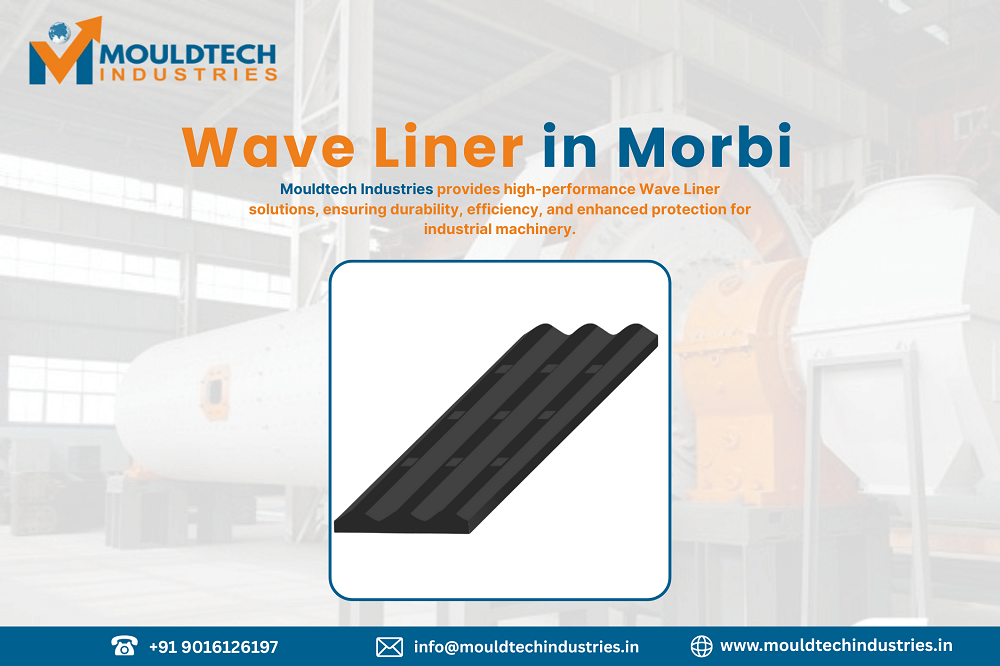
Wave Liner is a specifically engineered rubber-based lining designed to protect against wear in ball mills and other industrial areas with high rubbing and high impact. Its curved shape isn’t just for looks—it’s designed to guide how material moves, absorb energy, and spread wear across the liner’s surface.
Unlike flat linings, Wave Liners help manage the angles of impact and the movement of material within turning equipment. The rubber blend absorbs shock forces while standing up to wear, lessening the strain on both the liner and the main machine body.
Wave Liners are often used as part of complete rubber lining systems for ball mills, frequently working alongside raised bars, backing rubber layers, or ceramic wear protection pieces, depending on the job.
Uses Across Different Industries
- Mining Sector: Wave Liners are widely used in primary and secondary ball mills for handling iron ore, coal, limestone, bauxite, and other minerals. They help manage the force of grinding media while keeping the liner intact over longer operating stretches.
- Cement Factories: In cement grinding tasks, Wave Liners shield mill bodies from abrasion by clinker and impacts, while enabling steady grinding.
- Metal & Steel Plants: Steel processing units use Wave Liners in material-handling systems where abrasive slag and fine metal particles cause rapid surface wear.
- Ceramic Production: Even when fine, ceramic raw materials are very abrasive. Wave Liners help avoid contamination and excessive equipment wear in grinding and mixing processes.
- Power Plants: Systems that handle coal and process ash benefit from rubber-based wear protection where vibration, rubbing, and dampness are factors.
- Bulk Material Movement: Chutes, feeders, and transfer spots constantly handling material gain from lining systems that absorb impact and cut down on noise and dust creation.
Material Science & Design Thoughts
How well Wave Liners work heavily relies on picking and mixing the right materials.
- Rubber Qualities: Industrial rubber linings are made to have controlled firmness, flexibility, and pulling strength. Softer rubber absorbs impact energy, while firmer mixes resist rubbing.
- Wear Resistance Concepts: How well something resists wear is affected by its ability to bounce back, surface stickiness, and the distribution of energy. Rubber lessens the force pushing back compared to metal linings.
- Adding Ceramics: In areas with heavy rubbing, ceramic wear tiles can be paired with a rubber base to offer maximum wear resistance without sacrificing impact absorption.
- Impact Absorption: Rubber linings act as shock absorbers, protecting both the equipment and the grinding pieces from excessive sudden stress.
This balance between resisting rubbing and absorbing impact is vital in real-world plant conditions.
Design & Customisation Needs
No two industrial setups are the same. Wave Liner systems must be designed for:
- The diameter and body thickness of the equipment
- How fast the mill spins
- The size and amount of grinding media
- What the material is like
- The heat and wetness of the operating environment
Custom sizing ensures the liner fits correctly, aligns the bolts properly, and spreads the load evenly. Wave shapes tailored to the specific job help maximise wear life and process efficiency.
Manufacturing Quality & Production Control
Producers with a long history in the field know that how well a liner performs starts during the making process.
Key quality points include:
- Carefully controlled rubber mixing
- Accurate shaping and setting in moulds
- Precise measurements
- Consistency from one production batch to the next
- Testing of physical traits
Tight control over the process ensures liners behave as expected under constant industrial strain.
Setup & Upkeep Notes
Wave Liners are engineered for a a simpler setup than conventional metal liners.
- Setup Advantages
- Lighter liner mass
- Safer handling during transit and mounting
- Quicker assembly phases
- Upkeep Intervals
Rubber liners generally provide extended service periods, lessening the need for frequent stoppages. When renewal is needed, predictable wear patterns make checking and scheduling simpler.
Safety & Dependable Operation
Operator well-being is a top priority during liner mounting and servicing.
Rubber Wave Liners contribute to:
- Quieter running
- Diminished shaking
- More secure handling because of reduced weight
- Better safeguard for machinery
A consistent linear function enhances overall facility dependability and reduces the need for emergency maintenance.
Value Over the Entire Equipment Lifespan
Instead of prioritising the initial purchase price, industrial purchasers assess overall life-cycle performance.
Wave Liners assist in achieving:
- Less frequent liner substitution
- Lower losses associated with inactive periods
- Minimised harm to auxiliary components
- Optimised upkeep scheduling
Over prolonged operating periods, these aspects lead to demonstrable cost-effectiveness without sacrificing process dependability.
Export Readiness & International Acceptance
Worldwide industrial buyers anticipate uniformity, proper records, and technical clarity.
Liner assemblies prepared for export must comply with:
- Global material benchmarks
- Traceable production lots
- Schematics and specifications
- Documentation specific to the application
Wave Liners produced for international territories demonstrate an understanding of these prerequisites, ensuring acceptance across mineral extraction centres, cement corridors, and metal fabrication zones worldwide.
The Value of Experienced Manufacturers
Wave Liner effectiveness is based on more than just the design. Engineering proficiency, practical field experience, and manufacturing rigour are equally vital.
Seasoned manufacturers comprehend:
- Actual operating scenarios
- Failure patterns observed in facilities
- Liner behaviour is unique to the application
- Dependable supply and technical assistance
This depth of understanding yields trustworthy industrial solutions.
About Mouldtech Industries
Mouldtech Industries is a seasoned industrial producer specialising in rubber liners for ball mills, ceramic protection solutions for wear resistance, rubber lining setups, conveyor systems, and related durable products.
Serving all of India—spanning mineral belts, cement hubs, ceramic processing areas, and metal fabrication zones—Mouldtech Industries supports industrial activities in every central city and state across India while meeting worldwide industrial demands.
With a strong emphasis on engineering dependability and manufacturing consistency, Mouldtech Industries supplies wear protection systems tailored to real-world facility conditions.
Discover more at https://www.mouldtechindustries.in/
Summary
Wave Liner systems fulfil an essential role in shielding machinery subjected to rubbing, impact, and corrosive elements. By merging materials science with practical industrial design, Wave Liners help improve facility output, enhance safety procedures, and enable reliable maintenance scheduling.
For sectors where operational continuity, safety, and equipment lifespan are important, expertly designed liner solutions remain a fundamental component of successful operations.
Core Points
- Wave Liners manage wear and impact in demanding environments
- Rubber-based assemblies boost operational consistency
- Suitable for mining, cement, metal, ceramic, and bulk transit sectors
- Sustain long-term equipment capability
- Recognised across international industrial arenas
Trending FAQs
1. What is the typical lifespan of a Wave Liner?
Lifespan depends on material characteristics, operating conditions, and mill parameters. Properly engineered liners offer extended service intervals.
2. Are Wave Liners suitable for wet grinding applications?
Yes. Rubber liners perform well in wet environments where corrosion and slurry impact are present.
3. How often do Wave Liners require maintenance?
Routine inspections are recommended, but replacement frequency is generally lower than that of metallic liners.
4. Rubber vs ceramic wear solutions—how do they differ?
Rubber absorbs impact, while ceramic offers extreme abrasion resistance. Hybrid systems combine both benefits.
5. Are Wave Liners used globally?
Yes. They are widely used across mining, cement, and metal processing industries worldwide.
Contact Mouldtech Industries today to discuss your Wave Liner requirements and get reliable wear protection solutions engineered for demanding industrial applications across India and global markets.
#WaveLiner #BallMillRubberLiner #CeramicWearProtection #RubberLiningSystems #MiningWearSolutions #IndustrialWearProtection #MouldtechIndustries