
Grate Plate Manufacturer, Supplier, And Exporter in India: Mouldtech Industries
Mouldtech Industries is a Manufacturer of Grate Plate in Morbi.
Our Manufacturing Unit is in Vadodara, Gujarat, India.
Mouldtech Industries is a Manufacturer of Bridge Rubber Pad, Ball Mill Rubber Lining, Bridge Rubber Pad, Resistant Rubber Liner, Embedded Rubber Liners, Conveyors Solutions, Ceramic Lagging Sheet, Belt Cleaners, Bridge Rubber Pad, Ceramic Rubber Lagging Services, and Ceramic Rubber Lagging Sheet.
Grate Plate: A Key Component Facing Deterioration in Intense Industrial Applications
Introduction
Industries like mining, metal refinement, cement creation, ceramic production, and the handling of bulk materials operate amidst some of the most demanding mechanical and environmental circumstances. Constant scraping, significant shock forces, chemically active liquids, shifting heat levels, and non-stop production schedules put immense strain on processing machinery. In these settings, protecting against wear isn’t just an extra feature—it’s a fundamental necessity for sustaining facility dependability and achieving expected output.
Against this backdrop, the Grate Plate serves an essential function in sorting material, managing flow, and resisting deterioration within grinders and material transport systems. Although many treat it as a consumable part, its design, material quality, and construction directly influence throughput, maintenance cycles, and operational stability.
Difficulties in Industry Driving the Need for Grate Plates
In rigorous industrial settings, physical and chemical pressures continuously act on equipment parts and accelerate deterioration.
- Abrasion stands out as a primary hurdle. Ores, burnt rock, coal, molten residue, and raw ceramic powders contain hard fragments that gradually wear away metal surfaces. Even minor shortcomings in protecting against wear can result in rapid material loss.
- Impact forces arise when sizable feed material enters mills or storage bins. Reoccurring strikes can lead to fissures, reshaping, or premature failure of improperly conceived Grate Plates.
- Corrosion further complicates how wear happens, especially during wet grinding processes or in chemically harsh atmospheres common in mineral processing and power generation sites.
- Outages and the expense of upkeep remain significant worries. Any unforeseen halt impacts manufacturing timetables, staffing plans, and overall cost-effectiveness. Seasoned facility managers frequently note that poorly conceived or mismatched deterioration components are a main source of recurring maintenance actions.
- These issues extend beyond a single area. Mining regions across Asia, the Middle East, and parts of Europe operate under similar conditions as mineral processing and bulk handling infrastructure continues to expand.
Defining the Grate Plate
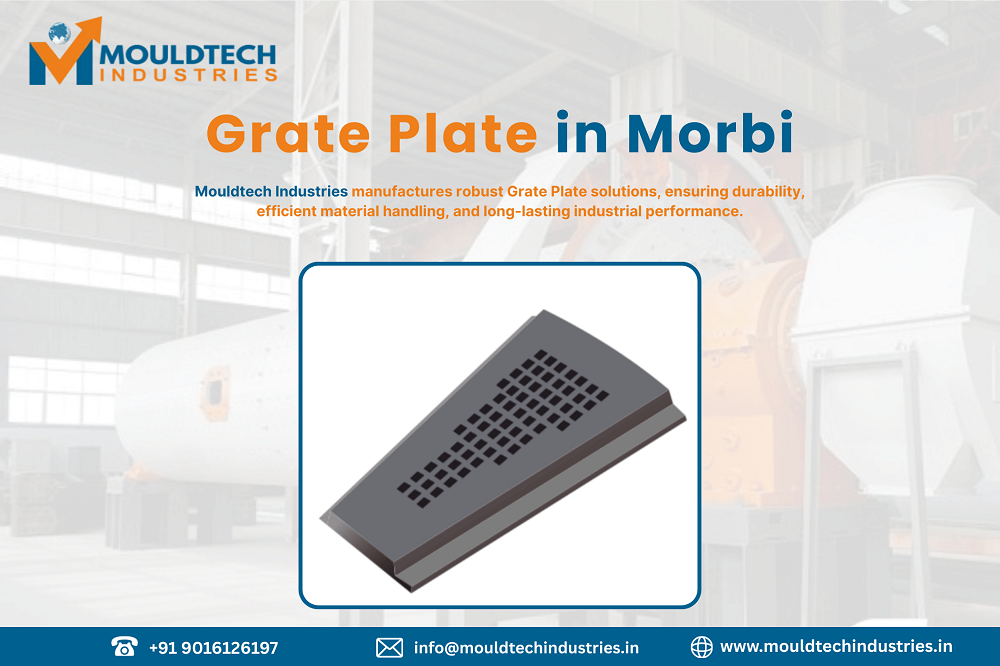
A Grate Plate is a hardened part fitted inside grinding mills and discharge areas to control particle size, regulate material movement, and shield subsequent machinery. It functions as a deliberate barrier, permitting processed material to exit while holding back pieces that are too large for further processing.
Unlike simple linings, Grate Plates perform dual roles in both mechanical separation and resisting wear. Engineers deliberately design the plate shape, open area, slot pattern, and material composition to meet specific process requirements.
From an engineering perspective, a Grate Plate must balance structural strength, wear resistance, and smooth material flow without causing pressure loss or blockages.
Uses Across Different Sectors
- Mining Sector: In mining and metal treatment operations, Grate Plates are frequently employed in ball mills that handle iron ore, copper, bauxite, and other mineral deposits. They help maintain a consistent ground size while enduring heavy scraping and shock loads.
- Cement Facilities: Cement mills depend on Grate Plates to manage the flow of clinker and avoid grinding material too finely. Consistent output enhances energy efficiency and stabilizes mill performance.
- Metal & Steel Plants: Steel facilities processing slag, raw materials for steelmaking, and fine metal particles require robust plate systems capable of handling both abrasive rubbing and heat stress.
- Ceramic Sector: Ceramic producers use Grate Plates when grinding primary materials, where an even distribution of particles is vital for subsequent shaping and firing stages.
- Power Plants: Systems for handling coal and processing ash benefit from wear-protected plates that minimize erosion and reduce the frequency of shutdowns.
- Bulk Material Transport: In conveyors, storage containers, and sorting equipment, Grate Plates aid in flow management while protecting structural elements from wearing out ahead of schedule.
Material Science & Engineering Factors
The choice of material determines how long a Grate Plate will last.
Grate Plates made with rubber components offer exceptional shock absorption and noise dampening. Their flexible nature helps dissipate energy from falling material, lessening stress on the mill’s structure.
Designs incorporating technical ceramics provide superior resistance to abrasion. These ceramics possess very high levels of hardness, making them suitable for finely abrasive substances where metal deterioration rates are too high.
Resistance to wear is governed by how hard the material is, its toughness, and the interaction between the material and the substances being processed. Engineers must consider not just hardness, but also how well it resists breaking and the strength of the bond between different layers.
Producers with extensive experience in this field recognize that pairing materials incorrectly can lead to failures before their expected time—even if each material performs well on its own.
Design & Tailoring Requirements
Grate Plates are seldom standard, off-the-shelf items.
Compatibility with existing equipment is essential. The pattern of the openings, the thickness, and the points of attachment must match the current mill structure to avoid operational instability.
Tailored sizing guarantees ideal ratios of open surface area, which directly impacts throughput and energy usage.
Design specific to the application takes into account the range of sizes in the incoming material, the thickness of any liquid mixture, the speed of rotation, and the sensitivity of downstream equipment.
Customization is often the factor distinguishing a wear part that only fits from one that functions dependably throughout its intended service period.
Manufacturing Quality & Process Regulation
Highly accurate production leads directly to consistent operational results.
Precise shaping, monitored hardening processes, and strict measurements ensure that one batch is similar to the next. Quality checks usually involve testing hardness, confirming dimensions, assessing the strength of the bond between materials, and visual inspections.
Consistency between batches is especially important for large facilities where several Grate Plates are fitted at the same time. Differences can lead to uneven wear and operational imbalance.
Fitting & Upkeep Considerations
Simplified attachment procedures shorten the time the machinery is stopped. Grate Plates that are well-conceived allow for easy positioning and secure locking, reducing the need for manual corrections.
Maintenance intervals are affected by how the plate wears and how easily it can be reached. Components laid out with predictable wear patterns permit scheduled replacements rather than emergency fixes.
Reducing shutdown time is not only a financial advantage—it directly impacts the safety of the facility and the productivity of the workforce.
Safety & Operational Dependability
The well-being of employees is closely tied to the condition of the equipment. Plates that are worn or broken can cause material blockages, sudden material releases, or structural collapse.
Reliable plate systems safeguard essential machinery, lessen vibrations, and stabilize the flow of the process—all contributing to better overall facility dependability and safer working conditions.
Paramount Concern: Lifetime Cost Effectiveness
For the entire equipment lifespan, cost-effectiveness hinges on service duration, necessary upkeep frequency, and consistent operational performance.
Grates with extended lifespans mean less frequent swaps. Consistent mill function cuts down on power draw and lessens unintended wear on neighboring parts.
Preventing abrupt stoppages frees up maintenance crews to concentrate on proactive upkeep instead of urgent fixes.
Preparation for World Markets & Universal Approval
Buyers in industrial sectors worldwide anticipate uniformity, proper paperwork, and strict adherence to design specifications.
Producers ready for international sales maintain clear process tracking, material validation, and consistent quality methods. These elements are vital for broad acceptance in controlled industrial settings.
The Value of Seasoned Producers
Established manufacturers offer expertise in the application itself, beyond mere production capacity.
They grasp how operational environments shift over time and how wearing parts interface within the whole setup. Dependable sourcing, technical guidance, and reliable quality stem from prolonged involvement in the sector.
Delving into Mouldtech Industries
Mouldtech Industries brings proven experience in wear protection, supplying rubber ball mill linings, ceramic wear protection systems, rubber surfacing solutions, and conveyor components. Serving clients across India and international industrial arenas, the firm emphasizes custom-engineered fixes that match actual working scenarios and long-term facility needs.
Further details can be found at https://www.mouldtechindustries.in/
Final Thoughts
The Grate Plate stands as a vital, though frequently overlooked, piece in large-scale industrial functions. Its impact on material handling, wear management, safety, and equipment dependability makes it key to smooth site operation.
When designed and built with a specific operational context in mind, grate plates meaningfully contribute to less idle time, predictable service schedules, and better ongoing stability.
Choosing the correct remedy starts with comprehending the process—not merely the item.
Essential Points to Note
- Good wear defense boosts equipment lifespan and dependability.
- Grates impact both material movement and upkeep planning.
- Suited for use in the mining, cement, metal, ceramic, and bulk handling sectors.
- Correct design lessens interruptions and operational hazards.
- Relevant worldwide across intensive industrial uses.
Trending FAQs
Q1. What is the typical lifespan of a grate plate?
Service life depends on material type, operating conditions, and maintenance practices.
Q2. Are grate plates suitable for wet grinding applications?
Yes, with appropriate material selection and corrosion-resistant design.
Q3. How often should grate plates be inspected?
Inspection frequency is usually aligned with planned maintenance shutdowns.
Q4. Rubber vs ceramic grate plates—how do I choose?
Rubber offers impact absorption, while ceramic provides superior abrasion resistance.
Q5. Are grate plates used globally in mining operations?
Yes, they are standard components in mining and mineral processing plants worldwide.
Contact Mouldtech Industries today to learn more about our high-performance Grate Plate solutions for mining, cement, metal, ceramic, and bulk material handling applications.
#BallMillRubberLiner #CeramicWearProtection #RubberLining #MiningSolutions #BulkMaterialHandling #ConveyorSolutions #MouldtechIndustries #WearProtection #IndustrialManufacturing