
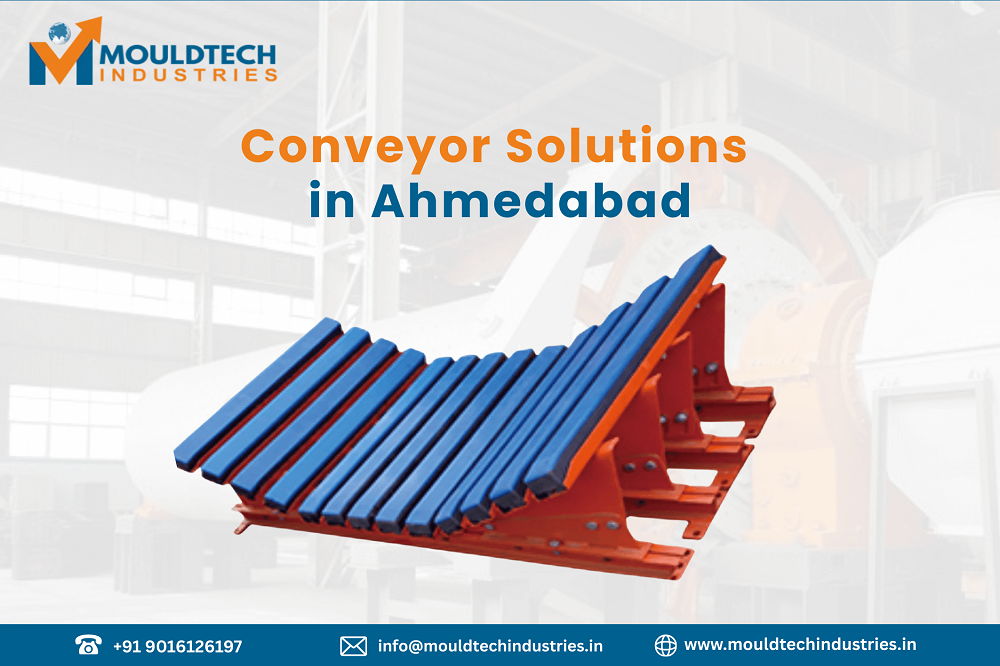
Conveyor Solutions Manufacturer, Supplier, And Exporter in India: Mouldtech Industries
Mouldtech Industries is a Manufacturer of Conveyor Solutions in Ahmedabad.
Our Manufacturing Unit is in Vadodara, Gujarat, India.
Mouldtech Industries is a Manufacturer of Bridge Rubber Pad, Ball Mill Rubber Lining, Bridge Rubber Pad, Resistant Rubber Liner, Embedded Rubber Liners, Conveyors Solutions, Ceramic Lagging Sheet, Belt Cleaners, Bridge Rubber Pad, Ceramic Rubber Lagging Services, and Ceramic Rubber Lagging Sheet.
Boosting Heavy Industry Performance with Conveyor Solutions: Expert Views from Mouldtech Industries
Introduction
In demanding industrial settings such as mining, metal production, cement making, ceramics, and bulk material handling, equipment is constantly under stress. Rough materials, repeated impacts, corrosive elements, and fluctuating operating conditions can accelerate wear, reduce productivity, and increase maintenance costs. Seasoned plant managers often observe that unexpected stoppages due to gear failures are a significant source of lost output in these fields.
Systems for guarding against wear, such as conveyor setups, rubber linings, and ceramic protection, are key to keeping gear dependable and operations running smoothly. The worldwide demand for these systems is growing as facilities in countries such as India and other major industrial regions aim to boost efficiency, shorten maintenance intervals, and extend equipment life.
Among these aids, Conveyor Solutions are crucial for smooth, safe, and practical material movement throughout industrial sites. Built for areas with heavy abrasion and impact, these setups help keep production going while reducing downtime from wear.
Key Industry Issues Driving Need for Conveyor Solutions
In mining and metalworking, materials such as iron ore, bauxite, limestone, and clinker are both abrasive and heavy. Conveyor setups moving these items encounter:
- Wear: The constant sliding of sharp, rough material wears down belts, rollers, and liners, hurting performance.
- Impact Loads: Drop zones, bins, and chutes create recurring impact forces that can harm standard parts.
- Corrosion: In some industrial settings, contact with chemicals, moisture, or high humidity can accelerate material degradation.
- Stops: Gear failures halt production, which is expensive in high-output operations.
- Upkeep Expenses: Frequent part changes, repairs, and labor add to running costs.
Manufacturers with a long history in the sector know that ignoring wear protection costs far more than buying sturdy Conveyor Solutions upfront. Across the globe, industrial sites in Australian mining areas, Middle Eastern cement centers, and Southeast Asian metal processing zones depend heavily on robust Conveyor Solutions to keep running without interruption.
Defining Conveyor Solutions
In the context of industrial engineering, Conveyor Solutions refers to a combination of highly durable conveyor belts, wear-resistant liners, impact supports, rollers, and protective extras designed to handle rough, heavy, or corrosive substances effectively. Unlike basic conveyor setups, these are specifically designed to tackle particular industrial hurdles:
- Effective material handling under heavy loads
- Resistance to wear from abrasive minerals and chemicals
- Seamless integration with existing plant hardware
- Minimizing unexpected upkeep needs
These setups are not universal fixes. Their build and material makeup are adapted to the specific site conditions, the amount to be moved, and the distinct wear patterns seen in mining, cement, metal, and bulk handling work.
Uses Across Different Industries
Conveyor Solutions see use in many different industrial areas:
- Mining: Moving ores, coal, and aggregates; lessening wear on liners and belts at transfer and loading spots.
- Cement Plants: Moving raw limestone, clinker, and gypsum efficiently while limiting dust and abrasion harm.
- Metal & Steel: Transporting hot slag, steel pieces, and metal concentrates where high heat and rough materials require sturdy defense.
- Ceramics Making: Ensuring safe movement of clay, glazes, and raw powder through abrasive chutes and bins.
- Power Plants: Managing the flow of coal, ash, and biomass fuel while cutting down on stops due to wear.
- Bulk Material Handling: Ports, hubs, and storage facilities use Conveyor Solutions for grain, cement, and mineral transport, requiring minimal maintenance and high operational reliability.
Seasoned plant engineers often observe that systems equipped with fitted wear protection significantly reduce belt changes and liner failures in these challenging industrial settings.
Material Science & Engineering Aspects
How well Conveyor Solutions work heavily relies on material choices and engineering concepts:
- Rubber Qualities: Top-tier industrial rubber offers flexibility, shock absorption, and wear defense. Rubber liners make belts last longer by cushioning material drops and lessening wear.
- Ceramic Strength: Ceramic wear pieces are tough and resist abrasion well, making them perfect for high-impact areas in chutes, bins, and feeders.
- Wear Resistance Logic: Both rubber and ceramic elements are designed to spread pressure, resist particle penetration, and absorb kinetic energy, thereby slowing material-caused deterioration.
- Impact Damping: Properly designed impact beds and lined sections lower peak forces, protecting both the conveyor frame and the material being moved.
Grasping these engineering principles is vital for plant engineers to select the right mix of materials for each job, balancing toughness, performance, and ease of maintenance.
Design & Customization Needs
Conveyor Solutions aren’t just standard items bought “off the shelf.” Design factors include:
- Hardware Fit: Setups must align with existing conveyor dimensions, pulley configurations, and chute layouts.
- Exact Sizing: Liners, belts, and rollers are made to precise plant specifications to guarantee optimal defense.
- Job-Specific Design: The nature of the abrasive minerals, chemical contact, dampness, or high-heat conditions dictates tailored material choice and structural setup.
Manufacturers with a deep industry background know that incorrect sizing or a material mismatch can lead to faster wear, more downtime, and higher maintenance costs.
Production Excellence & Process Oversight
Quality and uniformity are central to effective Conveyor Solutions:
- Accurate Manufacturing: Parts are built to tight specs to provide consistent wear defense.
- Quality Checks: Hardness, flexibility, chemical resilience, and exact dimensions are verified at every step.
- Batch Uniformity: Consistent material performance ensures that every liner, belt, or roller meets expected operational standards.
In industrial settings, such stringent quality assurance is essential to ensuring equipment reliability and safety.
Fitting & Upkeep Notes
Simplicity in setup and maintenance significantly impacts operational effectiveness:
- Less Downtime: Modular liners and pre-made parts allow for quicker changes.
- Upkeep Schedules: Planned checks, lubrication, and replacement planning are made simpler with standard designs.
- Fitting Speed: Parts made for fast mounting reduce labor hours and improve plant output.
Seasoned plant managers often note that well-conceived conveyor solutions enable planned maintenance rather than reactive fixes, minimizing unexpected downtime.
Safety and Operational Dependability
Industrial operations prioritize safety above all else:
- Personnel Security: Appropriately lined and padded conveyors mitigate injury hazards from material spills or component malfunctions.
- Asset Protection: Conveyors featuring abrasion-resistant coverings shield structural parts from wear, impact, and chemical contact.
- Facility Uptime: Uninterrupted functioning without frequent breakdowns ensures steady material throughput and minimizes the chance of process backlogs.
In sectors like mining and metal processing, these considerations directly lead to fewer safety incidents and more predictable production schedules.
Cost Effectiveness Throughout the Equipment Lifecycle
While the initial outlay for advanced conveyor setups might exceed that of conventional systems, the long-term lifecycle advantages are considerable:
- Sustained Savings: Robust liners and impact-support structures reduce the need for frequent component swapping.
- Reduced Outages: Fewer equipment problems translate to less lost production time.
- Maintenance Streamlining: Predictable wear progression allows for planned, economical servicing.
Producers with strong engineering backgrounds recognize that the overall cost of ownership is a more significant metric than immediate pricing when evaluating Conveyor Solutions.
Export Readiness and Worldwide Acceptance
Conveyor products from top-tier manufacturers adhere to established international industrial benchmarks:
- Global Trade Expectations: Products are built to meet worldwide material and safety standards.
- Documentation and Standard Compliance: Buyers intending to export receive material certifications, dimension summaries, and relevant compliance paperwork.
- International Buyer Demands: Major industrial centers in regions such as Australia, Europe, and Southeast Asia expect consistent quality, reliability, and service support.
This ensures that conveyor solutions produced in India maintain their competitive edge in the global industrial marketplace.
The Value of Seasoned Manufacturers
Selecting a vendor with extensive sector experience is vital:
- Technical Prowess: Accurate material specification, precise design output, and practical setup guidance.
- Sector Knowledge: Familiarity with real-world abrasion patterns and operational hurdles.
- Reliable Supply Chain: Consistent output, adherence to agreed delivery dates, and technical assistance during setup.
Manufacturers with a long history in the field understand the specific needs of various segments, ensuring solutions that are practical, reliable, and effective.
About Mouldtech Industries
Mouldtech Industries stands as a reputable provider of industrial wear protection solutions throughout India and on the global stage. Specializing in rubber liners for ball mills, ceramic wear-resistant tiles, rubber lining arrangements, and Conveyor Solutions, the company delivers resilient, high-performance goods for the mining, cement, metal, steel, ceramic, and bulk material handling sectors. Serving key metropolitan areas in India, including Ahmedabad, Morbi, Jaipur, Pune, Jamshedpur, Bengaluru, and Kolkata, Mouldtech Industries emphasizes engineering skill, superior manufacturing, and relevant industrial remedies.
Discover more about their offerings here: https://www.mouldtechindustries.in/
Summary
In demanding industrial settings, Conveyor Solutions are crucial components for sustained operational reliability, not mere add-ons. Properly engineered and maintained conveyor setups reduce wear, prolong asset life, bolster safety, and refine maintenance planning. Whether in mining, cement, metal, ceramics, or bulk material movement operations, these solutions guarantee continuous material flow and improved plant productivity.
For facility engineers, purchasing executives, and OEMs, understanding the underlying engineering principles, materials science, and operational factors of conveyor solutions is essential to selecting systems that truly meet industrial requirements.
Key Takeaways
- Wear defense significantly reduces asset failure and idle time.
- Conveyor solutions boost operational dependability across various industries.
- Applications span mining, metal & steel, cement, ceramic, power generation, and bulk handling.
- Correct blueprinting and material choice ensure enduring performance.
- Indian manufacturers, such as Mouldtech Industries, deliver world-class, high-quality products.
Frequently Asked Questions
Q1: What is the expected service life of industrial Conveyor Solutions?
A1: Depending on the material, load, and operating environment, properly conceived setups can last 3 to 7 years or longer, with predictable wear allowing for scheduled servicing.
Q2: Are conveyor solutions appropriate for environments involving high heat or chemicals?
A2: Yes. Linings made of rubber, ceramic, and composites can be specially formulated to resist chemical exposure, moisture, and elevated temperatures found in cement, metal, and chemical facilities.
Q3: How often should conveyor parts undergo servicing or replacement?
A3: Experienced facility staff often plan inspections every 3 to 6 months, with replacement intervals determined by observed wear and operational stress levels.
Q4: How do we choose between rubber and ceramic wear solutions?
A4: Rubber excels at absorbing impact and handling moderate abrasion; ceramic offers superior abrasion resistance in areas with high drop energy and heavy loading.
Q5: Are these conveyor solutions utilized globally?
A5: Assuredly. Mining centers in Australia, the metal and cement sectors in Europe, and bulk-handling facilities in Southeast Asia rely on durable conveyor systems.
For expert guidance on Conveyor Solutions, contact Mouldtech Industries today. Our team is ready to assist the mining, cement, metal, and bulk material-handling industries nationwide.
#BallMillRubberLiner #CeramicWearProtection #RubberLining #MiningSolutions #BulkMaterialHandling #ConveyorSolutions #MouldtechIndustries #WearProtection #IndustrialManufacturing