
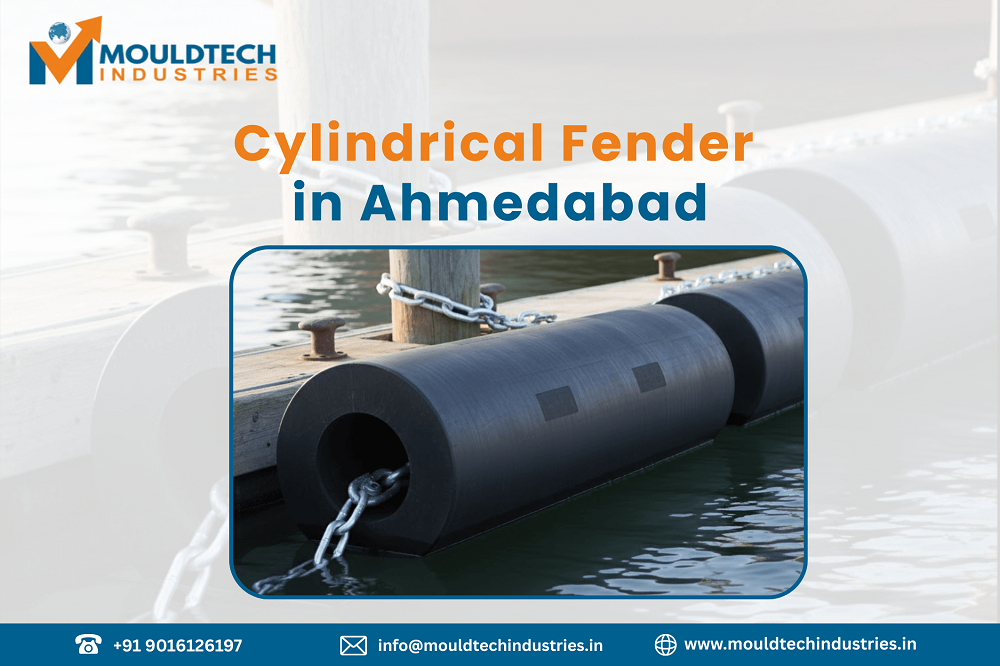
Cylindrical Fender Manufacturer, Supplier, And Exporter in India: Mouldtech Industries
Mouldtech Industries is a Manufacturer of Cylindrical fenders in Ahmedabad.
Our Manufacturing Unit is in Vadodara, Gujarat, India.
Mouldtech Industries is a Manufacturer of Bridge Rubber Pad, Ball Mill Rubber Lining, Bridge Rubber Pad, Resistant Rubber Liner, Embedded Rubber Liners, Conveyors Solutions, Ceramic Lagging Sheet, Belt Cleaners, Bridge Rubber Pad, Ceramic Rubber Lagging Services, and Ceramic Rubber Lagging Sheet.
Cylindrical Fender: A Key Defense Against Industrial Deterioration
In rigorous industrial settings, equipment dependability isn’t just about output—it’s fundamental to smooth running. Operations in mining, metalworks, cement facilities, ceramics production, and bulk handling across India constantly wrestle with issues such as scraping, pounding, and exposure to corrosive substances. Outages, maintenance costs, and equipment swaps create significant operational burdens.
Seasoned facility supervisors often note that even slight degradation of vital machinery can snowball into unexpected stoppages, lower output, and safety hazards. Against this backdrop, tough defense mechanisms against wear are essential. Among these, the Cylindrical Fender stands out as a crucial element, designed to reduce wear and impact in industrial applications while improving operational reliability.
Worldwide industrial demand for reliable wear protection is rising, particularly in regions with intensive mining, metal-processing centers, and ceramic-production clusters. Nations with advanced bulk material handling also increasingly rely on specially designed guard systems to protect machinery and extend service life.
Industrial Hurdles Driving Need for Cylindrical Fender
The mining, metal refining, cement production, ceramics, and bulk material transport sectors grapple with ongoing operational difficulties. These involve:
- Scraping: Continuous contact with rough materials such as ore, clinker, or ceramic dust can quickly erode machine exteriors, causing wear and weakening structural integrity.
- Impact Forces: Heavy machinery such as grinding mills, conveyors, and crushers endure repeated heavy blows that, without adequate shielding, can cause stress and breakdown.
- Chemical Decay: Exposure to chemicals, moisture, and dust laden with minerals hastens corrosion, shortening machine life.
- Stoppages: Equipment failures lead to schedule delays, lost production, and higher labor expenditures.
- Maintenance Outlays: Frequent fixes or part swaps raise operational spending and decrease overall facility effectiveness.
In mining and metal refining, these problems intensify due to the sheer scale of operations and the harsh environmental conditions. Producers with long-standing industry involvement understand that forward-looking wear defense is essential for sustaining operation time and cutting life-cycle expenditures.
What is a Cylindrical Fender?
A Cylindrical Fender is a specially designed industrial segment designed to absorb impacts, reduce scraping, and protect key machine surfaces in harsh environments. Generally built from high-quality rubber or composite materials, it merges flexibility, toughness, and wear resistance. Unlike generic parts, Cylindrical Fenders are tailored for high-impact jobs and extended use.
Practically speaking, Cylindrical Fenders act as expendable shields between moving gear and abrasive substances. They reduce equipment strain, prevent structural damage, and enable smoother operation in conveyors, grinding mills, and bulk material handling systems.
Uses Across Sectors
- Mining: Cylindrical Fender shield grinding mills, chutes, and ore transfer points from abrasive wear and impact forces. In heavy-duty work, they cut down equipment downtime and enhance operational safety.
- Cement Plants: In clinker handling, guards protect conveyors, chutes, and storage bins from abrasion caused by clinker and raw inputs. Their force resistance extends the service life of key parts.
- Metal & Steel Plants: Handling ores, slag, and metal dust subjects equipment to extreme wear. Cylindrical Fender prevents premature failure of mills, conveyors, and transfer systems.
- Ceramic Production: In ceramic production, abrasive powders and fast-moving material require guards that can withstand erosion while protecting machine exteriors.
- Power Plants: In coal-handling setups, Cylindrical fenders absorb impact and reduce wear on conveyors, chutes, and feeding systems, improving facility reliability.
- Bulk Material Handling: Industrial activities that move sand, grit, or raw minerals rely on Cylindrical Fenders to maintain conveyor integrity, minimize downtime, and reduce maintenance costs.
Material Science & Engineering Aspects
- Rubber Qualities: Industrial-grade rubber in Cylindrical Fender offers superb flexibility, impact cushioning, and scrape resistance. It helps spread energy from material impacts and reduces wear on underlying systems.
- Ceramic Strength: In hybrid or composite setups, ceramic inlays provide excellent toughness and wear resistance. These parts handle heavy impacts while keeping their shape.
- Wear Resistance Theory: Designing a guard involves understanding friction, surface hardness, and material fatigue. Properly chosen materials reduce erosion and improve long-term operational performance.
- Impact Cushioning: In grinding mills and conveyors, guards act like shock absorbers, protecting equipment from repeated high-energy hits. This reduces repair needs and lengthens equipment life.
Design & Customization Needs
Cylindrical Fender must be engineered to match the equipment. Standard dimensions might not suit specialized machinery; custom sizing guarantees the best fit and function. Designs specific to the application consider:
- Conveyor belt gauge and load type
- Grinding mill size and turning speed
- Material flow characteristics
- Impact force frequency and intensity
Crafting guards with precise measurements and material properties ensures maximum protection while minimizing interference with plant processes.
Manufacturing Quality & Process Oversight
Precise manufacturing is vital. Cylindrical Fenders are made under tight quality checks to ensure:
- Accurate Dimensions: Each piece meets exact specifications for smooth integration with existing gear.
- Consistent Material: Uniform rubber firmness and density ensure predictable wear and impact absorption.
- Batch Dependability: Makers employ thorough review processes to guarantee consistency across production batches.
In demanding industrial settings, even slight variations in material or size can impair performance. Expert makers like Mouldtech Industries ensure every guard meets engineering and industry benchmarks.
Setup & Servicing Notes
A simple setup reduces downtime and supports scheduled maintenance. Key points include:
- Pre-designed mounting setups for quick swaps
- Compatibility with the current gear to avoid upsetting operations
- Maintenance schedules aligned with facility timetables, minimizing stops
- Checks for wear and tear to plan timely replacements
Experienced facility supervisors often see that the proper setup and maintenance of Cylindrical Fenders directly relate to reduced unplanned downtime and greater operational efficiency.
Safety & Operational Trustworthiness
Worker well-being and plant dependability are paramount. Cylindrical Fender contributes by:
- Lowering the chance of mechanical failure from impact or scraping
- Minimizing debris and material spills that could cause danger
- Ensuring smoother equipment running, reducing operational stress
- Maintaining vital plant throughput without risking safety
In mining and metal processing, protecting both staff and equipment with engineered guards is a vital component of industrial safety protocols.
Cost Effectiveness Across Equipment Lifespan
While tube-shaped bumpers represent an initial outlay, they deliver ongoing financial advantages through:
- Lengthening the functional life of material handling gear like conveyors, grinding mills, and transfer points
- Decreasing the need for upkeep and unscheduled interruptions
- Maximizing plant output by consistently safeguarding machinery
Producers with deep industry roots recognize that total cost of ownership evaluations favor durable wear defense systems over repeatedly swapping out unprotected components.
Export Preparedness & Worldwide Acceptance
Industrial purchasers worldwide anticipate tube bumpers to satisfy rigorous quality and documentation requirements. Core aspects involve:
- Adherence to worldwide material and safety norms
- Tracking of production batches and quality certification for cross-border transport
- Appropriate packaging and handling for large-scale overseas shipment
Familiarity with industry benchmarks in the resource extraction, metallurgy, and ceramics sectors spanning the US, Europe, and Asia.
Global industrial approval hinges on both product dependability and the manufacturer’s capability to consistently meet quality and documentation expectations.
The Value of Seasoned Producers
Engineering proficiency, sector familiarity, and a dependable supply chain are paramount. Established manufacturers:
- Grasp material selection and wear characteristics
- Provide tailored solutions for varied industrial settings
- Sustain consistent production for extended engagements
- Offer technical assistance to facility engineers and upkeep crews.
Mouldtech Industries exemplifies this skill, delivering engineered wear-mitigation solutions throughout India and to international industrial sectors.
About Mouldtech Industries
Mouldtech Industries is a reliable manufacturer of industrial wear-defense systems, specializing in tube-shaped bumpers, rubber linings for grinding mills, ceramic wear-resistant tiles, and conveyor apparatus. Serving clientele across all of India—including Maharashtra, Gujarat, Rajasthan, Tamil Nadu, Karnataka, West Bengal, Uttar Pradesh, Madhya Pradesh, Andhra Pradesh, and Telangana—Mouldtech Industries guarantees quality, reliability, and engineering excellence.
Their solutions are also recognized in global industrial arenas, meeting strict quality benchmarks for resource extraction, metal processing, and bulk material management. For further insights, please see their official website: https://www.mouldtechindustries.in/
Summary
In demanding industrial settings, Cylindrical Bumper systems are crucial for protecting apparatus, minimizing downtime, and ensuring operational consistency. Appropriately designed bumpers enhance the service duration of vital machinery, boost facility efficiency, and yield long-term financial rewards. Opting for products from experienced manufacturers assures appropriate fit, longevity, and alignment with industry benchmarks—both domestically in India and across international industrial spheres.
Facility engineers and operations teams can confidently incorporate tube bumpers into their equipment to secure processes while maintaining output levels.
Key Takeaways
- Tube-shaped bumpers provide essential wear protection in abrasive and high-force environments.
- They enhance operational reliability and reduce unscheduled interruptions.
- Applicable across resource extraction, cement, metallurgy, ceramics, power generation, and bulk material transport sectors.
- Custom design and material choice assure sustained performance.
- Demonstrates global relevance, meeting industrial benchmarks for overseas markets.
Frequently Asked Questions (FAQs)
Q1: What is the usual service life of a tube bumper?
A: Service life varies based on the material, its application, and working conditions; industrial-grade elastic bumpers typically last several years under constant use with planned maintenance.
Q2: Which industries benefit most from tube bumpers?
A: Resource extraction, cement production, metal & steel works, ceramics, power stations, and bulk material handling operations see considerable advantages.
Q3: How frequently should tube bumpers be checked or swapped out?
A: Routine checks every 3 to 6 months are advised; replacements are scheduled based on the deterioration observed by maintenance personnel.
Q4: How do elastic bumpers compare against ceramic wear solutions?
A: Elastic material offers flexibility and shock absorption; ceramic provides greater hardness and defense against grinding wear. Combined systems can integrate the strengths of both.
For inquiries about Cylindrical Fender and other industrial solutions, contact Mouldtech Industries today. Visit our website or reach out to discuss custom engineering and manufacturing support.
#BallMillRubberLiner #CeramicWearProtection #RubberLining #MiningSolutions #BulkMaterialHandling #ConveyorSolutions #MouldtechIndustries #WearProtection #IndustrialManufacturing